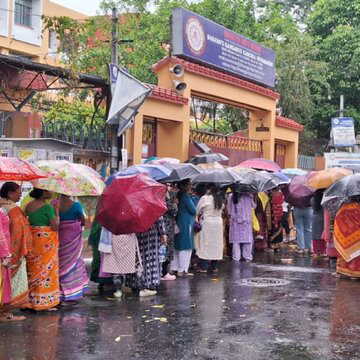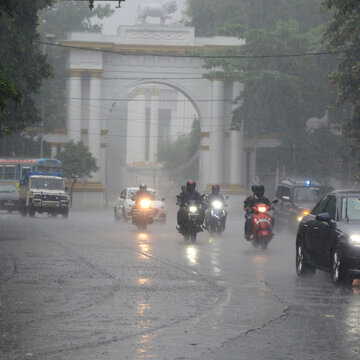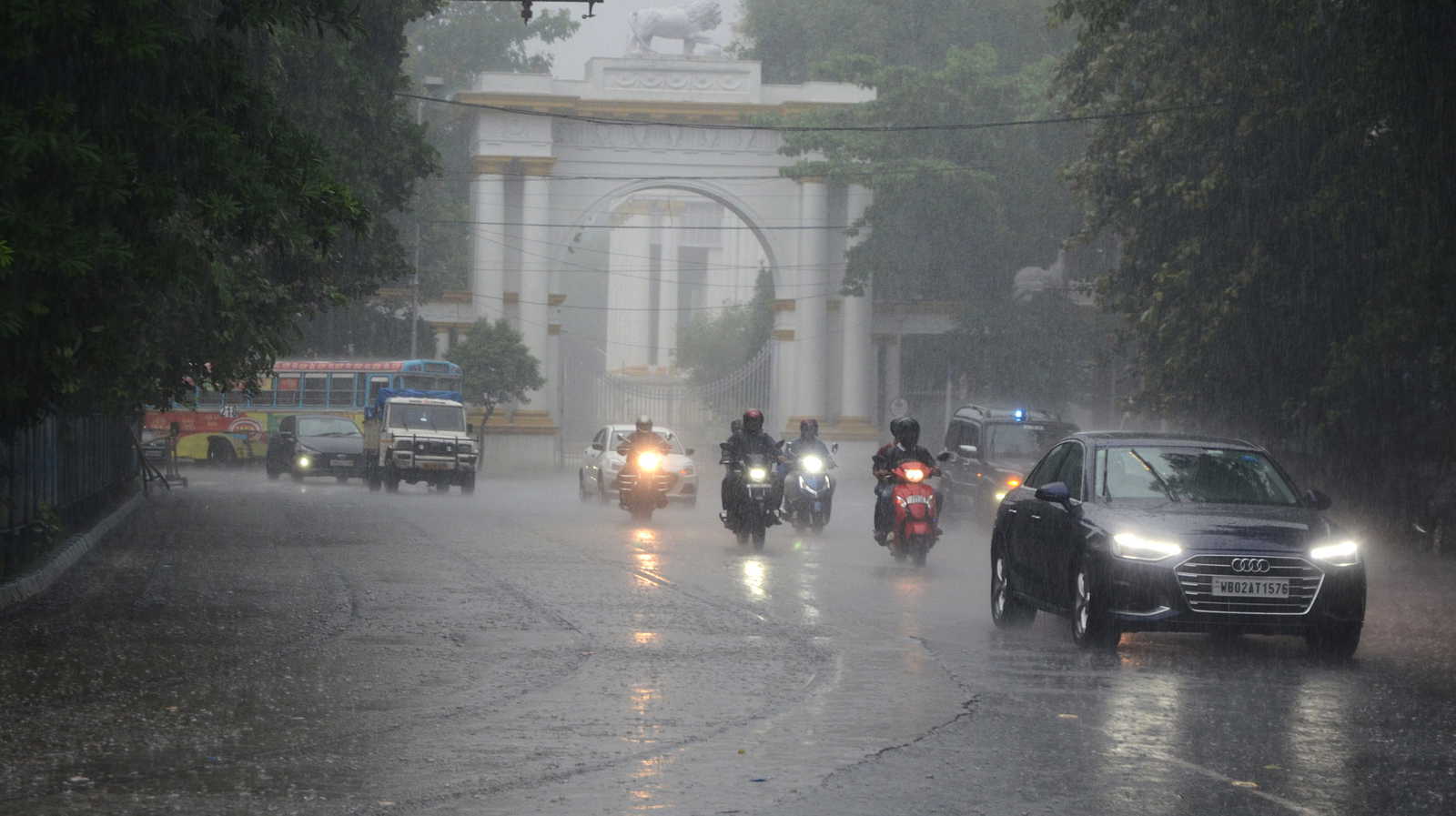
An intense thunderstorm swept across the city on Wednesday evening, lasting close to two hours and leaving a trail of disruption. Along with heavy rain and gusty winds, the weather system caused a drop of around six degrees in temperature, offering brief relief from the prevailing heat.
The sudden change in weather conditions caught many off guard during peak evening hours, leading to traffic slowdowns and difficulties for commuters navigating flooded stretches.
Several areas waterlogged despite pumping efforts
Large parts of the city reported severe waterlogging. Among the worst affected were Dum Dum, Belgachhia, Ultadanga, Maniktala, Beleghata, CR Avenue, College Street, Amherst Street, Thanthania, Bidhan Sarani, Camac Street, Theatre Road, Harish Mukherjee Road, Southern Avenue, Ballygunge, Lake Gardens, Golf Green, Kalighat, Tollygunge, Behala and pockets along the EM Bypass.
Also Read | West Bengal elections phase 2 sees rain play spoilsport, voters turn up with umbrellas
Civic authorities deployed heavy-duty pumps to drain out accumulated water. However, several roads remained inundated for hours, affecting vehicular movement and causing delays across multiple routes.
Flight operations hit, diversions reported
The storm also impacted air traffic, with operations briefly halted between 8.20 pm and 8.45 pm. Landings continued to face delays even after services resumed.
At least eight flights, including two international services, were diverted due to adverse weather conditions. Several incoming and outgoing flights were delayed, while one flight from Pune reportedly remained airborne over the city for more than an hour before further instructions.
Also Read | Poll curbs hit business: 100-metre rule shuts over 400 eateries across Kolkata
More rain likely, says Met office
The Met Office has indicated that the city may witness additional spells of rain on Thursday. While no severe warning has been issued, the possibility of further thunderstorms remains, keeping authorities on alert.
With more rain expected, concerns persist over recurring waterlogging in low-lying areas and continued strain on traffic and transport systems.