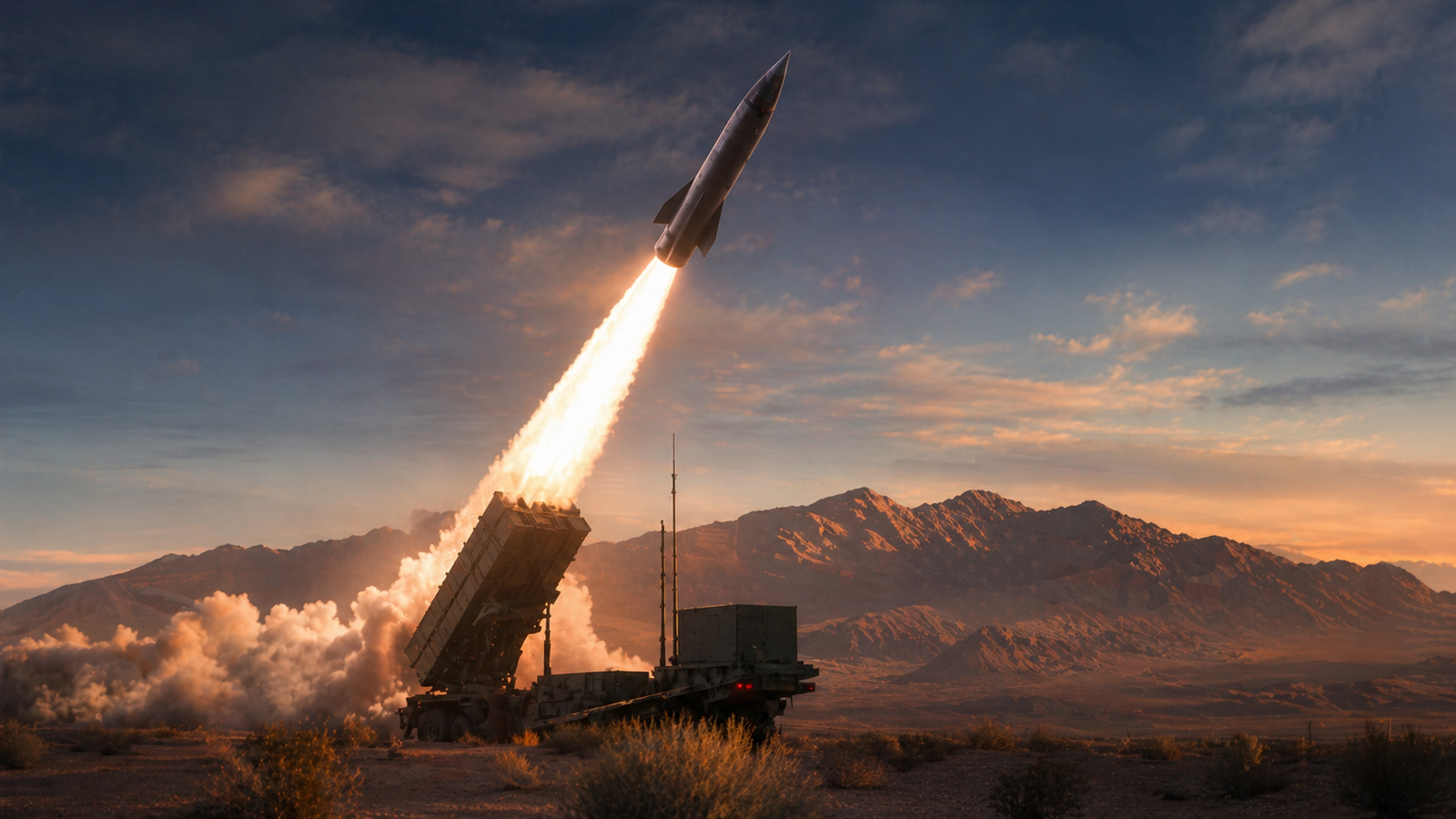
The United States is weighing the deployment of its Dark Eagle hypersonic missile to the Middle East for potential use against Iran, per Bloomberg. US Central Command has submitted a request to position the system in the region, aiming to target ballistic-missile launchers located deep inside Iranian territory.
If approved, this would mark the first operational deployment of the long-delayed weapon, which has yet to be formally declared fully operational. The move comes as other global powers, including Russia and China, have already fielded similar systems.
Also Read | No More Mr Nice Guy: Trump warns Tehran amid stalled talks, says ‘Get smart soon’
Why the request was made
According to a person familiar with the matter cited by Bloomberg, the request highlights a gap in current strike capabilities. Iran is said to have moved its missile launchers beyond the reach of the Precision Strike Missile, which has a range of over 300 miles.
The proposed deployment is intended to address that limitation by introducing a longer-range option. No final decision has been taken so far, and US Central Command has not commented on the development.
Ceasefire in place, but tensions remain
A ceasefire between the US and Iran has been in place since April 9. However, the request signals that preparations for possible future action are underway.
Both sides are using the pause to regroup. Bloomberg Economics Defense Lead Becca Wasser noted that "future rounds of fighting may be more deadly". The statement reflects concerns about the scale and intensity of any renewed conflict.
Capabilities of the Dark Eagle system
The Dark Eagle, also known as the Long-Range Hypersonic Weapon (LRHW), is designed to travel at speeds exceeding five times the speed of sound while maintaining the ability to maneuver mid-flight. It reportedly has a range of more than 1,725 miles, though specific details remain classified.
Also Read | Trump signals tougher stance as US prepares potential strikes on Iran
Developed to counter advanced air defence systems, the missile is built to evade interception. Each unit, produced by Lockheed Martin, is estimated to cost around $15 million, with only a limited number currently available.
The US has already deployed other advanced weapons in the region, including JASSM-ER cruise missiles, with around 1,100 reportedly used so far. While the US claims local air superiority in parts of Iran, losses of MQ-9 drones and crewed aircraft indicate that some areas remain contested.