Tilka Majhi was an 18th-century tribal protest leader and is regarded as a martyr from the earliest phase of India’s independence struggle.
On Saturday, during the BJP’s ‘Parivartan Yatra’, party workers allegedly confused Tilka Majhi with Birsa Munda, a 19th-century revolutionary and leader of the Munda rebellion. The incident has sparked a debate in Medinipur.
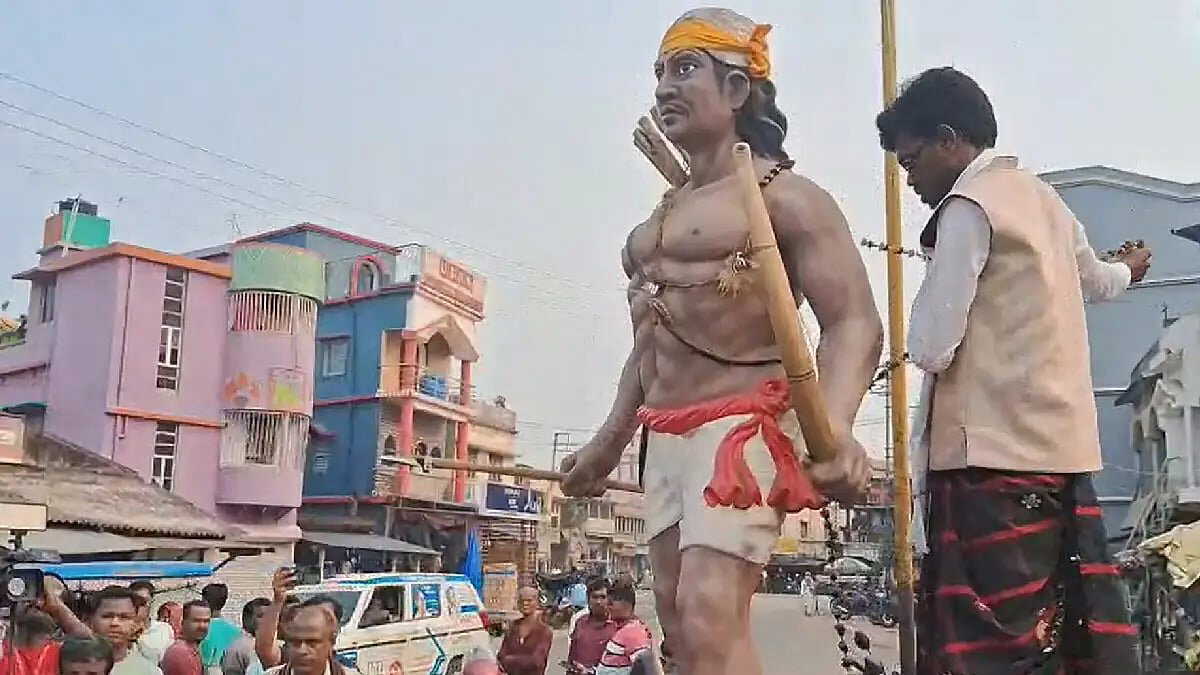
When the ‘Parivartan Yatra’ chariot reached Keshpur, BJP leaders garlanded the statue of Tilka Majhi. However, slogans in the name of Birsa Munda were reportedly raised at that moment.
The incident has caused discomfort within the saffron camp, as several senior leaders were present at the event, including Odisha MP and BJP national leader Rabindra Narayan Behera and Ghatal organisational district BJP president Tanmay Das. A video of the incident has gone viral on social media, though Ei Samay Online has not verified its authenticity.
ALSO READ | Lok Adalat on March 14 postponed in West Bengal due to SIR voter list work
The incident has drawn criticism from sections of the tribal community, who expressed anger over the alleged confusion. Meanwhile, the Trinamool Congress organised protests in Keshpur on Monday over the issue. Two bike rallies from Amarakuchi and Burapaat Panchkuri in Keshpur block converged in the town. Trinamool leaders also garlanded the statue of Tilka Majhi in the Keshpur market area.
Members of the tribal community have alleged that BJP leaders failed to recognise Tilka Majhi, a prominent Santhal tribal leader and freedom fighter who resisted British rule in the Indian subcontinent.
ALSO READ | Why no Narcotics Advisory Committee in West Bengal? CEC Gyanesh Kumar pulls up DG Vineet Goyal
Keshpur block Trinamool president Pradyot Panja said, “BJP leaders only know how to create problems for people. They cannot even recognise brave leaders. Cannot show respect either. People will respond through the ballot box.”
Responding to the criticism, Ghatal organisational district BJP president Tanmay Das said, “Trinamool has descended into dirty politics. We consider both as gods. Slogans can certainly be raised in one person's name in front of another's statue.”