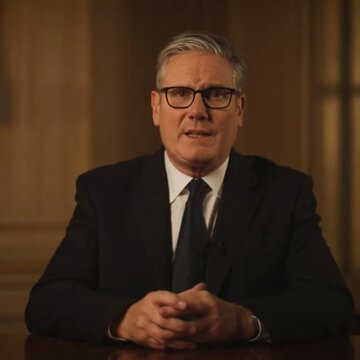
The Labour government has been warned that it is struggling to connect emotionally with voters, with Morgan McSweeney, Prime Minister Keir Starmer’s chief of staff, cautioning cabinet ministers that rebuilding trust will require a sharper emotional and empathetic approach.
The Guardian noted McSweeney delivered the warning during a cabinet meeting on Tuesday, where ministers were urged to focus on what was described as the “three Es” — emotion, empathy and evidence — to regain public confidence. One source said McSweeney told ministers the government faced a “deficit in emotion”, a phrase later disputed by a No 10 source, though concerns about voter disconnect were acknowledged.
Also Read | Why 2025 feels more dangerous than any year before, according to BBC’s John Simpson
Starmer used the meeting to rally his cabinet, telling them they were in “the fight of our lives” and urging ministers to ignore opinion polls while preparing for a political battle with Reform UK, led by Nigel Farage.
Poll pressure and warnings inside cabinet
Cabinet ministers are understood to have raised concerns about Labour’s ability to reach voters on an emotional level, even as the prime minister insisted that a sustained focus on the cost-of-living crisis could secure victory at the next election. However, Labour’s political agenda has recently been overshadowed by international developments, including former US president Donald Trump’s actions in Venezuela and remarks related to Greenland.
A recent YouGov survey has added to the pressure, placing the Conservatives ahead of Labour for the first time since the general election, with both trailing Reform. Labour’s support was recorded at just 17%, marking an unusually sharp decline for a newly elected government.
Also Read | Prince Harry 'begging to come home' but Meghan Markle says...
Sources told The Guardian that ministers were shown a presentation urging them not to panic, drawing parallels with other governments that suffered early polling slumps. However, no direct historical comparisons were made, amid acknowledgement that Labour’s situation is unusual due to the rise of a new political force dominating the polls.
Starmer reportedly told colleagues that No 10 strategists were closely studying how centre-left governments in Norway, Canada and Australia managed to recover politically by prioritising cost-of-living measures. In Canada and Australia, Trump’s election was cited as a contributing factor to shifting political dynamics.
Cost of living focus and party strategy shift
The prime minister’s recent domestic messaging efforts have faced disruption. A visit to Reading on Monday, intended to highlight frozen bus and rail fares, was dominated by questions on foreign affairs, including Greenland and the capture of Venezuelan president Nicolás Maduro, who has been indicted in New York.
Despite this, Starmer told ministers that maintaining a tight domestic focus was essential. He framed the political contest as a choice between “a Labour government renewing the country” and a Reform movement that, he said, “feeds on grievance, decline and division”.
Meanwhile, Labour’s new deputy leader Lucy Powell attended the cabinet meeting and later told MPs she was keen to help “tell the story of whose side we are on”. Powell said the party would move towards an “incumbency first” strategy, prioritising the protection of sitting MPs rather than targeting new seats.
Also Read | Viral clip exposes harassment women face on public transport in London. Watch here
She also urged MPs to end internal divisions and said Labour headquarters would offer workshops to help parliamentarians take credit for government policies that directly benefit constituents, including frozen rail fares, high street funding and the extension of the warm home discount.
Addressing MPs, Powell said the government needed to speak more clearly about its achievements and warned that “dark forces” were working against a Labour administration. “We’ve got a big argument to make and win,” she said, stressing the party’s focus on tackling the cost-of-living crisis and holding powerful interests to account.