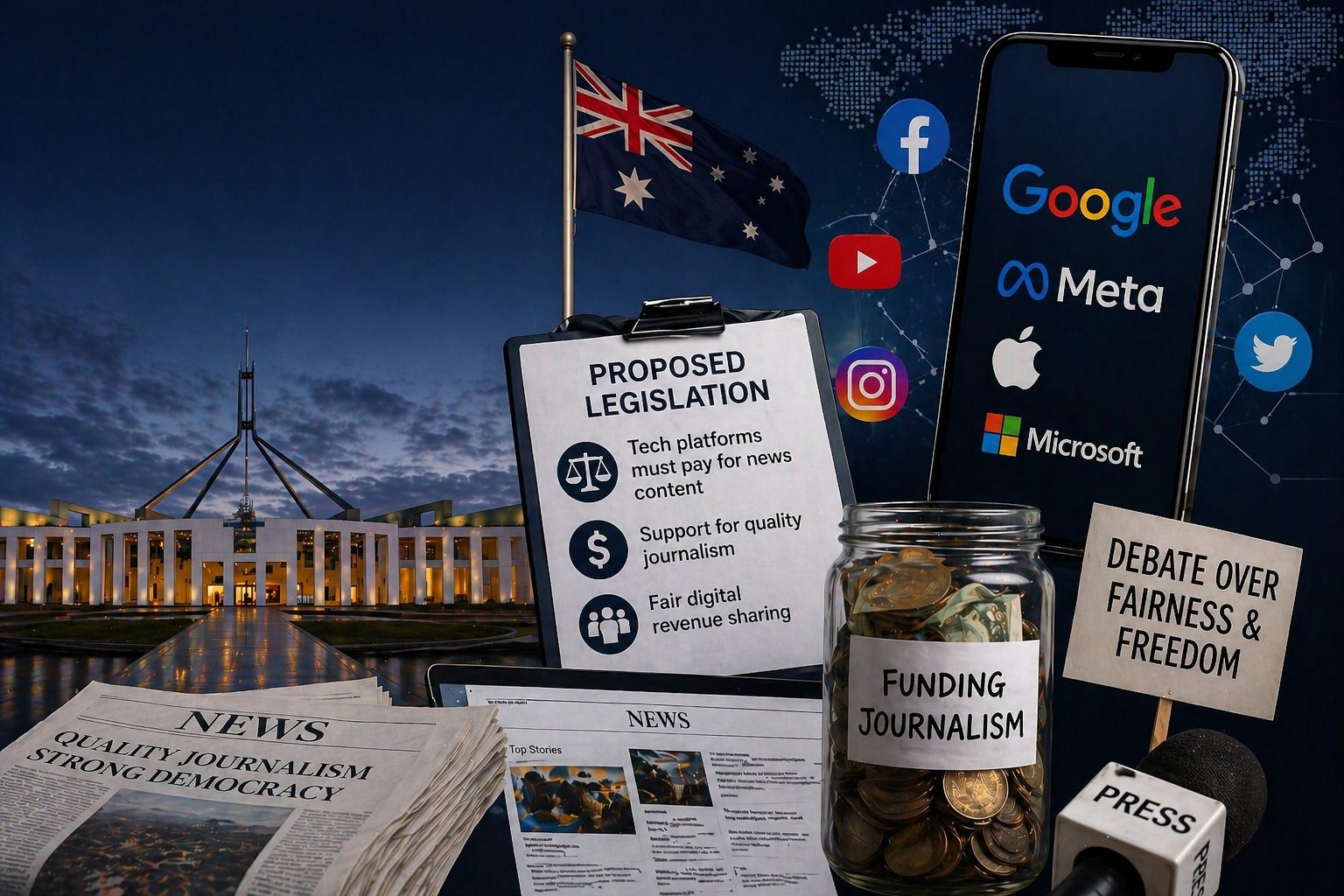
The government of Australia has recently introduced a plan for levying a tax on big technology companies like Facebook, Google, and TikTok to help finance journalism through the provision of money to news outlets.
The draft legislation, expected to be introduced in Parliament by July 2, compelling technology companies to provide financing to news outlets or be required to pay tax based on their profits in the country.
Push to fund journalism
Prime Minister Anthony Albanese defended the move, arguing that journalism must be compensated in an era where digital platforms profit from news content.
“It shouldn’t just be taken by a large multinational corporation and used to generate profits with no compensation for those who produce that content,” Albanese said, stressing that investment in journalism is vital for a functioning democracy.
Under the proposal, platforms that do not strike commercial agreements with publishers would face a 2.25% tax on their Australian revenue.
What is the News Bargaining Incentive?
The proposed system, called the “News Bargaining Incentive”, is designed to push platforms into negotiating payment deals with news organisations.
Companies that comply by funding journalism would receive offsets, reducing their tax burden. The government estimates the measure could generate between 200 and 250 million Australian dollars annually which is similar to payouts seen under earlier agreements.
Revenue collected would be distributed among news outlets based on the number of journalists they employ, according to Communications Minister Anika Wells.
Tech giants push back
The proposal has drawn sharp criticism from major tech firms. Meta said news publishers voluntarily share content on its platforms and described the proposal as a “digital services tax” disconnected from how value is exchanged online.
Also Read | India-New Zealand deal brings visa bonanza — are you eligible?
Google also rejected the plan, arguing it overlooks existing commercial agreements and fails to reflect how news consumption has evolved. The company added that the policy unfairly targets certain firms while excluding others. TikTok has not issued an official response.
A renewed standoff
This is not the first time that Australia has attempted regulation of payment for news content. The country passed the News Media Bargaining Code in 2021, leading platforms to enter into contracts with publishers to avoid having them arbitrated.
Many of these contracts have now expired, while some platforms have completely removed news content from their systems. The bill will plug these loopholes by making these contributions compulsory, leading to another conflict with tech companies.