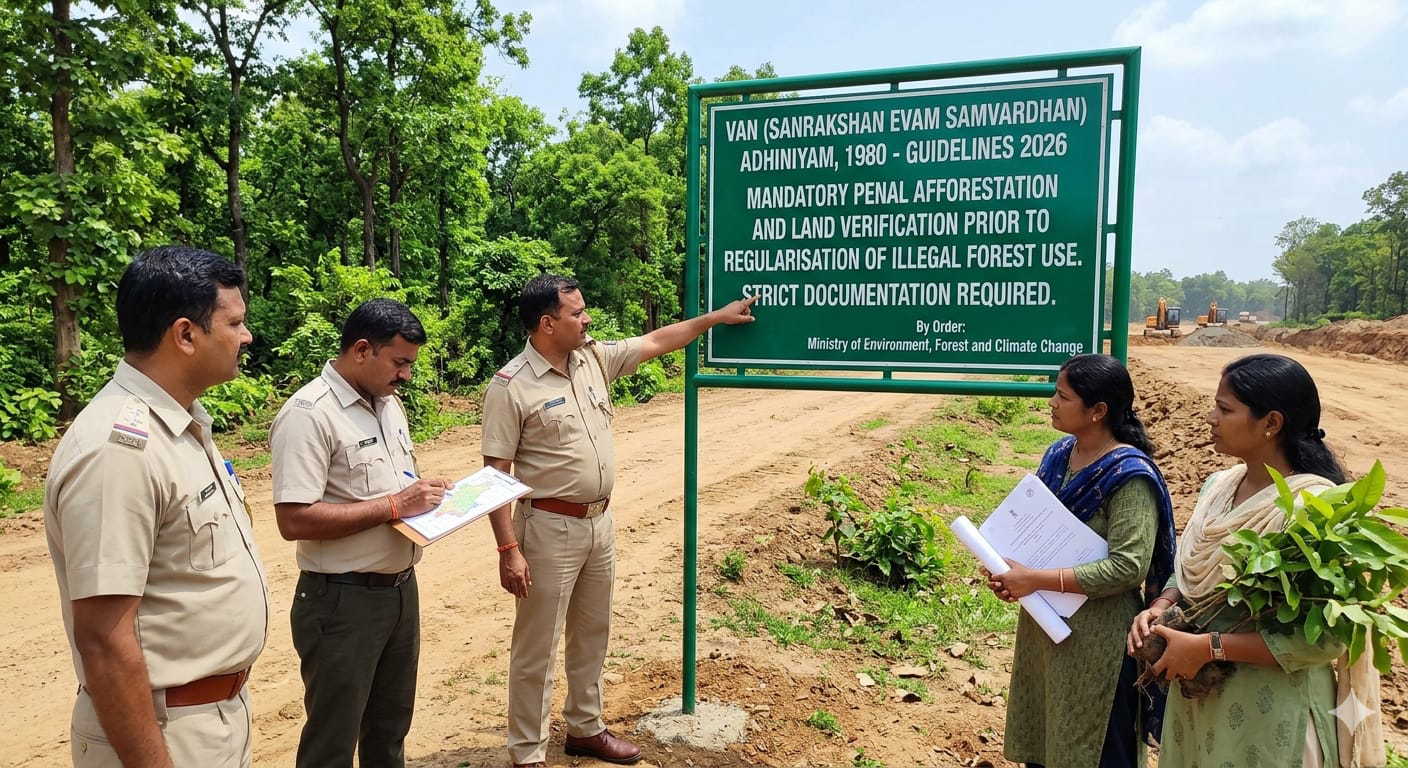
India's Union Environment Ministry has tightened rules for infrastructure projects that cleared forest land without permission. These projects must now complete penal afforestation before they can receive final regulatory approval.
As per the report of Hindustan Times, the directive was sent to all states and Union territories earlier in April 2026. It enforces guidelines issued on January 21, 2026, under the Van (Sanrakshan Evam Samvardhan) Adhiniyam, 1980. Those guidelines created a single, consistent procedure for handling illegal forest diversions.
The old loophole
Projects that violated forest clearance laws could previously receive conditional central government approval. As cited by Hindustan Times, developers simply submitted written promises to complete afforestation later.
Also Read | Delhi deer park to shrink—why are animals being moved out?
No verified proof of completed action was required. The Ministry's letter identified this as a recurring problem; states were routinely accepting these undertakings from project proponents instead of complete documentation.
What do the new rules require?
States must now submit full documentation before a violation case is considered for regularisation. A regional office of the environment ministry must verify that the land proposed for afforestation is genuinely suitable. Only after this confirmation will Stage-I approval be granted.
Also Read | Delhi power demand crosses 7,000 MW in April—heatwave already pushing limits?
Compensatory afforestation is a legal obligation for all projects that convert forest land for non-forest use, such as mining or road construction. The penal version applies specifically to projects that bypassed legal clearances entirely, as reported by Hindustan Times.
Why does this matter?
According to the report of Hindustan Times, the earlier system created a damaging incentive. "Normalising illegal use of forests by allowing discretionary post facto approval with penal afforestation creates a perverse incentive to undertake non-forest use without clearances and in effect compound violation," said Chetan Agarwal, a forest analyst.