The technological rivalry between the US and China has expanded beyond artificial intelligence, semiconductors and electric vehicles, now to the field of brain-computer interfaces (BCIs). China is now claiming a significant milestone with the world's first commercially cleared invasive brain-computer interface, placing it ahead of Elon Musk's Neuralink in the rapidly developing brain-chip industry.
What is NEO?
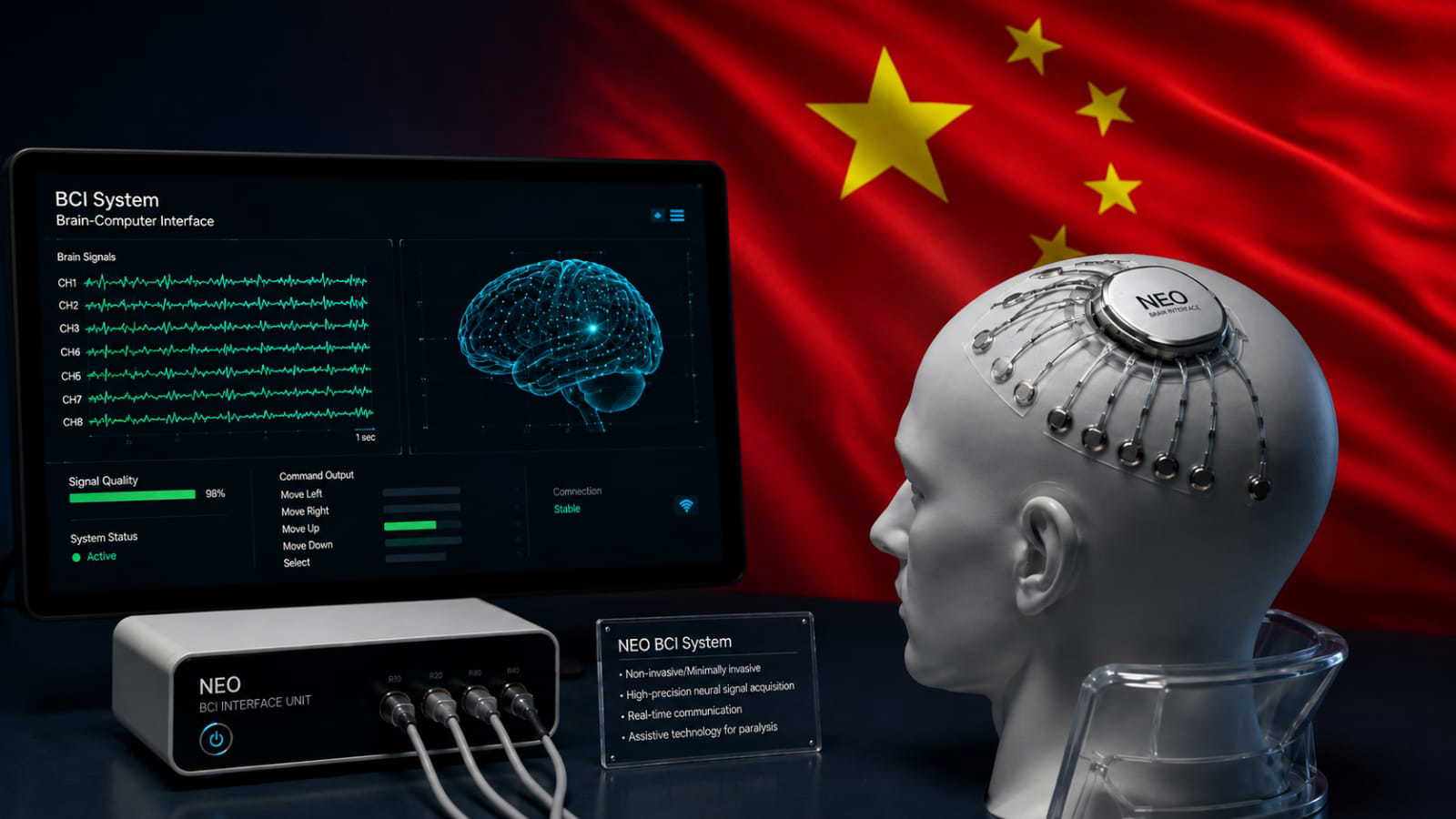
According to a report by India Today, the device, known as NEO, was developed by Neuracle Technology in collaboration with Tsinghua University. Designed to help people with paralysis regain movement, the implant received commercial approval in March from China's National Medical Products Administration. The approval applies to patients aged 18 to 60 who have paralysis in all four limbs caused by spinal cord injuries while still retaining some arm function.
Also Read | Is Pakistan's new satellite network keeping constant watch on India?
Unlike Neuralink's N1 implant, which places tiny electrodes directly into the brain's cortex, NEO adopts a less invasive approach. The coin-sized implant positions eight sensors on the dura mater, the protective membrane surrounding the brain, rather than penetrating brain tissue. These sensors collect brain signals and transmit them to a computer, which converts them into commands for a soft robotic glove designed to restore hand movement and assist with everyday tasks.
Because the device does not need to be inserted deep into the brain, it carries a lower risk of complications such as bleeding, tissue damage and long-term scarring. Reports suggest that this simpler design may also have helped accelerate the regulatory approval process.
The first recipient of this new technology
One of the first recipients of the implant was Dong Hui, a 39-year-old man from Henan province who was paralysed from the neck down following a car accident six years ago. According to MIT Technology Review, Dong underwent surgery in November 2024 as part of a clinical trial and spent nearly a year in rehabilitation. Last October, he was able to hold a pen and write his name for the first time since the accident.
Also Read | 'Protect civilians': India urges 'immediate de-escalation' as Israel and Iran trade fresh strikes
China's ambitions extend beyond a single device. Brain-computer interfaces have reportedly been identified as a strategic technology area in the country's latest five-year plan, to become a global leader in the sector by the end of the decade. Meanwhile, companies such as NeuroXess are exploring the integration of BCIs with artificial intelligence, including systems that allow patients to control devices through thought and decode Mandarin speech signals in real time.