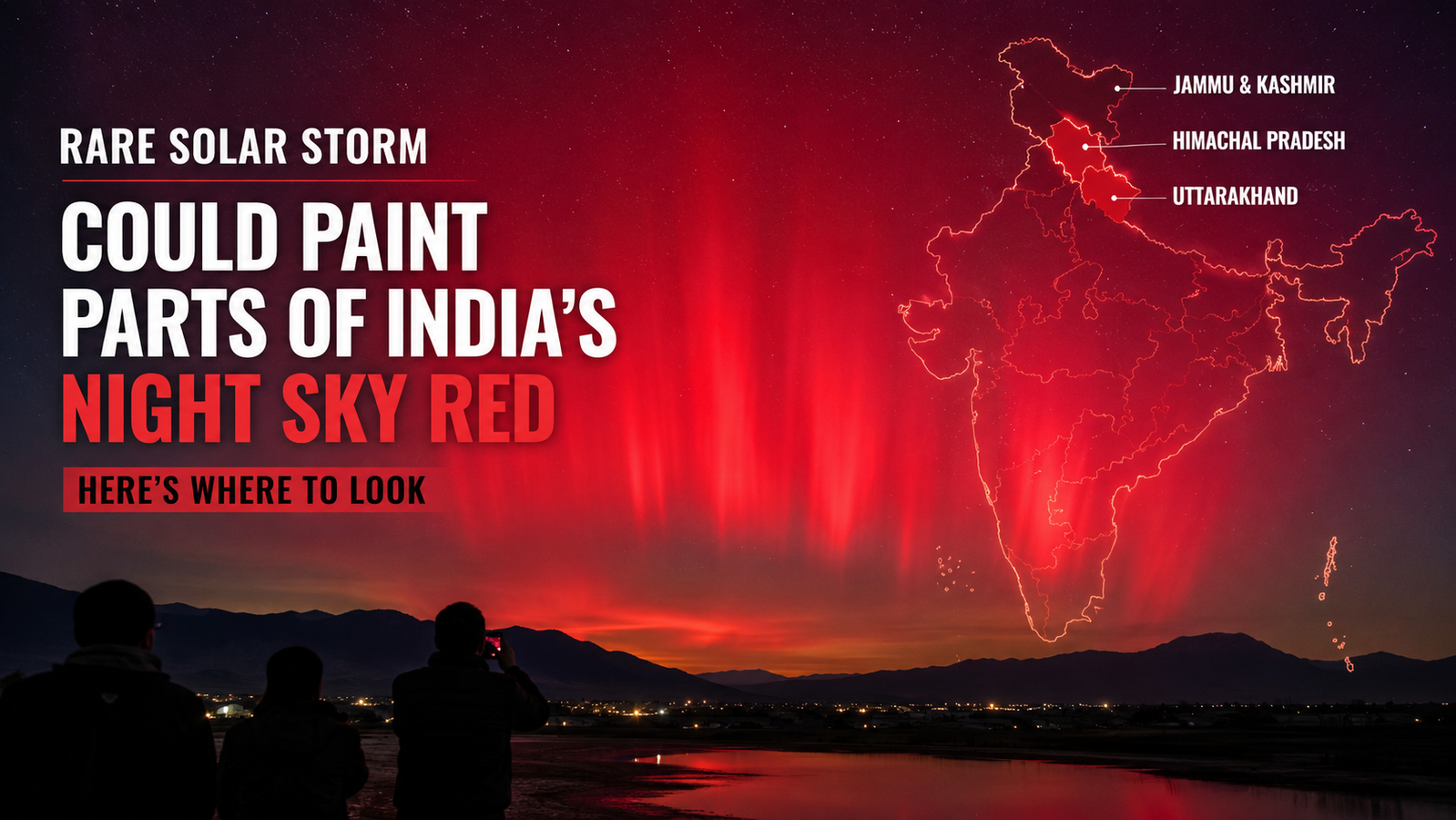
A powerful solar storm racing towards Earth could give a small part of India a chance to witness one of nature's most spectacular celestial displays. The incoming geomagnetic disturbance, triggered by a massive eruption on the Sun, is expected to interact with Earth's magnetic field and potentially push auroral activity much farther south than usual.
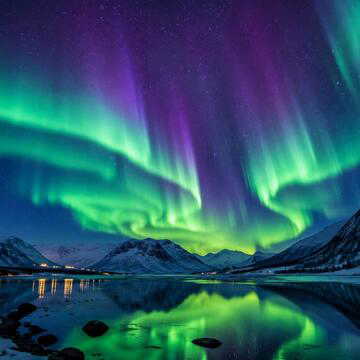
For most people, the Northern Lights remain something seen in photographs from Iceland, Norway or Alaska. But when strong solar storms strike, the glowing auroral oval can expand well beyond its normal range, occasionally making the phenomenon visible in locations where it is rarely seen.
While experts caution that visibility in India remains uncertain, the strength of the current solar event has generated excitement among astronomers and skywatchers alike.
Himalayan regions offer the best chance
According to NDTV, the possibility of witnessing auroral activity in India is largely limited to the country's northernmost high-altitude regions. Areas with minimal light pollution and unobstructed views of the northern horizon are considered the most favourable.
Among the top locations are regions in Ladakh, particularly around Hanle and Pangong Lake, which are already renowned for some of the darkest skies in the country. Remote parts of Jammu and Kashmir, including Gulmarg and Sonmarg, may also offer favourable viewing conditions if cloud cover remains limited.
The high-altitude deserts of Spiti Valley in Himachal Pradesh and parts of Uttarakhand's Himalayan belt are also being watched closely by astronomy enthusiasts hoping for a rare glimpse of the phenomenon.
Also Read | Ujjwala beneficiaries to get subsidy on only 4 LPG cylinders annually, announces govt
What might the aurora look like in India?
According to NDTV, anyone expecting dramatic green curtains dancing across the sky may need to temper their expectations. If auroral activity becomes visible from India, it is more likely to appear as a faint reddish or crimson glow near the northern horizon.
These colours occur when charged solar particles interact with oxygen atoms high in Earth's atmosphere. Because of the great distance from the poles, the display is expected to be much subtler than those seen in traditional aurora hotspots.
Experts say smartphones and cameras equipped with night mode or long-exposure photography settings could have a better chance of capturing the glow than the naked eye.
Also Read | IAF steps in to airlift NEET-UG retest papers as authorities tighten security after leak controversy
Why this solar storm is attracting attention?
According to NDTV, the event has been triggered by a coronal mass ejection from an active region on the Sun that recently produced a significant solar flare. Scientists estimate that the cloud of charged particles is travelling at an extraordinary speed and could generate strong geomagnetic disturbances upon arrival.
Such storms are responsible for creating auroras by funnelling charged particles towards Earth's magnetic poles. When those particles collide with oxygen and nitrogen in the upper atmosphere, they release energy in the form of colourful light.
Whether or not India's skies ultimately light up, the event serves as a reminder of the powerful connection between our planet and the constantly changing activity of the Sun. For skywatchers in the Himalayas, tonight could offer a rare chance to witness a phenomenon usually reserved for the far reaches of the Arctic.