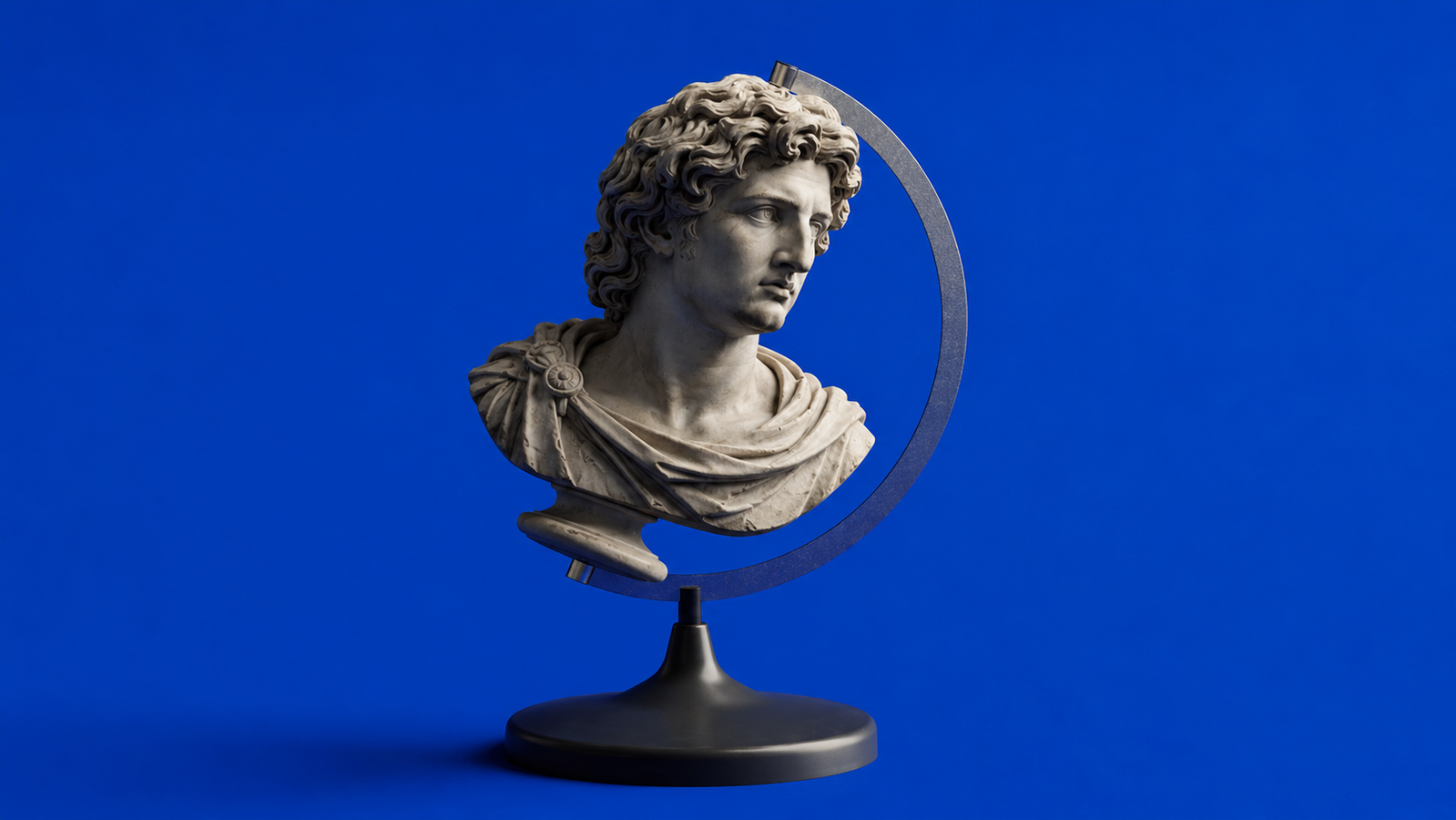
At twenty, Alexander inherited a kingdom that still seemed more promise than power; by thirty-two, he was dead in Babylon, and the world he had raced across from Macedonia to the edges of India was already beginning to turn him into legend.
Few names in history carry so much heat, so much distance, so much unresolved fascination.
He was a conqueror, a king, and after that, something harder to measure: a figure large enough to survive both admiration and doubt, a man whose life still seems to move somewhere between fact and myth.
Also Read | ‘Avatar: Fire and Ash’ set for OTT debut on JioHotstar after successful theatrical run
🖋️ Alexander - Edmund Richardson
— Bloomsbury Books UK (@BloomsburyBooks) June 4, 2026
A stunningly written new biography of Alexander the Great, based on a series of important new discoveries and the author's own translations of source material from twelve ancient languages.
Read more - https://t.co/hG7dOqwFjd pic.twitter.com/AKGPMheaki
Another crack at history's grand enigma
More than two millennia later, that fascination remains strong enough to inspire yet another attempt to separate the man from the myth. Edmund Richardson’s latest biography of Alexander the Great is a serious new entry in a field that has long been crowded with scholarship and legend.
Published on June 4, 2026, the title, Alexander: God, King, Man, is a fresh, highly readable retelling of one of antiquity’s most enduring figures.
On today's Book Club podcast: My guest is Edmund Richardson, author of a new biography of Alexander the Great called Alexander: God, King, Man.
— The Spectator (@spectator) May 20, 2026
Edmund tells me why there is still a fresh story to tell about this most storied of historical figures, why his empire collapsed as…
A formidable hunt for the facts
According to Bloomsbury, the publisher of the book, Richardson’s work is based on more than a decade of research and on his own translations from twelve ancient languages.
Bloomsbury describes the biography as a “revelatory retelling” and says it draws on a series of important new discoveries.
The publisher’s synopsis also presents the book as an attempt to reframe Alexander’s story through evidence rather than inherited myth.
Alexander's rise and empire
The publisher’s summary places Alexander at the center of a rapid rise that began in 336 BCE, when he was 20 and inherited a fragile Macedonian kingdom with heavy debts and an army that did not yet fully answer to him.
From there, he pushed east into the Persian Empire, a campaign that helped make him one of history’s most famous military figures. He died at 32 in Babylon.
Also Read | Football meets music: Nora Fatehi joins FIFA World Cup 2026 official album
Not merely history, but a tale well told
The book is being positioned not only as a biography but also as a work of narrative history.
Bloomsbury’s page highlights endorsements from writers and historians including Toby Wilkinson, Ken Follett, William Dalrymple, Dan Jones, and Rory Stewart, underscoring the publisher’s push to sell the book as both scholarly and broadly accessible.
That aligns with The Economist’s own description of the title as a compelling read rather than a dry academic exercise.
FAQs
Q1: Who is Edmund Richardson and why is his Alexander biography significant?
Ans: Edmund Richardson is a classics professor and historian whose new book, Alexander: God, King, Man, draws on more than a decade of research and translations from twelve ancient languages to reassess Alexander the Great.
Q2: What is Alexander: God, King, Man about?
Ans: The biography explores the life of Alexander the Great, aiming to separate historical fact from centuries of myth while incorporating recent research and discoveries about the ancient ruler.