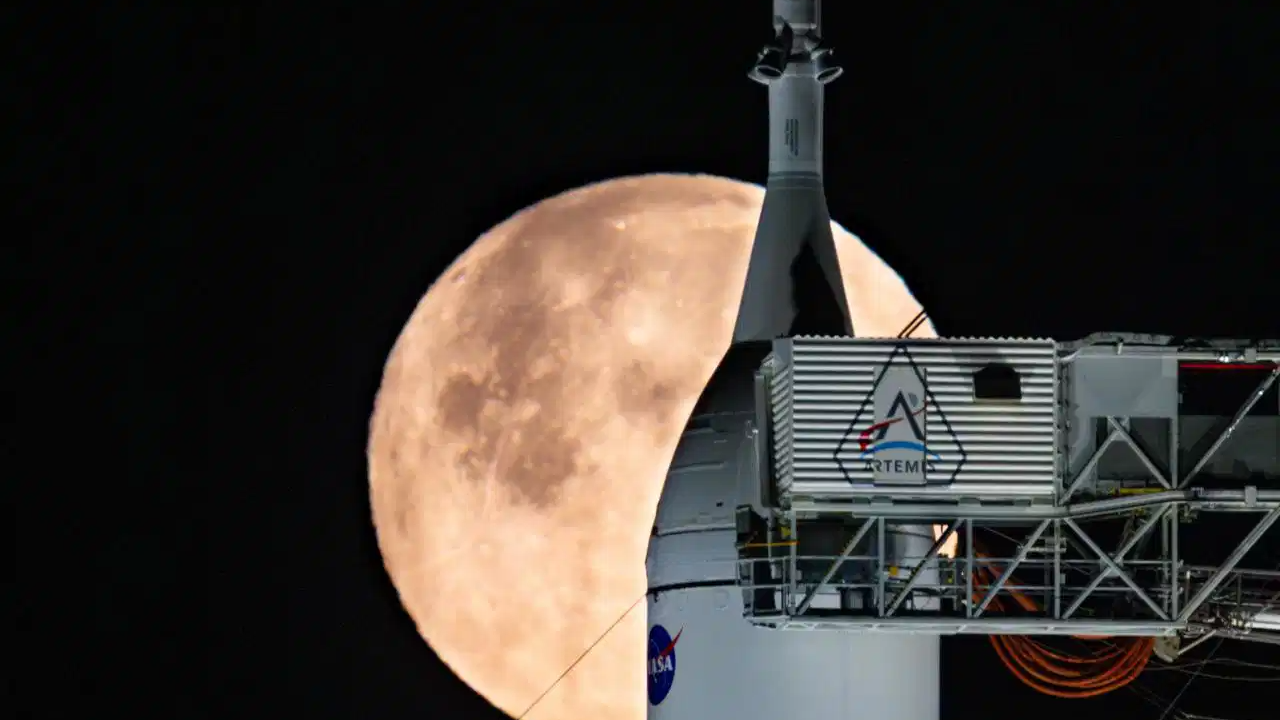
NASA, on Tuesday, encountered a leaking issue during the process of fueling its lunar launch vehicle (the Artemis II rocket) for a critical final test to determine the date of launching astronauts to the moon, as informed by the space agency.
Around noon, the launch team started to load the 322-foot-tall rocket, the Artemis II, with super cold liquid hydrogen and liquid oxygen at the Kennedy Space Centre. During this phase of the activity, more than 7,00,000 gallons (2.6 million litre) had to be added to the tank and remain on board for several hours, replicating what will occur during the final countdown to launch.
Also Read | What Narendra Modi and Donald Trump said about the India-US trade deal: Here's all we know
However, two hours into the day-long loading operation, large amounts of liquid hydrogen was discovered near the bottom of the rocket, after which the flow of hydrogen loading was stopped with only half of the core stage filled with liquid hydrogen.
Launch team works around problem
The launch team worked to solve an issue using techniques that were developed during the other launch of the Space Launch System rocket around three years ago. During that time, the first test flight experienced fuel leaks before it lifted off to complete a successful launch.
The crew, consisting of three US citizens and one Canadian, has been monitoring the countdown to launch from Houston, Texas, which is home to the Johnson Space Centre. They have been quarantined while they await the results of the countdown for over a week.
This countdown is important because it will set the target for when to begin the first crewed return trip to the moon in over 50 years.
Also Read | From diamonds to Pedophile Island: Epstein’s $288 million estate revealed
Two days behind schedule
Running two days behind due to a bitter cold snap, NASA set its countdown clocks to stop 30 seconds before reaching zero, just before engine ignition. The clocks started ticking Saturday night, giving launch controllers the opportunity to go through all the steps and address any remaining rocket issues. Hydrogen leaks held the first SLS rocket on the pad for months in 2022.
Open to launch on Sunday if the fueling demo can be completed, NASA could send commander Reid Wiseman and crew to the moon. The SLS must be ready to launch by February 11 or the mission will be delayed until March. The only other available days for launch in February are only a few days of each month, and the bitter cold weather has reduced February's launch opportunity by two days.
What will 10-day mission entail?
The astronauts will conduct a 10-day mission to observe the lunar surface by flying by the dark side of the moon before returning home, all while testing the capsule's life support and other critical systems. The astronauts will not land on the moon or go into orbit around it.
Also Read | 'MAGA was all a lie': Marjorie Taylor Greene launches scathing attack on Trump after quitting Congress
NASA has sent astronauts to the moon with its Apollo programme in the 1960s and 70s. Artemis is the new programme that hopes to extend a long-term, human presence on the moon, beginning with Wiseman's crew paving the way for future crews landing on the moon.