The National Human Rights Commission (NHRC) has ordered all states and union territories to conduct a thorough audit of school booklists within 30 days and submit a report on the actions taken in response to concerns about private schools using expensive textbooks instead of NCERT books.
The commission has also sent notices to the Ministry of Education and the Central Board of Secondary Education, requesting that they respond to the allegations.
Pricing raises questions about access and justice
The proceedings were led by NHRC member Priyank Kanoongo. The panel has asked the Centre to clarify, within 15 days, the role of NCERT and SCERT in curriculum and textbook prescription.
Also Read | Why is India facing more extreme heatwaves than the rest of the world this April?
The commission has linked the issue to children’s right to equal and affordable education, claiming that the complaints go beyond a basic pricing disagreement and raise questions about access and justice.
Thousands against hundreds of rupees
Unlike NCERT textbooks, which often cost a few hundred rupees, allegations submitted to the NHRC indicate that numerous private schools are opting for commercial publication sets instead, which may cost several thousand rupees.
The panel also recognized potential issues under Section 29 of the Right to Education Act, as well as equity goals under the National Education Policy 2020 and National School Bag Policy 2020. It further noted allegations that parents were being asked to buy books from specific vendors, raising transparency concerns.
Schools exploiting framework gap
A framework gap was also mentioned by the NHRC, which stated that NCERT texts are just suggested in elementary school but required in higher education.
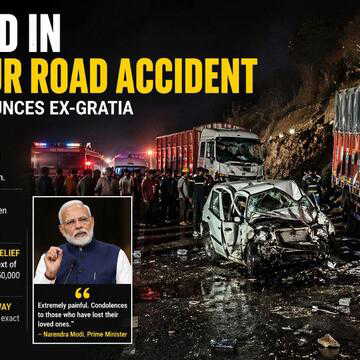
Also Read | At least 11 people killed in Mirzapur horror crash as truck loses control on slope; PM Modi expresses grief
It said that gap, according to the complaints, appears to be helping some schools push more expensive alternatives. The commission said similar grievances have surfaced in multiple states, with some authorities already taking action, suggesting a wider pattern of rising education costs and commercialisation in schooling.
Such tactics can place a disproportionate financial burden, particularly on families from economically poorer regions.