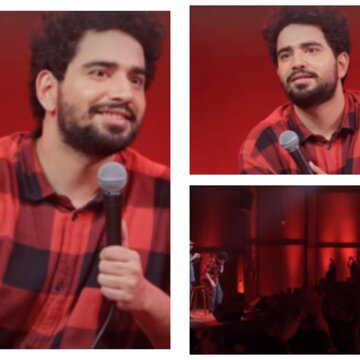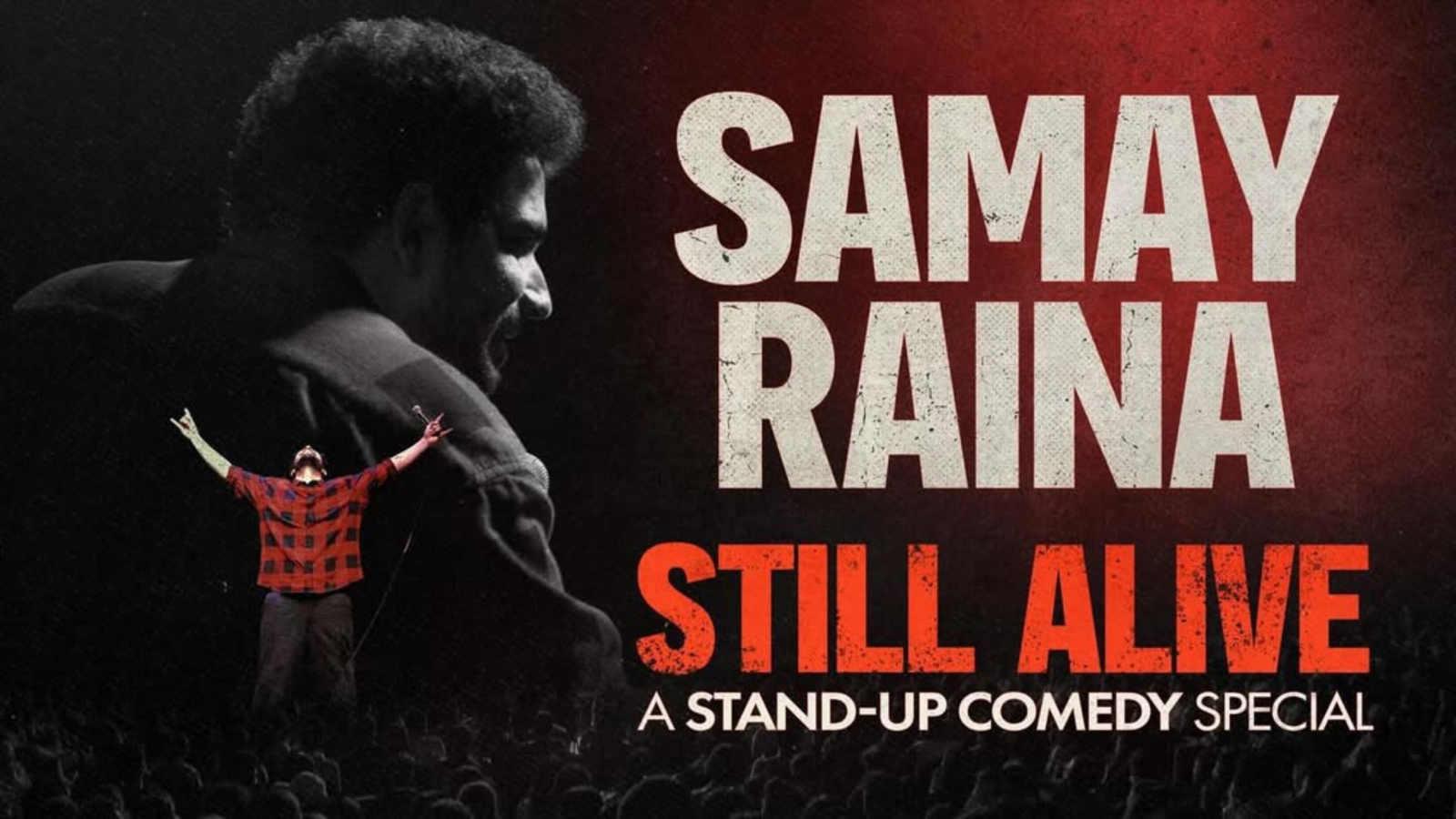
Just this week, Samay Raina steps onto the stage not just to entertain, but to confront. His latest stand-up, 'Samay Raina Still Alive' set doesn’t chase easy laughs; it wrestles with the chaos of the internet age. What is born is greater than comedy? Perhaps yes, perhaps not.
Cancel culture gets a reality check
Raina directly addresses the wave of backlash he has faced in recent months. Instead of dodging criticism, he leans into it, mocking the very idea of being “cancelled.” His central argument is simple: cancel culture in India is loud, but rarely lasting. The audience, he suggests, ultimately decides relevance, not outrage cycles.
Self-deprecation as a shield
A recurring strength in Raina’s performance is his ability to turn criticism inward. He jokes about his own missteps, controversies, and even his public persona. This self-awareness disarms critics while making the audience feel in on the joke rather than targeted by it.
Also Read | Samay Raina hits ‘Unpause’ — Latent season 2 loading
Internet vs reality
One of the most compelling bits contrasts online outrage with real-world indifference. Raina highlights how digital mobs often amplify issues that barely register outside social media bubbles. The takeaway is clear: the internet isn’t always a reflection of ground reality; it is often a distortion.
The fine line between edgy and offensive
Raina walks a tightrope throughout the set, deliberately pushing boundaries. But he also acknowledges that comedy today exists under scrutiny like never before. His performance raises a larger question: should comedians self-censor, or is discomfort an essential part of satire?
Owning the narrative
Perhaps the strongest takeaway is control. Instead of letting critics define him, Raina reclaims his story through humour. By addressing controversies head-on, he shifts from being the subject of discussion to the one leading it.
Also Read | Samay Raina fires back at critics in ‘Still Alive’ with sharp, unfiltered jabs
A shift from comedian to commentator
Beyond the punchlines, what stands out in this set is Samay Raina’s evolution. He is no longer just delivering jokes for laughter; he is framing arguments. The structure of the set feels closer to a monologue on culture than a traditional stand-up routine. This shift mirrors a broader global trend where comedians are increasingly doubling up as social critics, using humour as a vehicle for commentary.
Audience complicity in outrage
Raina subtly flips the lens back onto viewers. He suggests that outrage culture survives because audiences participate in it by sharing clips, reacting instantly, and feeding algorithms. In doing so, he doesn’t just critique cancel culture as an external force but frames it as a collective behaviour. The implication is uncomfortable: the same audience that laughs at jokes may also be responsible for amplifying the backlash.
A key undercurrent in the set is timing: when to speak, when to stay silent, and when to respond. Raina’s comeback itself is part of the narrative. By returning with a full-length stand-up video instead of fragmented social media responses, he leverages the attention economy on his own terms. It is a strategic move, suggesting that long-form content still holds power in an age dominated by reels and short clips.
The set also indirectly critiques platforms like YouTube and Instagram, where context often gets lost. Raina points out how short clips can strip jokes of nuance, turning them into viral controversies. This raises an important question about whether the medium itself is partly responsible for misunderstandings and whether comedians must now adapt their craft to survive in it.
Also Read | Raaka first look out: Allu Arjun stuns in bold avatar in Atlee’s film
Resilience as a brand
Another subtle but important takeaway is how resilience itself becomes part of a creator’s identity. Raina doesn’t just recover from controversy; he incorporates it into his persona. This transformation from a comedian under fire to one who thrives on fire is crucial in today’s creator economy, where narratives often matter as much as content.
What makes this stand-up special isn’t just the jokes; it is the timing. India’s comedy scene has been navigating an increasingly sensitive environment, where legal scrutiny, public sentiment, and platform policies intersect. In this context, Samay Raina’s set feels like both a response and a provocation.
It also reflects a generational shift in audiences. Younger viewers are more aware of internet dynamics, more engaged in discourse, and yet more prone to quick reactions. Raina taps into this duality, acknowledging the chaos while benefiting from it.
At the same time, the set raises an enduring question: can comedy remain fearless without becoming reckless? Raina doesn’t offer a clear answer, but he demonstrates that navigating this tension is now part of the craft itself
Love it or hate it, this isn’t a set you can ignore. Samay Raina isn’t just trying to make people laugh; he is trying to make them react, think, and perhaps even argue. And in today’s digital landscape, that might be the most powerful punchline of all.