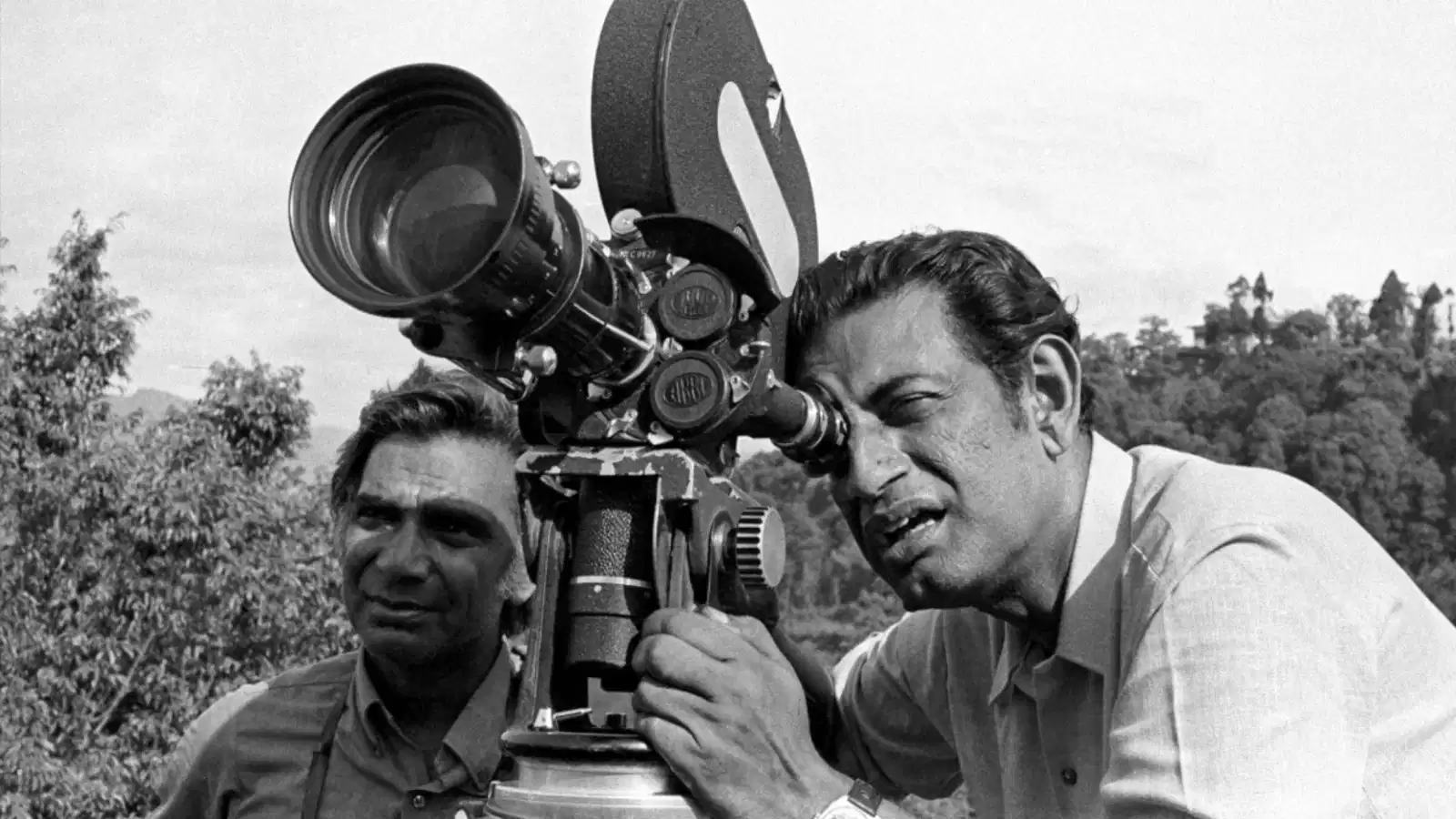
There are filmmakers who tell stories, and then there are those who quietly reshape how stories are told. Satyajit Ray belongs to the latter. Born on May 2, 1921, he created a world of cinema that found meaning in the smallest of moments, where silence carried weight and ordinary lives unfolded with extraordinary depth. His films did not chase grandeur, yet they travelled across borders, leaving a lasting impression on audiences and filmmakers alike.
Years later, that influence has not dimmed. If anything, it feels more relevant with time. As his birth anniversary is observed, it becomes the perfect moment to revisit a body of work that continues to define cinematic storytelling.

Here are some of his films that reflect the richness and lasting resonance of his vision:
The Apu Trilogy: A life in three acts
Pather Panchali (1955) introduces Apu’s childhood in rural Bengal, portraying a family’s struggle with poverty through a deeply sensitive lens.
Aparajito (1956) follows Apu and his mother in Varanasi, focusing on the emotional distance that grows between them as he pursues education.
Apur Sansar (1959) completes the story, exploring adulthood, marriage, and fatherhood, capturing themes of loss and rediscovery.

Women, desire and quiet rebellion
Charulata (1964), set in 1870s Calcutta, portrays a lonely woman whose life shifts with the arrival of her husband’s cousin. It delicately reflects longing and independence.
Mahanagar (1963) traces a housewife stepping into the workforce, highlighting changing family roles and urban realities.

Fantasy, mystery and adventure
Goopy Gyne Bagha Byne (1969) blends fantasy and satire, telling the story of two musicians granted magical powers.
Sonar Kella (1974) brings detective Feluda into a gripping mystery set against Rajasthan’s striking landscape.
Hirak Rajar Deshe (1980) follows Goopy and Bagha as they arrive in a kingdom ruled by a tyrant king, where music and wit become tools to challenge oppression

Fading glory and the weight of time
Jalsaghar (1958) presents the fall of an aristocrat clinging to fading glory, set against a rich musical backdrop.
Agantuk (1991), Ray’s final film, unfolds as a philosophical exchange sparked by a mysterious relative’s visit, raising questions about civilization and identity.