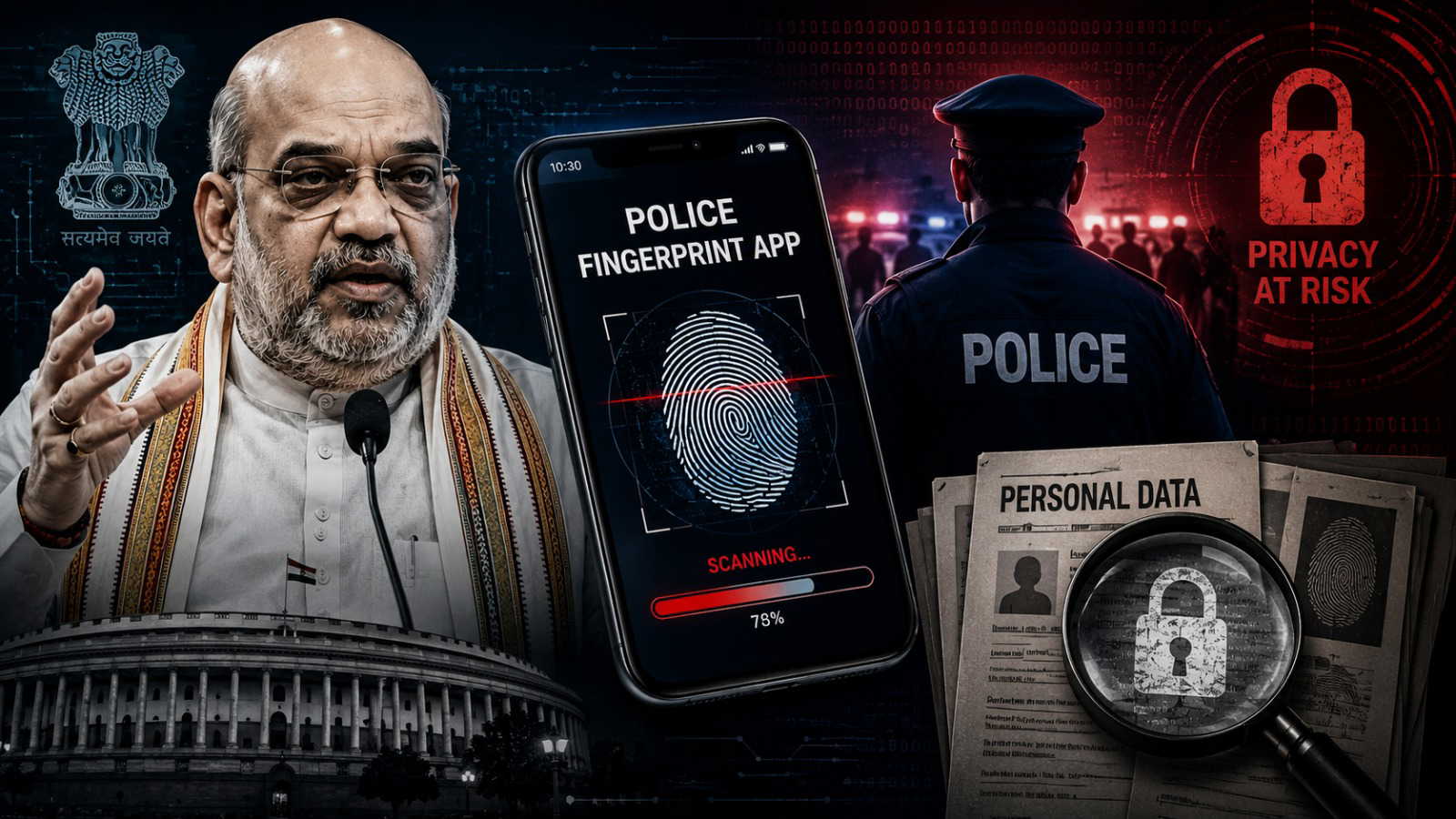
Union Home Minister Amit Shah has launched a mobile application connected to the National Automated Fingerprint Identification System (NAFIS), allowing police personnel and investigative agencies to conduct fingerprint-based identity verification directly from the field.
The new tool is designed to improve the speed and efficiency of criminal investigations by enabling officers to match fingerprints against a national database without needing to transport individuals to police stations for verification.
However, the launch has also triggered discussions around privacy, surveillance and the safeguards governing the collection and use of biometric data.
What is the new fingerprint app?
The application is an extension of the National Automated Fingerprint Identification System, or NAFIS, a nationwide biometric database maintained by law enforcement authorities.
Using a smartphone-linked fingerprint scanner, authorised officers can capture fingerprints and compare them with records stored in the national database. The technology aims to help investigators quickly identify suspects, repeat offenders and individuals with criminal records.
Officials say the system can significantly reduce the time required for identity verification and criminal record checks.
What is NAFIS?
National Crime Records Bureau developed NAFIS as a centralised fingerprint database to modernise criminal identification processes across India.
The system digitally stores fingerprint records collected by law enforcement agencies and enables faster information sharing between states and investigative units.
Authorities have described it as an important step toward improving policing through technology and reducing delays in criminal investigations.
HM Amit Shah has launched Abhigyan app that lets police collect thumb impressions and instantly check for pending criminal records of individuals linked to a database of 1.3 crore criminal suspects and convicts. pic.twitter.com/9sLExJp5iS
— Karthik Reddy (@bykarthikreddy) June 20, 2026
How will the app be used?
According to officials, authorised police personnel and investigation agencies can use the app during field operations to verify identities in real time.
The system is expected to be particularly useful in identifying individuals who provide false identities, tracing wanted suspects and confirming the identities of people already listed in criminal databases.
Also Read | UAE passport services for Indians to remain closed for five days
The app is intended for official law-enforcement use and is connected to existing criminal identification infrastructure.
Why has it sparked debate?
Civil liberties groups and privacy advocates have raised concerns about the potential expansion of biometric surveillance and the possibility of misuse if adequate safeguards are not in place.
As per multiple reports, critics argue that stronger transparency measures, data protection mechanisms and oversight procedures are needed to ensure that biometric information is collected and used responsibly.
Supporters, meanwhile, contend that the technology can improve public safety and make investigations more efficient when used within legal frameworks.
Technology and policing
The launch reflects a broader trend toward the use of digital tools and biometric technologies in law enforcement worldwide.
Also Read | Feels unreal, Indian woman compares Dubai’s spotless streets to disney world
Governments increasingly rely on databases, facial recognition systems and fingerprint identification technologies to assist investigations, though such measures often generate debates about balancing security needs with individual privacy rights.
As the app is rolled out, discussions are likely to continue regarding how biometric data should be governed and protected.
FAQs
What is the new fingerprint app launched by Amit Shah?
It is a mobile application linked to the National Automated Fingerprint Identification System (NAFIS) that allows authorised officers to verify fingerprints in the field.
What is NAFIS?
NAFIS is India's centralised fingerprint identification database developed by the National Crime Records Bureau.