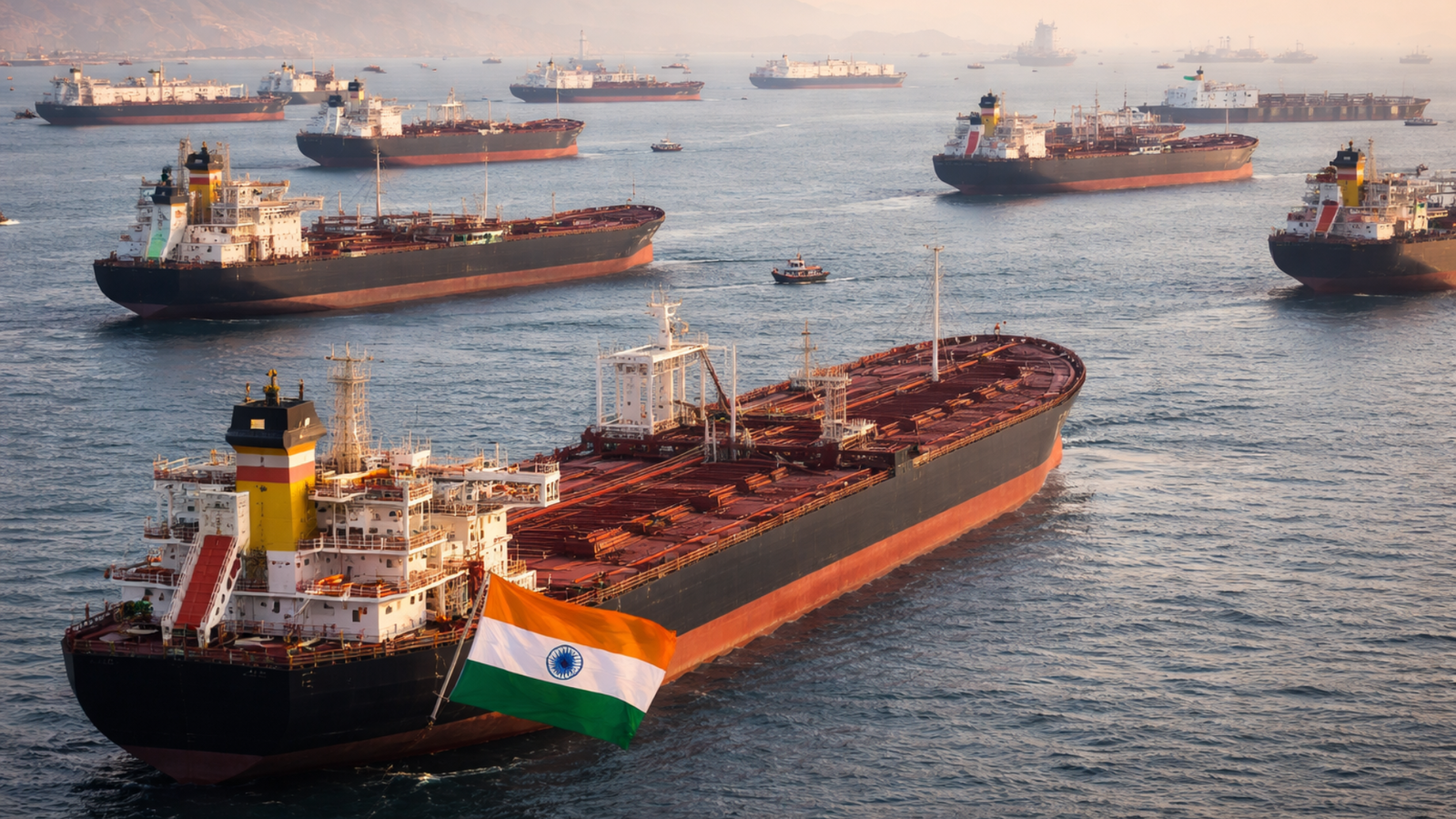
At least 18 India-flagged vessels carrying crude oil, LPG, and LNG remain stranded to the west of the Strait of Hormuz as the ongoing West Asia conflict continues to disrupt one of the world’s most critical shipping routes. Government officials confirmed that an additional 10 foreign-flagged ships transporting energy supplies bound for India are also stuck in the Persian Gulf region.
Speaking at a media briefing, Rajesh Kumar Sinha, Special Secretary in the Ministry of Ports, Shipping, and Waterways, detailed the composition of these vessels. Of the foreign-flagged ships, three are carrying LPG, four are crude oil tankers, and three are LNG carriers.
Cargo, crew and risk exposure
Among the India-flagged vessels, three are LPG tankers, one is an LNG carrier, and four are crude oil tankers. One empty tanker is currently being loaded with LPG. In total, 485 seafarers are on board these ships. The vessels are part of nearly 500 ships affected in and around the narrow strait as tensions escalated in the region.
“The government's priority is to ensure that Indian-flagged vessels carrying India-bound cargo are allowed to pass through the Strait of Hormuz,” Sinha said.
He also highlighted rising operational risks, noting that insurance premiums have surged sharply. “The affected area is not just the Strait of Hormuz; areas outside of it also fall under the high-risk area (HRA),” he said, adding that premiums have jumped from 0.04 per cent to as high as 0.7 per cent of the insured value. “In one case, the premium now is 0.7 per cent of the insured value, and it could be even higher.”
Also Read | Iran-bound aid flight to India hit in alleged US strike at Mashhad airport
Despite the disruption, eight India-flagged vessels have managed to safely exit the strait in recent days. These include LPG carriers BW TYR and BW ELM, which together transported about 94,000 tonnes of LPG. BW TYR is expected to reach Mumbai on March 31, while BW ELM is headed to New Mangalore, due on April 1.
Sinha said the immediate focus remains on securing the exit of stranded vessels. “Our first priority is to get Indian-flagged vessels out... We are yet to reach the stage where we start sending back vessels (for refills),” he noted.
▪️वर्तमान में 18 भारतीय जहाज़, जिनमें 485 नाविक सवार हैं, फारस की खाड़ी में संचालन कर रहे हैं और सभी सुरक्षित हैं। पिछले 24 घंटों में किसी भी प्रकार की समुद्री घटना की सूचना नहीं मिली है।
— PIB in Uttar Pradesh (@PibLucknow) March 30, 2026
▪️दो #LPG वाहक जहाज़ BWTYR और BW ELM कुल 94,000 मीट्रिक टन एलपीजी लेकर होर्मुज़ जलडमरूमध्य… pic.twitter.com/H8m7cTutgx
Energy security concerns grow
The disruption has significant implications for India’s energy supply. Around 40 per cent of India’s crude oil, over 50 per cent of LNG, and nearly 90 per cent of LPG imports pass through the Strait of Hormuz. The government is closely monitoring the situation and engaging diplomatically to ensure safe transit.
“All Indian seafarers in the region are safe, and no incident involving Indian-flagged vessels has been reported in the past 24 hours. The situation has remained stable over the last 72 hours as well,” Sinha said.
Also Read | ‘No place for self-serving politics’: PM Modi calls for unity amid West Asia crisis, warns against rumours
India’s energy security efforts amid war
Despite this disruption, several Indian ships have successfully crossed the strait in the last few days. Four LPG ships, including Pine Gas and Jag Vasant, have delivered a total of 92,612 tonnes of LPG to Indian ports between March 26 and March 28. Earlier, MT Shivalik and MT Nanda Devi had transported a total of 92,712 tonnes of LPG. These ships had reached Indian ports on March 16 and 17. MT Shivalik had reached Mundra on March 16, while MT Nanda Devi had reached Kandla on March 17.
Apart from this, the oil tanker Jag Laadki, carrying 80,886 tonnes of crude oil from the UAE has successfully crossed the strait and has already reached Mundra. The oil tanker is carrying crude oil from the UAE for Indian refineries. In addition to this, Jag Prakash, carrying gasoline from Oman for Africa, has also successfully crossed the strait and is on its way to Tanzania.
When the conflict began, 28 vessels were flying the flag of India in the Strait of Hormuz. Out of these, 24 vessels were on the western side, and four vessels were on the eastern side. In the recent situation, eight vessels have been able to leave the area.
This is a worrying situation for India because the country relies on the route for the importation of oil. It is seen that 40 per cent of the oil, over 50 per cent of the LNG, and almost 90 per cent of the LPG imported by the country pass through the Strait of Hormuz. The government is in talks with Iran at the diplomatic level.