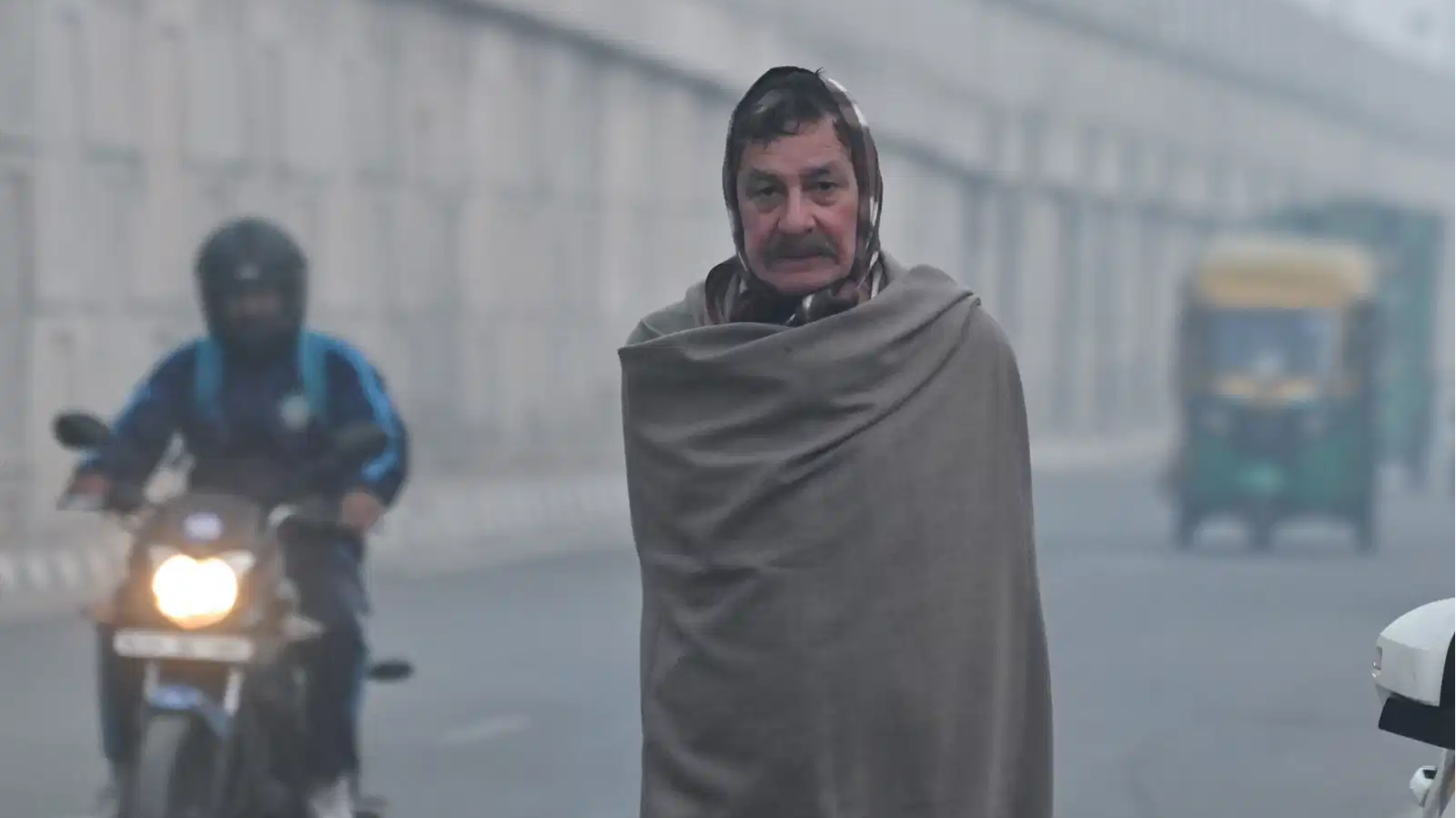
Large parts of north India are in the grip of an intense cold wave, with Delhi and Gurugram recording temperatures lower than several Himalayan hill stations this week. Gurugram touched 0.6 degrees Celsius on Monday, its coldest January morning in nearly five decades, while Delhi’s minimum temperature fell to 3 degrees Celsius on Tuesday.
According to data from the India Meteorological Department (IMD), Gurugram’s reading matched its previous low recorded on January 22, 1977. The city has dipped below 1 degree Celsius only three times in recorded history. On December 5, 1966, the temperature dropped to minus 0.4 degrees Celsius, followed by 0 degrees on January 11, 1970, and 0.3 degrees on January 22, 1979.
Also Read | Amid trade tariff strain, new US ambassador Sergio Gor backs Modi-Trump bond
On the same day, many hill stations remained significantly warmer. Shimla recorded a minimum temperature of 8.8 degrees Celsius, while Mussoorie stood at 7.7 degrees. Other hill locations such as Mukteshwar, Jollygrant and Tehri reported around 4.1 degrees Celsius. Kangra and Palampur in Himachal Pradesh were at 3 degrees Celsius, warmer than the National Capital Region.
Clear skies over plains, cloud cover in the hills
Explaining the unusual temperature pattern, IMD director general M Mohapatra said cloud cover over the higher Himalayan reaches played a key role. Speaking to the media, Mohapatra said that cloudy nights prevented heat from escaping, keeping minimum temperatures higher in hill regions.
In contrast, the plains experienced clear skies along with cold northwesterly winds. These conditions allowed strong radiative cooling during the night, leading to a sharp fall in temperatures across Delhi, Haryana and neighbouring areas.
Several other cities in the plains also recorded near-freezing temperatures. Hisar reported 2.6 degrees Celsius, Amritsar 1.1 degrees, Churu 1.3 degrees, Karnal 3.5 degrees and Meerut 4.5 degrees.
Also Read | INSV Kaundinya flies Tricolour across Arabian Sea, nears Muscat with 'men of steel'
The cold wave left visible signs across Gurugram and nearby areas, with frost forming on crops, grasslands and vehicle windshields. Residents reported dense fog and poor visibility during early morning hours, making travel hazardous.
The IMD has issued an orange alert until January 13, warning of cold wave to severe cold wave conditions, dense fog and ground frost in parts of Delhi, Haryana and adjoining states. Health advisories caution against prolonged exposure, especially for children and the elderly, due to the risk of respiratory illness and frostbite.
Meteorologists said temperatures are likely to remain abnormally low for the next few days. A gradual rise of 2 to 4 degrees Celsius is expected later in the week as a fresh western disturbance approaches the western Himalayan region.