India is working through the Ministry of External Affairs to keep its ships moving through the Strait of Hormuz, a critical passage that has been severely disrupted by the war between the United States, Israel and Iran, a senior shipping ministry official said on Friday.
Opesh Kumar Sharma, director of shipping at the Ministry of Ports, Shipping and Waterways, said the government would not disclose every aspect of the process “for obvious reasons" but confirmed that coordination is being handled through the MEA. He also said priority decisions are taken in consultation with the Ministry of Petroleum and Natural Gas and the Ministry of Fertilisers.
Also Read | ABVP passes resolution congratulating West Bengal people for 'restoring democratic values'
"Merchant vessel carrying crude oil safely transited Strait of Hormuz and will arrive at Vishakhapatnam port on June 3."
— News Arena India (@NewsArenaIndia) May 29, 2026
- Shipping Director at Ministry of Ports pic.twitter.com/d8FxQU3WiJ
A discreet convoy under watchful eyes
Sharma said there are about 13 Indian-flagged vessels in the Strait of Hormuz, including one LPG tanker, five crude oil tankers, one chemical or product tanker, three container ships, two bulk carriers and one dredger.
Asked whether public ship-tracking data affects movement, he said commercial tracking platforms are open to subscribers and that public data can be used in different ways depending on intent. He added that, at present, the data is helping authorities and the public track the ships.
VIDEO | Delhi: MEA spokesperson Randhir Jaiswal responds to a media query regarding updates on Indian vessels stuck in Strait of Hormuz.
— Press Trust of India (@PTI_News) May 29, 2026
He says, “It is our understanding that 11 Indian-flagged vessels are still in the Persian Gulf region. Fourteen of these ships that were in… pic.twitter.com/z0R3e4NPRI
The narrow channel and the wider stakes
The government’s disclosures come amid continuing disruption in the waterway, which normally carries about one-fifth of global oil and liquefied natural gas shipments.
Reuters reported on May 21 that India’s priority was to bring back its stranded ships before sending any more vessels to load fuel, quoting additional secretary Mukesh Mangal as saying: “Our priority is to get all our ships out of the Strait of Hormuz.”
13 Indian-flagged vessels and one Indian-owned vessel were still stuck on the west side of the strait at that time, while 13 energy-carrying vessels had already transited out since the effective closure began after U.S.-Israeli strikes on Iran on February 28.
Before the conflict, India sourced more than 40% of its crude oil imports and about 90% of its LPG from the Middle East through Hormuz.
Also Read | 'PM personally supervising': Centre tells SC as court seeks answers on NEET-UG leak probe
Yet the merchantmen press onward
Separate reports indicated that Indian-bound tankers continued to move through the route despite the instability.
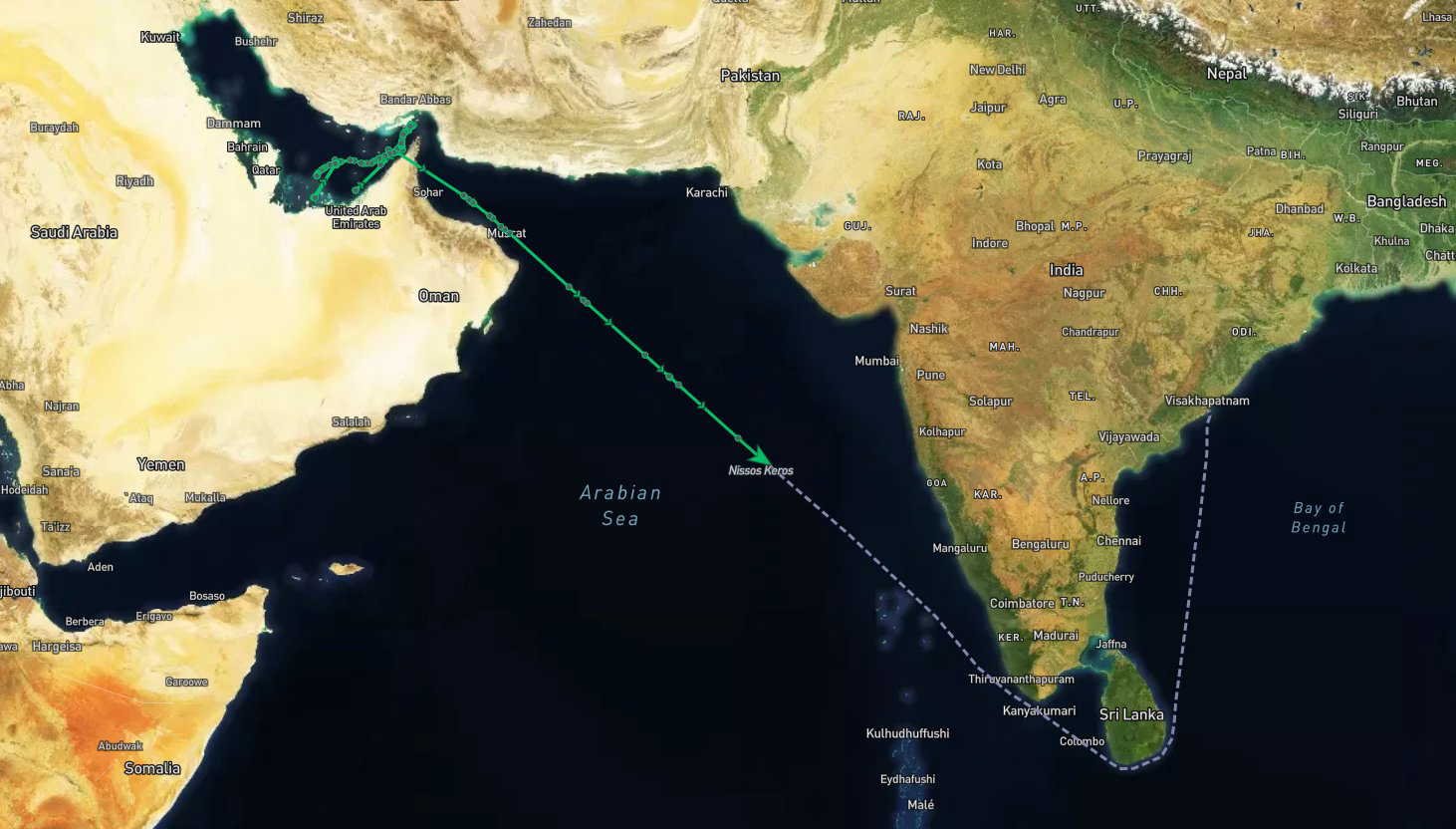
The India-bound tanker Nissos Keros cleared the Strait of Hormuz and was expected to reach Visakhapatnam on June 3. The vessel had left Shajrah on May 21, and Iran’s IRGC Navy had allowed 23 commercial vessels, including oil tankers and container ships, to pass through the strait in a 24-hour period.