An Allahabad High Court judge has come under scrutiny after granting bail in almost all dowry death cases heard by his bench over three months in 2025, according to a report by The Indian Express.
Justice Pankaj Bhatia granted bail in 508 out of 510 publicly available regular bail orders in dowry death cases between October and December 2025, amounting to 99.61% of the total cases. The report noted that the structure, language, and even the bond amounts in many of these orders appeared largely similar, despite varying circumstances surrounding the deaths.
ALSO READ | Delhi HC orders takedown of Epstein-linked posts about Hardeep Puri’s daughter
Supreme Court pulls up bail order
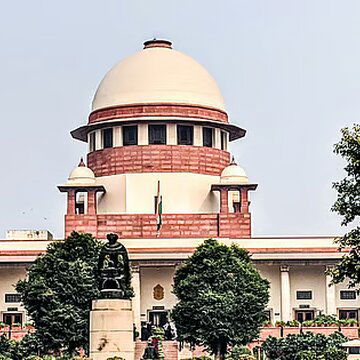
The development comes days after the Supreme Court of India criticised one of Justice Bhatia’s bail orders. On February 9, a Bench of Justices J B Pardiwala and K V Vishwanathan set aside the order, calling it “most shocking and disappointing.”
“We fail to understand on plain reading of the impugned order as to what the High Court is trying to convey… what weighed with the High Court in exercising its discretion in favour of the accused for the purpose of grant of bail in a very serious crime like dowry death,” the court observed.
The Supreme Court cancelled the bail in that case and directed the accused to surrender. It highlighted that the postmortem report attributed the woman’s death to strangulation and that the incident occurred within three months of marriage, invoking provisions under the Bharatiya Sakshya Adhiniyam.
ALSO READ | 'Not only Delhi needs green cover', Supreme Court calls for nationwide approach
The court further said that the High Court should have carefully examined the nature of the offence, prescribed punishment, relationship between the accused and the deceased, place of occurrence, and medical evidence before granting bail. Following the remarks, Justice Bhatia reportedly requested the Chief Justice to relieve him of bail matters, stating that the Supreme Court’s observations had a “huge demoralising and chilling effect” on him.
Patterns in bail orders raise concerns
The case that drew the Supreme Court’s attention involved the death of 28-year-old Sushma Devi from Shrawasti district, whose body was found in the verandah of her matrimonial home less than two months after her marriage. Her father alleged that Rs 3.5 lakh was given during the wedding and that a car was later demanded by the groom’s family.
As per the report, a Sessions Court had earlier denied bail, citing postmortem findings of “asphyxia due to antemortem strangulation” and visible injury marks.
Across the 510 cases analysed, charges were filed under Section 304B of the IPC- or Section 80 of the Bharatiya Nyaya Sanhita, along with Sections 3 and 4 of the Dowry Prohibition Act. The accused included 362 husbands, 68 mothers-in-law, 63 fathers-in-law, and other relatives.
The report also found that in 356 cases, the accused had spent less than a year in custody before being granted bail. In six cases, the deceased women were pregnant at the time of death. Postmortem findings cited hanging as the cause of death in 340 cases, followed by poison consumption in 27 cases, strangulation in 16, burn injuries in 11, throttling and head injuries in seven each, and drowning in four cases.
In many orders, the reasoning for granting bail cited time spent in custody, lack of criminal antecedents, and the observation that there was “nothing on record” to suggest harassment “soon before death", a line that reportedly appeared in 253 orders.