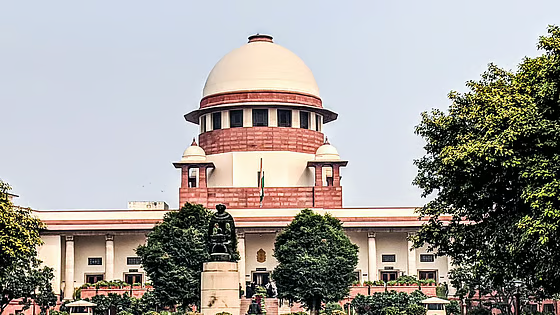
The Supreme Court on Wednesday allowed passive euthanasia for a 31-year-old man who has remained in a permanent vegetative state for more than a decade, calling it a decision taken in the patient's best interest and dignity, Hindustan Times reported.
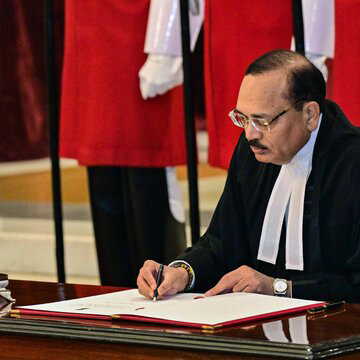
The ruling came in a petition filed by the parents of Harish Rana, a resident of Ghaziabad in Uttar Pradesh and a former student of Panjab University. A bench of Justices JB Pardiwala and KV Viswanathan delivered separate but concurring opinions permitting the withdrawal of clinically assisted nutrition and hydration (CANH) under strict medical supervision.
The court directed that the process be carried out in the palliative care unit of the All India Institute of Medical Sciences (AIIMS), Delhi.
Who is Harish Rana?
Harish Rana, a resident of Ghaziabad in Uttar Pradesh, has been in a vegetative state for more than a decade after suffering severe head injuries in 2013.
At the time, he was studying at Panjab University and was staying in a paying guest accommodation. That year, he fell from the fourth floor of the building, sustaining serious injuries to his head. The accident left him in a coma, and he has remained unresponsive since then, HT reported.
Harish depends on feeding tubes for nutrition and hydration. Although he is not on mechanical ventilation, he requires round-the-clock care. Doctors have reported no neurological improvement in his condition for over 10 years.
After years of treatment and therapy, his parents approached the court seeking permission to withdraw life-sustaining treatment. They argued that continued medical intervention served no therapeutic purpose and only prolonged suffering.
Court outlines principles on life-sustaining treatment
While reading portions of the judgment in court, the bench clarified that CANH cannot be treated as ordinary care. It said, "CANH cannot be regarded as a basic means for primary care, but it is a technologically induced medical intervention that is prescribed and supervised by trained healthcare professionals, even when administered at home. Therefore, it is permissible for the primary and secondary medical boards to exercise their informed decision on withdrawing such medical support."
Also Read | Centre invokes Essential Commodities Act to regulate natural gas supply amid West Asia conflict
The court said the key question in such cases is not whether the patient should die but whether medical intervention should continue when recovery is medically impossible. The bench stated, "On the best interest principle, we have held that the correct inquiry would not be whether the patient should die but whether his life should be prolonged under the current circumstances and medical interventions," HT reported.
It also stressed that withdrawing life-sustaining treatment should not be seen as abandoning a patient. "The withdrawal has to be carried out in a humane and sensitive manner. It cannot be an abandonment of a patient, but it has to be done in a structured manner that minimises pain and ensures dignity."
Medical reports and family plea
Medical boards examined Rana's condition during the case. A primary board reported that he had 100 percent disability with quadriplegia and negligible chances of recovery. A secondary board formed at AIIMS later concluded that his condition was irreversible with little possibility of improvement.
Also Read | Delhi High Court serves notice to TMC MP Mahua Moitra over pet Rottweiler Henry custody dispute
Hindustan Times reported that the court noted that Rana's parents and younger brother unanimously requested that treatment be withdrawn as it no longer served any therapeutic purpose.
While allowing the plea, the Supreme Court also issued procedural safeguards for future cases and asked chief medical officers across districts to prepare expert panels to evaluate passive euthanasia requests. It also urged the Union government to consider framing a law on passive euthanasia, saying, "We have urged the Union of India to consider framing legislation on passive euthanasia since there is a legislative vacuum."