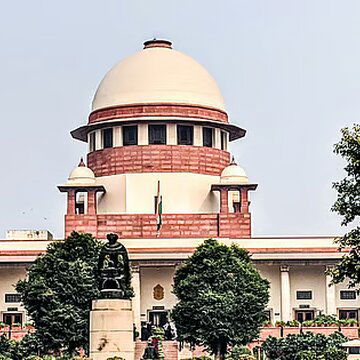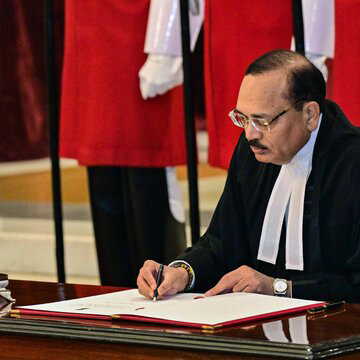
The Supreme Court on Friday declined to entertain a public interest litigation (PIL) for the formulation of a national policy for providing menstrual leaves to women students and employees. The Supreme Court expressed concern that making it mandatory for employers to provide leaves to women employees during this time would have an unintended effect on how employers view women employees.
The PIL was heard by a Supreme Court bench led by Chief Justice Surya Kant and Justice Joymalya Bagchi. During the hearing of the PIL filed by Shailendra Mani Tripathi, the Supreme Court observed that even though the issue was important, it was not inclined to entertain the PIL.
Also Read | Who is Harish Rana? Supreme Court allows passive euthanasia for man in vegetative state for over a decade
The judges noted that mandating menstrual leave by law could potentially influence how employers view female employees. The Chief Justice observed that making leaves mandatory would dissuade employers from hiring women employees.
"These pleas are made to create fear, to call women inferior, that menstruation is something bad happening to them..this is an affirmative right...but think about the employer who needs to give paid leave," the bench said.
Representation may be considered by authorities
While declining to entertain the petition, the Supreme Court stated that the competent authority could examine the matter if a representation had already been submitted. The court said authorities may consider the request and evaluate the possibility of framing a policy after consulting all relevant stakeholders.
The PIL was therefore disposed of with a direction that the authorities take an appropriate decision regarding the representation.
Debate over policy versus voluntary initiatives
During the hearing, senior advocate M R Shamshad, appearing for the petitioner, informed the court that certain states and institutions have already taken steps to accommodate menstrual leave. He referred to Kerala, where relaxation has been introduced in schools, and noted that some private companies have voluntarily offered such leave to employees.
Responding to this argument, the Chief Justice said voluntary initiatives were welcome but warned against making such provisions compulsory under law.
"Voluntarily given is excellent. The moment you say it is compulsory in law, nobody will give them jobs. Nobody will take them in the judiciary or government jobs; their career will be over. They will say you should sit at home after informing everyone," the CJI said.
Also Read | Centre invokes Essential Commodities Act to regulate natural gas supply amid West Asia conflict
The bench also pointed out that the petitioner had already submitted a representation to the authorities concerned. In such circumstances, it said there was no need to repeatedly approach the court seeking a mandamus.
The court concluded that the appropriate authorities should consider the representation and take a decision in accordance with the law.