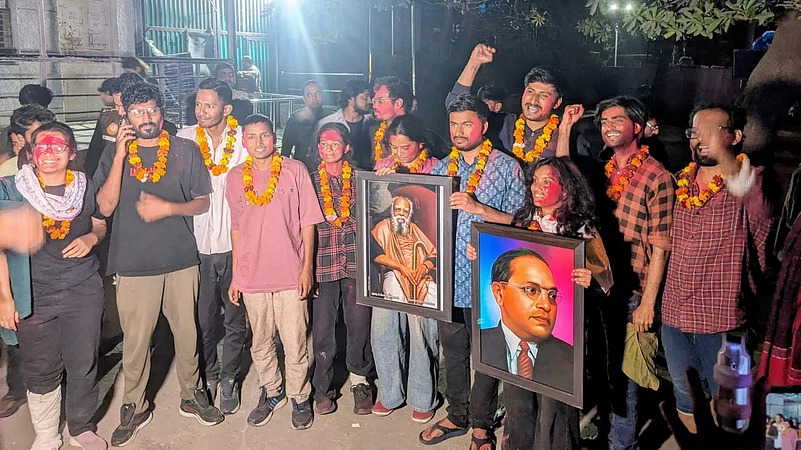
In a significant order underscoring the primacy of personal liberty, a Delhi court on Sunday directed the immediate release of 14 students of Jawaharlal Nehru University Students’ Union (JNUSU) who had been granted bail days earlier but remained in custody due to procedural delays. The court observed that the right to liberty cannot be eclipsed by administrative formalities, especially when the accused are young students with academic futures at stake.
The order was passed by Judicial Magistrate (First Class) Ravi at Patiala House Courts, who emphasised that while the state has legitimate interests in ensuring due process, these must be balanced against constitutional protections.
The 14 students were among 51 detained during protests near the main gate of Jawaharlal Nehru University last week. The march, organised by the JNUSU towards the Ministry of Education, sought the resignation of the vice-chancellor over alleged caste-related remarks made in a podcast interview. Following clashes near the university entrance, 14 students including three JNUSU office-bearers, were arrested. Earlier, while granting bail, Judicial Magistrate Animesh Kumar had noted that although allegations of assaulting police personnel were serious, the accused were students and not habitual offenders. However, verification of their permanent residential addresses was made a precondition for release. As many of the students hail from different parts of the country, the verification process proved time-consuming. In the absence of completed verification and furnished bail bonds, they were sent to 14-day judicial custody.
Also Read | ‘Allahabad hai bhai’: CJI Surya Kant’s Holi ‘bhang’ remark draws laughter in Supreme Court
Delay cannot defeat bail, says court
The students’ counsel, led by advocates Abhik Chimni and Sidharth Ganeshan, argued that their clients could not be kept behind bars indefinitely merely because verification procedures required time. They contended that continued custody despite bail amounted to punishment before trial.
The prosecution opposed the plea, stating that police teams had been dispatched across states to verify addresses and warned that without verification, there was a risk of the accused absconding. In its order, the court observed that while address verification is an important safeguard, it cannot operate as an obstacle that prolongs incarceration. Noting that the investigating officer attributed the delay to travel constraints and bank holidays, not to any fault of the accused. The magistrate ruled that the students should be released forthwith.
Also Read | 'Heads must roll': CJI Surya Kant slams NCERT over class 8 textbook row, Union government apologises
The court’s decision reiterates a foundational legal principle: bail, once granted, should not be rendered meaningless by procedural bottlenecks. By prioritising liberty and recognising the academic stakes for the young accused, the judiciary signalled that due process must not become a pretext for prolonged detention.