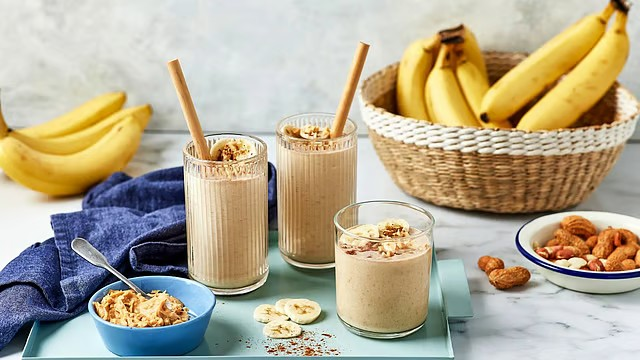
Busy mornings often leave little time for a proper breakfast, making smoothies a popular choice. A blend of oats, banana, almonds, raisins and strawberries feels like the perfect start — filling, nutritious and easy on digestion. With a balance of vitamins, protein and minerals, smoothies are often seen as a complete meal in a glass.
However, recent research suggests that adding banana to a smoothie may not always be the best idea.
A study published in the journal Food & Function has found that when banana is added to a smoothie, the body’s ability to absorb flavanols drops by nearly 84 percent. Flavanols are powerful antioxidants that play a key role in keeping the heart healthy, supporting brain function and reducing inflammation in the body.
Also Read | Where Christmas began, and what the story really means
Why banana becomes the problem
Researchers explain that bananas contain an enzyme called polyphenol oxidase (PPO). This enzyme is responsible for the brown spots that appear on bananas as they ripen. When foods rich in flavanols are mixed with banana, this enzyme reduces the effectiveness of those antioxidants and makes them harder for the body to absorb.
This means that while the smoothie may still be filling, some of its most valuable nutritional benefits are significantly reduced.
Should you stop adding banana to smoothies?
Nutritionists say there is no need to completely avoid bananas. Many foods contain polyphenol oxidase, and bananas remain an excellent source of potassium, vitamin B6 and dietary fibre.
Also Read | Black coffee isn’t the real issue — here’s how coffee affects your skin
What matters is food combination. If you are using flavanol-rich ingredients such as berries, apples or citrus fruits, it is better to avoid adding banana to the same smoothie. On days when banana is included, choose ingredients that are not rich in flavanols to ensure better nutrient absorption.
With small changes in ingredient pairing, smoothies can remain both healthy and effective.