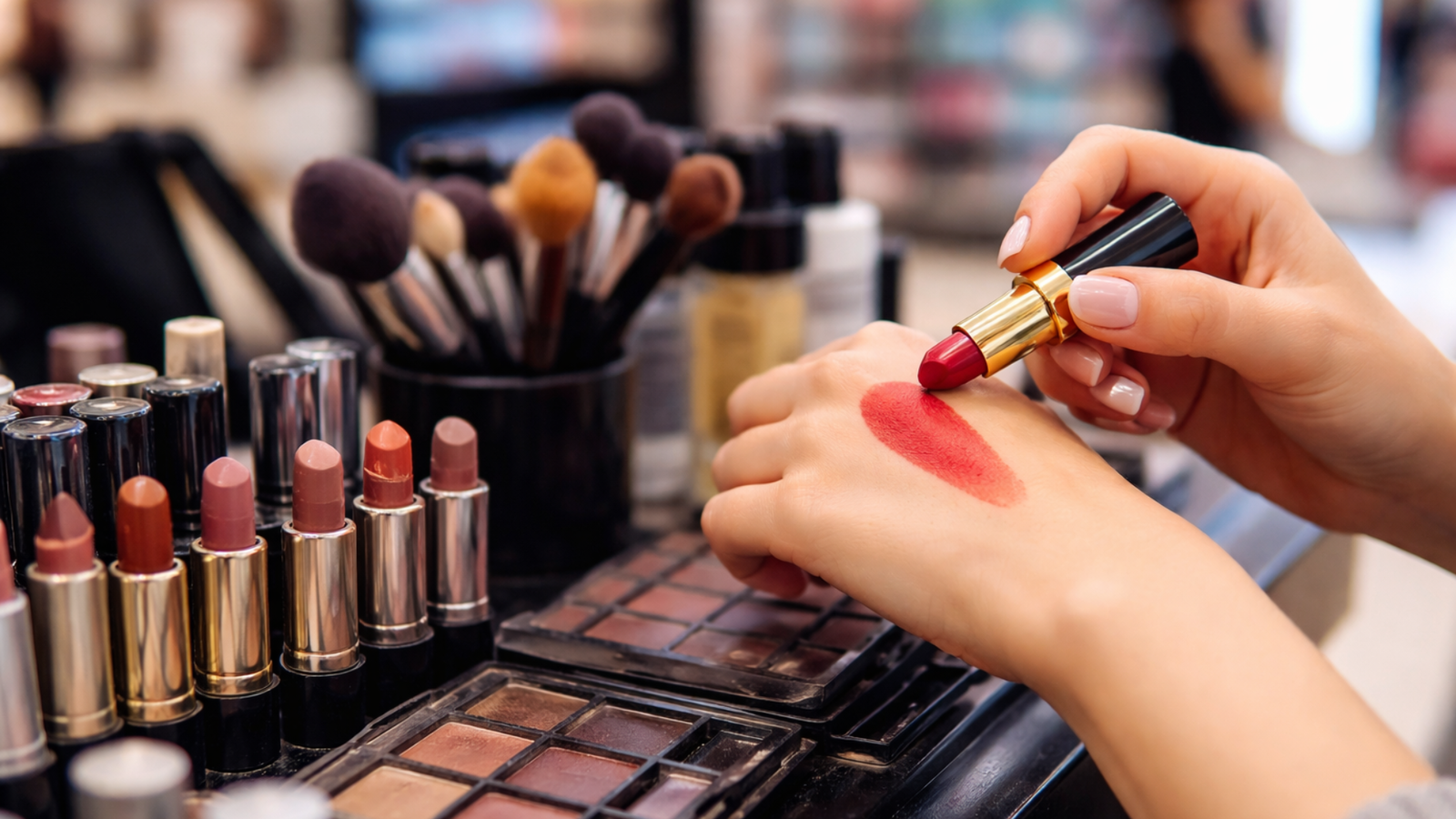
Makeup testers are used by multiple people throughout the day, often without consistent sanitation. With every use, oils, bacteria, and at times viruses are transferred onto the surface. Gradually, this leads to a buildup that cannot always be seen but can still affect the skin.
Experts warn that in high-traffic retail environments, shared testers can quickly turn into what dermatologists describe as a “petri dish” for bacteria and viruses.
The case that raised concerns
The issue drew wider attention after a case involving Sephora. Elena Davoyan, a California resident, filed a lawsuit claiming she developed oral herpes after using a lipstick tester at a Sephora store in 2015. According to the case, she had no prior history of cold sores and was later diagnosed with the virus after trying the sample. The lawsuit stated that the store failed to warn customers about the risks associated with shared testers and encouraged the use of open products.
The case gained viral attention at the time, amplifying concerns around hygiene practices in beauty retail spaces, though it was eventually settled with undisclosed terms.
Also Read | Dating someone with depression? The signs, emotional challenges and how to make it work
What science and experts say
Although such cases cannot always be proven with complete certainty, research shows that transmission is biologically possible under the right conditions. Dermatologist Joshua Zeichner notes that viruses such as herpes can survive in moist environments like lipsticks and foundations and may spread through direct contact with infected skin.
According to the Cleveland Clinic, the herpes simplex virus (HSV-1) can survive on damp surfaces like lipstick long enough to infect a new host, especially in shared-use settings.
While the risk of contracting herpes from a single use is not absolute, the presence of bacteria alone makes testers largely unsanitary.
Scientific studies support this concern. Research conducted by biological scientist Elizabeth Brooks found that between 67 per cent and 100 per cent of makeup testers showed bacterial contamination.
Also Read | World’s first ‘dinosaur leather’ bag unveiled, debate over authenticity begins
Other studies published in the Journal of Applied Microbiology suggest that nearly 70 to 90 per cent of used beauty products can contain microbes such as E. coli and Staphylococcus, reinforcing the scale of contamination in shared cosmetics.
Safer alternatives while shopping
Based on these findings, experts advise avoiding direct application of testers on the face. Using disposable applicators, swatching products on the hand, and requesting sanitised or single-use samples are considered safer options.
Experts also recommend simple hygiene practices such as sanitising hands after swatching, asking staff to remove the top layer of products, and avoiding testers that appear heavily used.
Even these measures are not entirely foolproof, as contamination may exist beneath the surface.