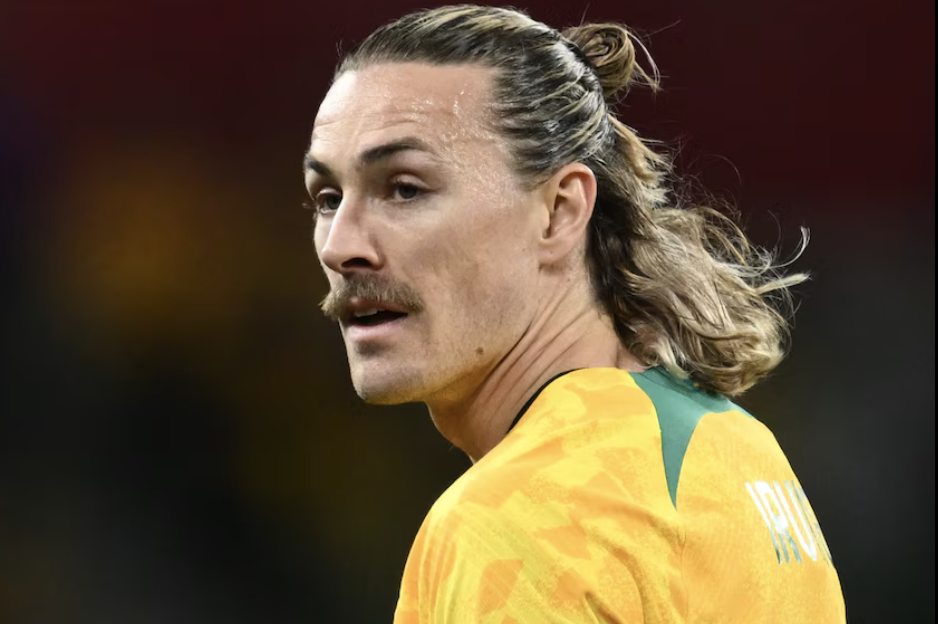
Jackson Irvine has delivered a sharp critique of FIFA, accusing the organisation of undermining its own values by awarding a peace prize to Donald Trump. The Australian midfielder said the decision risks damaging football’s credibility as a platform for unity and positive global influence.
Irvine, who is expected to feature in his third World Cup for the Socceroos, made the remarks amid growing scrutiny around the sport’s governance and its intersection with politics. His comments add to an increasingly vocal debate about the direction in which global football is heading.
A growing disconnect in the game
Speaking publicly, Irvine argued that such decisions contradict FIFA’s stated commitment to human rights and social responsibility. He described the award as a move that weakens the organisation’s efforts to position football as a unifying force.
The midfielder suggested that actions like these create a widening gap between the leadership of the sport and its grassroots foundations. For players and fans alike, he said, football risks losing its connection to the communities it represents.
Rising tensions before the World Cup
The controversy comes at a sensitive time, with the build-up to the 2026 World Cup already facing criticism over high costs and geopolitical tensions. Issues ranging from ticket pricing to international conflicts have added layers of complexity to what is traditionally seen as a celebration of sport.
Irvine’s remarks reflect broader concerns among players about how off-field decisions influence the perception of the game. He also pointed to ongoing debates around human rights, including the treatment of marginalised communities in different parts of the world.
Also Read | Kobbie Mainoo commits future to Manchester United with long-term contract
Players, politics and responsibility
While acknowledging that not all players are comfortable speaking out, Irvine has consistently advocated for athletes to use their platforms responsibly. He has previously been involved in campaigns highlighting labour rights and inclusivity, reinforcing his stance that football should contribute positively to society.
At the same time, he recognised the deeply polarised environment surrounding such issues, where public figures often face strong reactions regardless of their position. Despite this, Irvine maintained that difficult conversations are necessary if football is to uphold its broader values.
Also Read | Is PSG vs Bayern's nine-goal thriller the greatest Champions League game of all time?
As the World Cup approaches, the debate over the sport’s role beyond the pitch is only likely to intensify, with players like Irvine pushing for greater accountability from those at the top.