Global basketball is set for a significant shift as Asia and Europe prepare to host two major upcoming World Cups. The FIBA has awarded the 2030 and 2031 editions to Japan and France respectively, underlining the sport’s expanding global footprint.
Japan to host 2030 Women’s World Cup
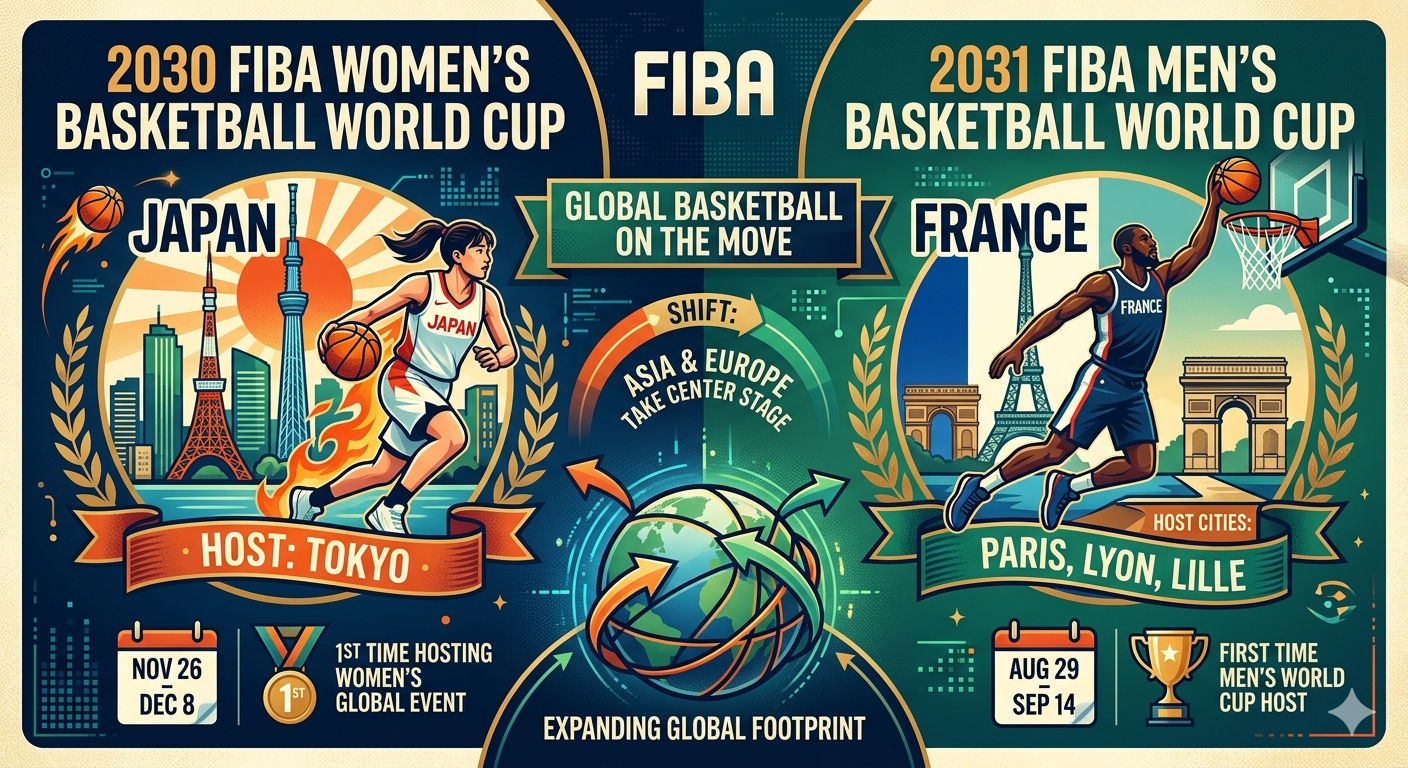
Japan will stage the 2030 FIBA Women’s Basketball World Cup, with Tokyo as the primary host city. The tournament is scheduled from November 26 to December 8, marking the first time Japan will organise the women’s global event.
The move reflects growing confidence in Japan’s ability to deliver major sporting events, following its successful hosting of global competitions in recent years. It also signals Asia’s rising importance in international basketball, both in terms of viewership and on-court competitiveness. Hosting the tournament at home could further accelerate the sport’s popularity in the country, especially after the national team’s recent strong performances on the global stage.
France to host the 2031 World Cup
France will host the 2031 FIBA Men’s Basketball World Cup, scheduled from August 29 to September 14. Matches will be held across key cities including Paris, Lyon, and Lille, with the final phase set to take place in the capital.
This will be the first time France hosts the men’s World Cup, adding to its growing portfolio as a major sporting hub. With established infrastructure and a strong basketball culture, the country is well-positioned to deliver a high-quality tournament. The event is also expected to attract global attention, particularly with France producing top-tier talent in recent years.
A global strategy in motion
FIBA’s decision highlights a broader strategy to expand basketball’s reach by combining established European markets with rapidly growing Asian regions. Both Japan and France offer strong infrastructure, experienced event management, and passionate fan bases.
These selections not only ensure high standards of organisation but also help deepen basketball’s global presence. As the sport continues to evolve, the 2030 and 2031 World Cups are expected to play a key role in shaping its international future.