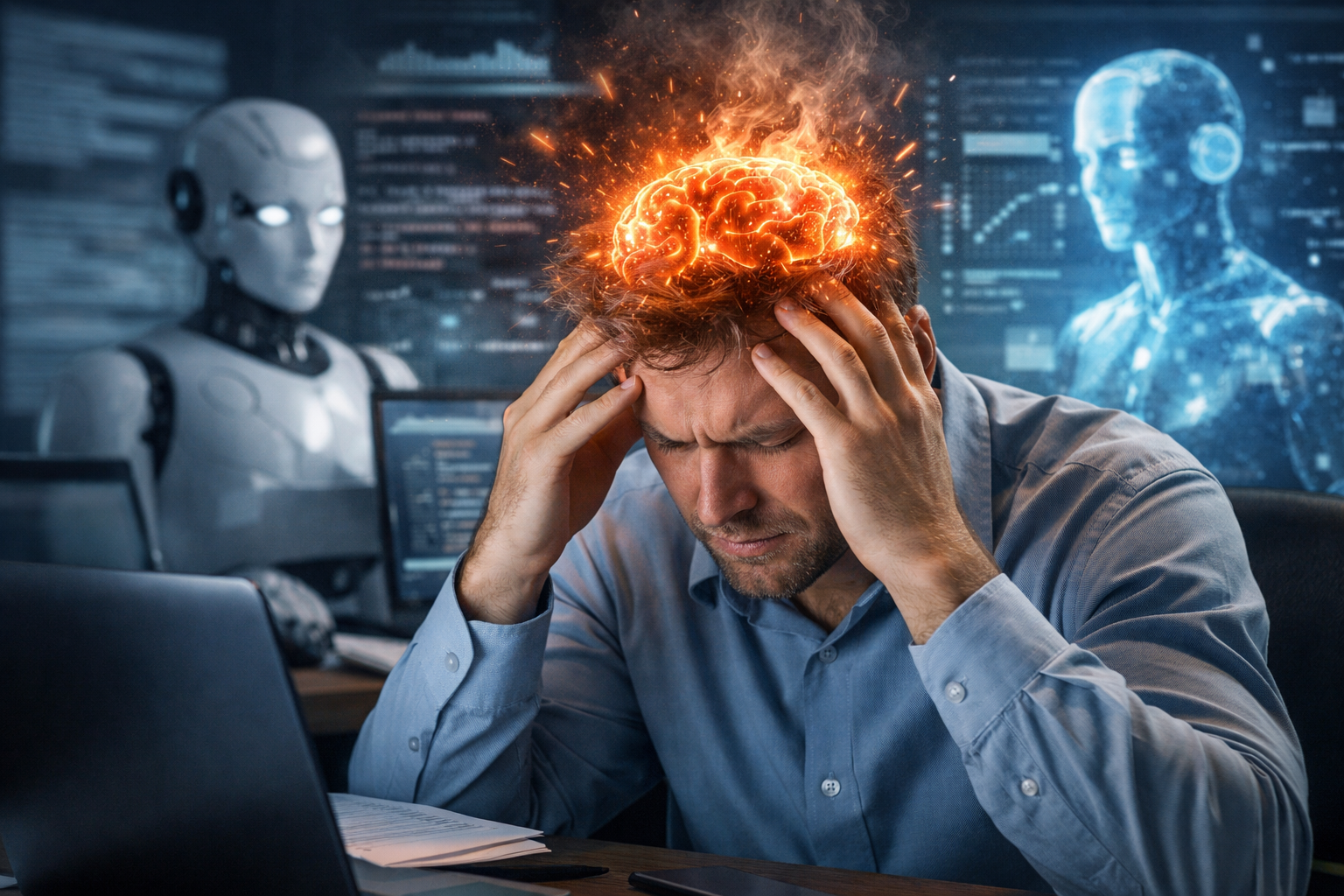
Artificial intelligence is a tool that improves work productivity and makes work faster. Even though using AI can make work faster, a new study suggests that it might be mentally exhausting for workers. Researchers from Boston Consulting Group and the University of California, Riverside surveyed 1,488 full-time workers in the United States and found that many employees are experiencing a new form of mental fatigue called AI brain fry.
Participants described symptoms such as a “buzzing” feeling in the head, mental fog, difficulties in focusing, slower decision-making and headaches. The researchers cautioned about the impact of excessive AI use, writing, “Our findings are both a guide and a warning.”
They added, “Used thoughtfully, this data can help design AI-driven workflows to diminish burnout.”
ALSO READ | OpenAI upgrades Codex with GPT-5.4: What the new coding assistant can do
AI fatigue is increasing mistakes at work
The study found that workers experiencing AI brain fry are significantly more likely to make errors. Employees facing this mental fatigue were 11 per cent more likely to make minor mistakes and 39 per cent more likely to make major errors compared to those who did not report the issue.
It also affects employee retention. According to reports, about 34 per cent of workers have experienced AI brain fry and even considered quitting their jobs, compared to 25 percent of those who did not report such fatigue.
ALSO READ | No internet? No problem: New app lets you send messages via Bluetooth
Companies pushing for stronger AI adoption
The findings come at a time when many companies are encouraging employees to use AI tools more frequently. Jensen Huang, CEO of Nvidia, has previously advised staff to “use AI for every task.” Some firms are even measuring employee performance based on AI usage. According to reports, Meta has started judging engineers on the basis of how many lines of code they are writing using AI tools.
As AI integrates bigger parts into workplaces, studies and everywhere, experts suggest that a balance must be created by an employee between productivity gains and the employee`s well-being. Without careful management, the pressure to constantly rely on AI could increase burnout and workplace stress.