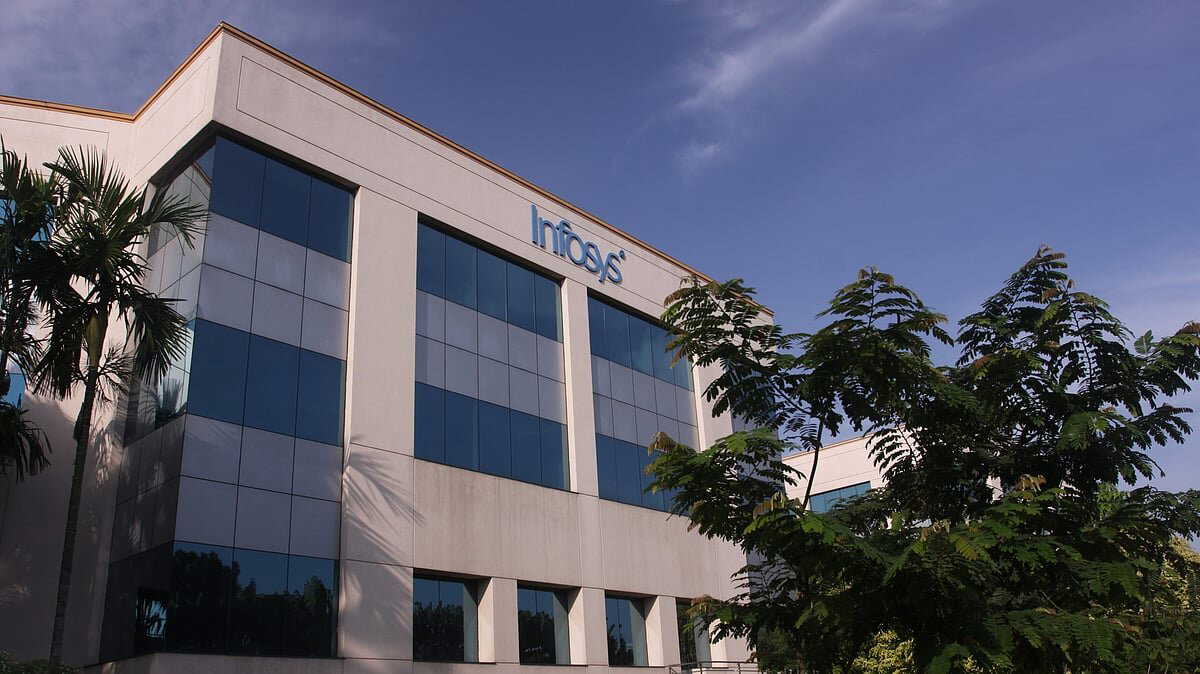
Infosys has asked its employees who work from home to provide details of their monthly electricity expenses. The company sent an email regarding this on Saturday, stating that the move is intended not to reduce costs but to support the company’s long-term sustainability efforts. However, the announcement has sparked controversy among employees and the public.
An email by the company's CFO, Jayesh Sanghrajka, explained that the company wants to understand how much electricity work-from-home employees use for office-related tasks. This data will help assess whether the company’s carbon footprint is increasing or decreasing under its hybrid work model.
Also Read | Palash Muchhal deletes photos with Smriti Mandhana amid cheating allegations
Tracking Electricity Usage for Carbon Footprint Reduction
Under Infosys’s hybrid policy, employees can work from home for most of the month and are required to come to the office for only 10 days. The CFO noted that electricity consumed at home also contributes to the company’s overall carbon footprint. Therefore, knowing the electricity usage of employees working remotely is necessary to identify opportunities to reduce environmental impact.
Employees were asked to provide a breakdown of electricity consumption by category and to indicate whether solar panels are installed at their residences. The email also invited suggestions from employees on steps that could be taken to save electricity.
Infosys has a history of promoting energy conservation. Since 2008, the company has reduced per-employee electricity costs by up to 55 per cent. In 2025, 77 per cent of the company’s electricity consumption came from renewable energy sources. Notably, in 2021-22, Infosys was the first company to publish a detailed report on electricity consumption from work-from-home setups.
Also Read | ‘Vande Bharat rukwa diye’: Youths block tracks with logs to stop high-speed train for reel | WATCH
Netizens react to the initiative
The email quickly drew attention on social media, generating mixed reactions. Many praised the initiative as "progressive" and a positive step toward sustainability. Others criticised it, questioning how employees could accurately measure electricity usage for individual devices and raising concerns that the company might be indirectly saving on costs at the expense of employees.