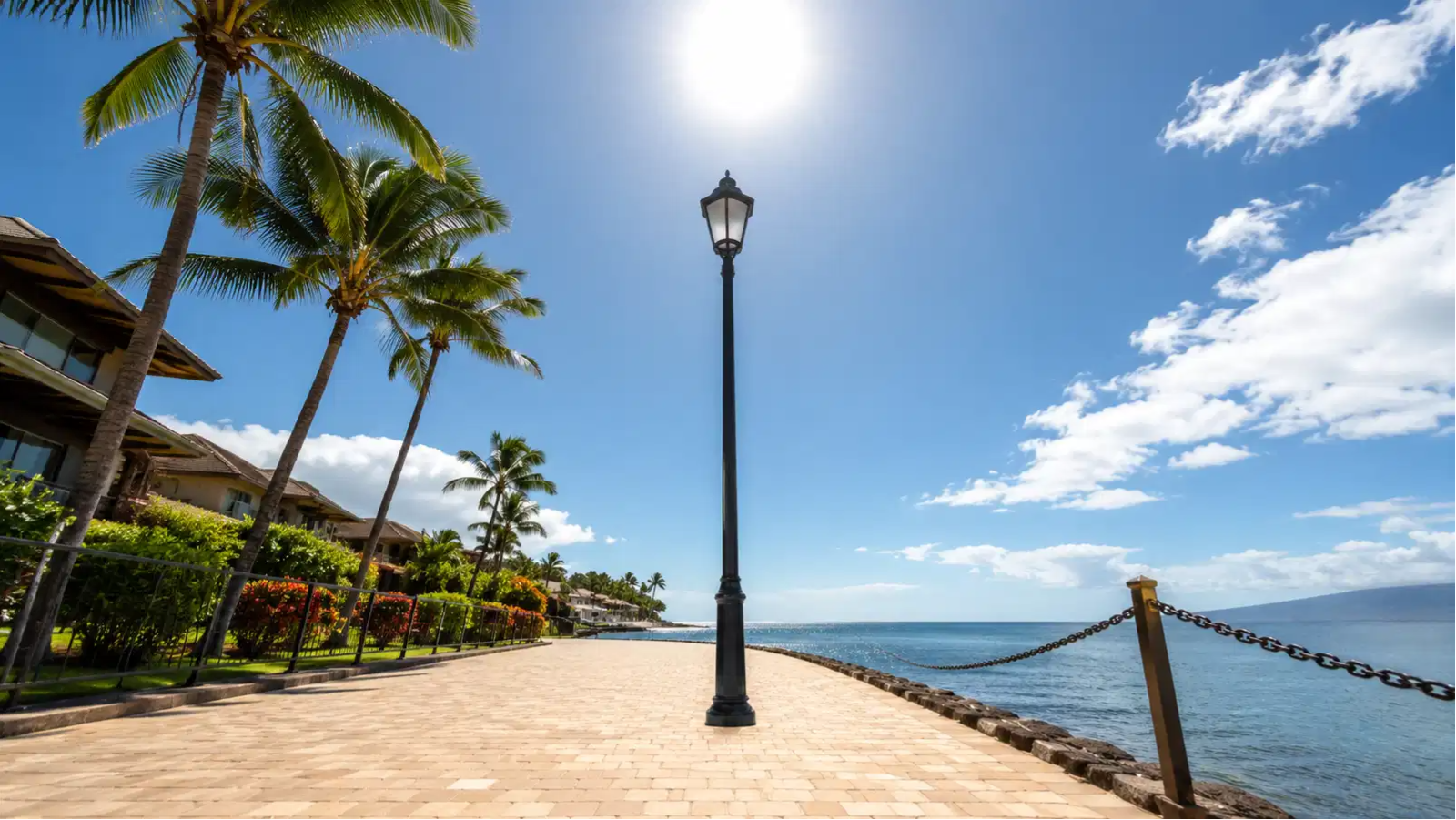
For a few minutes twice every year, something unusual happens under the midday Sun when shadows almost completely disappear. The rare astronomical phenomenon is known as Lahaina Noon, also called "zero shadow day" or "shadowless noon".
During this brief event, the Sun appears directly overhead at solar noon, causing upright objects such as trees, poles, buildings and even people to cast little to no visible shadow.
What is Lahaina Noon?
The phenomenon occurs when the Sun reaches the "subsolar point", the exact location on Earth where sunlight falls vertically.
Also Read | Two Americans held after entering Punch the monkey’s zoo enclosure in Japan
At that moment, shadows shrink dramatically and can nearly vanish because sunlight is hitting objects from almost directly above. Scientists describe it as the subsolar point passing overhead.
In Hawaii, however, the event is popularly known as Lahaina Noon. The name was introduced by Honolulu’s Bishop Museum in the 1990s after a public naming contest. It was inspired by the Hawaiian phrase "la haina", meaning "cruel Sun".
DID YOU KNOW??
— I AM BLAZE THE CURIOUS⚕️☢️ (@Blazethecurious) May 18, 2026
Hawaii is the only state in the United States where shadows completely vanish twice a year, making real-world buildings, telephone poles, and people look like poorly rendered video game objects that forgot to cast a shadow.
Known as LĀHAINĀ NOON, this stunning… https://t.co/P8Egq0y3gh pic.twitter.com/BJU8uTVVim
Long before the modern term became popular, ancient Hawaiians referred to the event as "kau ka la i ka lolo", which translates to "the sun rests on the brains", describing the intense overhead sunlight experienced during the phenomenon.
Why do shadows disappear?
Lahaina Noon happens because of Earth's tilt and its yearly movement around the sun.
As Earth revolves around the Sun, the position of direct sunlight shifts between the Tropic of Cancer and the Tropic of Capricorn. Locations within this tropical belt experience moments when the Sun aligns directly overhead.
At that precise time during solar noon, sunlight falls almost vertically, leaving little room for shadows to form. The effect lasts only a few minutes before shadows begin appearing again as the sun's position changes.
Where can the phenomenon be seen?
Lahaina Noon is not limited to Hawaii. Similar "zero shadow' days occur in many places located between the Tropic of Cancer and the Tropic of Capricorn.
Also Read | Astronaut captures breathtaking southern lights glowing above Earth from space | WATCH
Several cities across India, Southeast Asia, Central America and parts of Africa witness the phenomenon every year.
The exact dates and timings differ depending on the location. The event often draws attention from students, scientists and skywatchers, as familiar surroundings briefly appear unusually shadowless under the midday Sun.