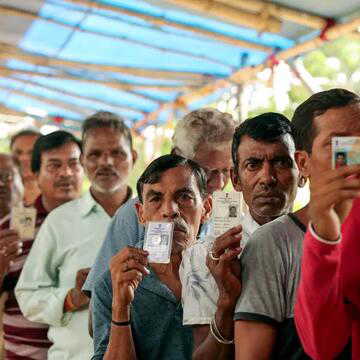
Today, West Bengal heads into another crucial election, and the central question remains whether Mamata Banerjee can maintain her political dominance built over the past decade and a half. A closer look at her electoral track record since 2011 offers insight into how firmly she has held her footing in the state.
2011: The turning point
The 2011 Assembly election marked a historic shift in Bengal politics. Mamata Banerjee’s Trinamool Congress secured 184 seats, ending the 34-year rule of the Left Front. In alliance with the Congress, the coalition crossed the majority mark comfortably, signalling a decisive mandate for change. This election laid the foundation of Mamata’s governance model centred on welfare outreach and grassroots mobilisation.
2016: Consolidation of power
Five years later, Mamata Banerjee reinforced her position with an even stronger performance. The Trinamool Congress increased its tally to 211 seats, improving both its legislative strength and political control. The victory demonstrated that her support base had expanded beyond the anti-Left wave that defined 2011, indicating deeper voter trust in her administration.
Also Read | Why Bengal voters lean towards regional leadership despite national narratives | Explainer
2021: Facing the BJP surge
The 2021 election proved to be her toughest test yet. With the Bharatiya Janata Party emerging as a formidable challenger, the contest turned into a high-voltage battle. Despite an aggressive campaign led by national leaders, Mamata Banerjee retained power with 213 seats, while BJP secured 77 seats and established itself as the principal opposition.
This election also reflected a shift towards a bipolar contest in Bengal politics, reducing space for traditional players like Congress and the Left.
The Pattern: Stability amid challenges
Across three consecutive Assembly elections, Mamata Banerjee has not only retained power but strengthened her position numerically. Her consistent performance highlights a resilient voter base supported by welfare schemes, organisational strength, and a strong personal connect with the electorate.
Also Read | What is 'Booth capturing'? Election day 'term' explained
However, each election has brought new challenges. While 2011 was about change and 2016 about consolidation, 2021 tested her ability to withstand a powerful national opponent.
What lies ahead
As Bengal votes again, Mamata Banerjee faces a familiar yet evolving challenge. Anti-incumbency, governance concerns, and sustained pressure from BJP continue to shape the political narrative.
Her past electoral record suggests resilience, but the outcome will depend on whether that support holds steady in the face of a sharpened contest.