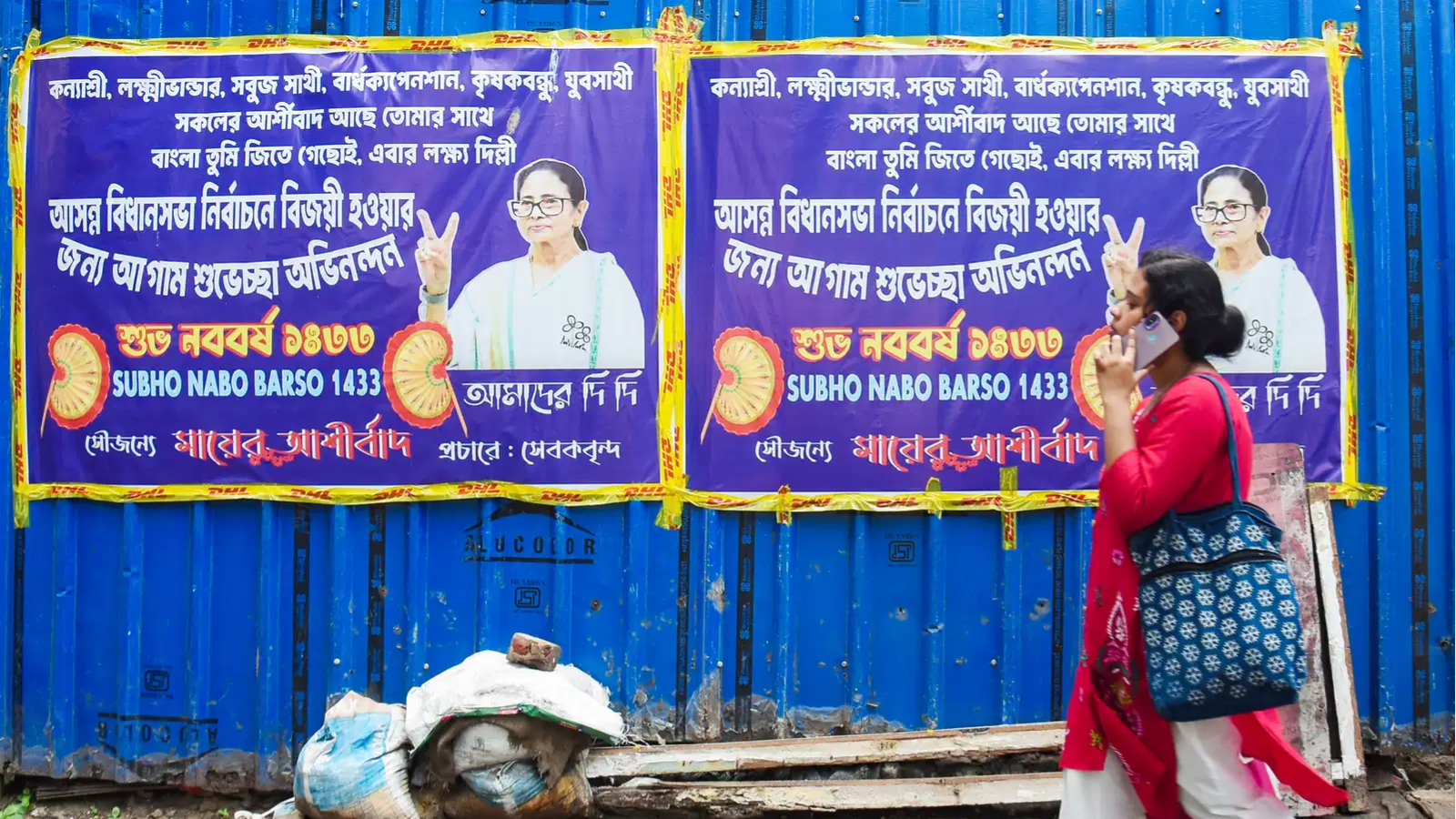
In West Bengal, voting patterns often reflect a strong focus on everyday concerns rather than broader national narratives. Surveys and electoral studies show that priorities such as employment, agriculture support and local infrastructure rank high among voters.
This emphasis shapes electoral choices at the constituency level, where candidates and parties are judged on their perceived ability to address immediate needs. Elections in the state are often about everyday life: roads they travel, safety they feel, jobs they struggle to find.
Also Read | Election Commission counts votes today for West Bengal, Assam, Kerala, Tamil Nadu, and Puducherry
Strong regional political identity
West Bengal has a long history of powerful regional leadership, from Left Front rule to the rise of the Trinamool Congress (TMC). Political shifts in the state have typically been driven by local movements rather than national waves.
This legacy contributes to a political culture where state leadership and regional identity carry significant weight. Campaigns frequently draw on linguistic, cultural and social identity, reinforcing a sense of distinct political space within the national framework.
Fragmented and localised voting patterns
Recent elections indicate that voting behaviour in Bengal is highly localised, with different regions showing varied political preferences. Factors such as community dynamics, urban-rural divides and constituency-specific issues influence outcomes.
For instance, urban areas and rural belts often vote differently, reflecting distinct socio-economic priorities. This fragmentation reduces the uniform impact of national narratives across the state.
Role of welfare and governance perception
State-level welfare schemes and governance delivery play a visible role in shaping voter choices. Electoral behaviour studies highlight that voters assess governments based on their performance in key sectors like employment and agriculture. This direct link between governance and daily life strengthens the appeal of regional leadership that is seen as more accessible and accountable.
Influence of identity and community factors
Voting behaviour in Bengal, like elsewhere in India, is also shaped by social factors such as religion, community and local affiliations. These influences tend to operate more strongly at the regional and constituency level than through national narratives, further reinforcing localised political preferences.
Also Read | Election Results 2026 Explained: How the Election Commission counts every vote
High engagement, complex choices
West Bengal consistently records high voter turnout, reflecting strong political engagement. However, analysts caution that turnout alone does not signal support for any single narrative or party.
Instead, the electoral landscape remains shaped by a mix of local concerns, identity factors and leadership perception—factors that often favour regional players over national messaging.