Today, while reflecting on the journey that started two years back on May 19, 2024, when we transitioned from the Times of India Group to Tidings Media, my mind returns to one particular day from twenty months ago.
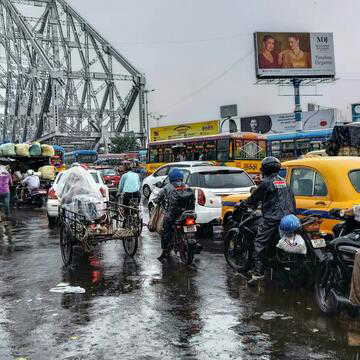
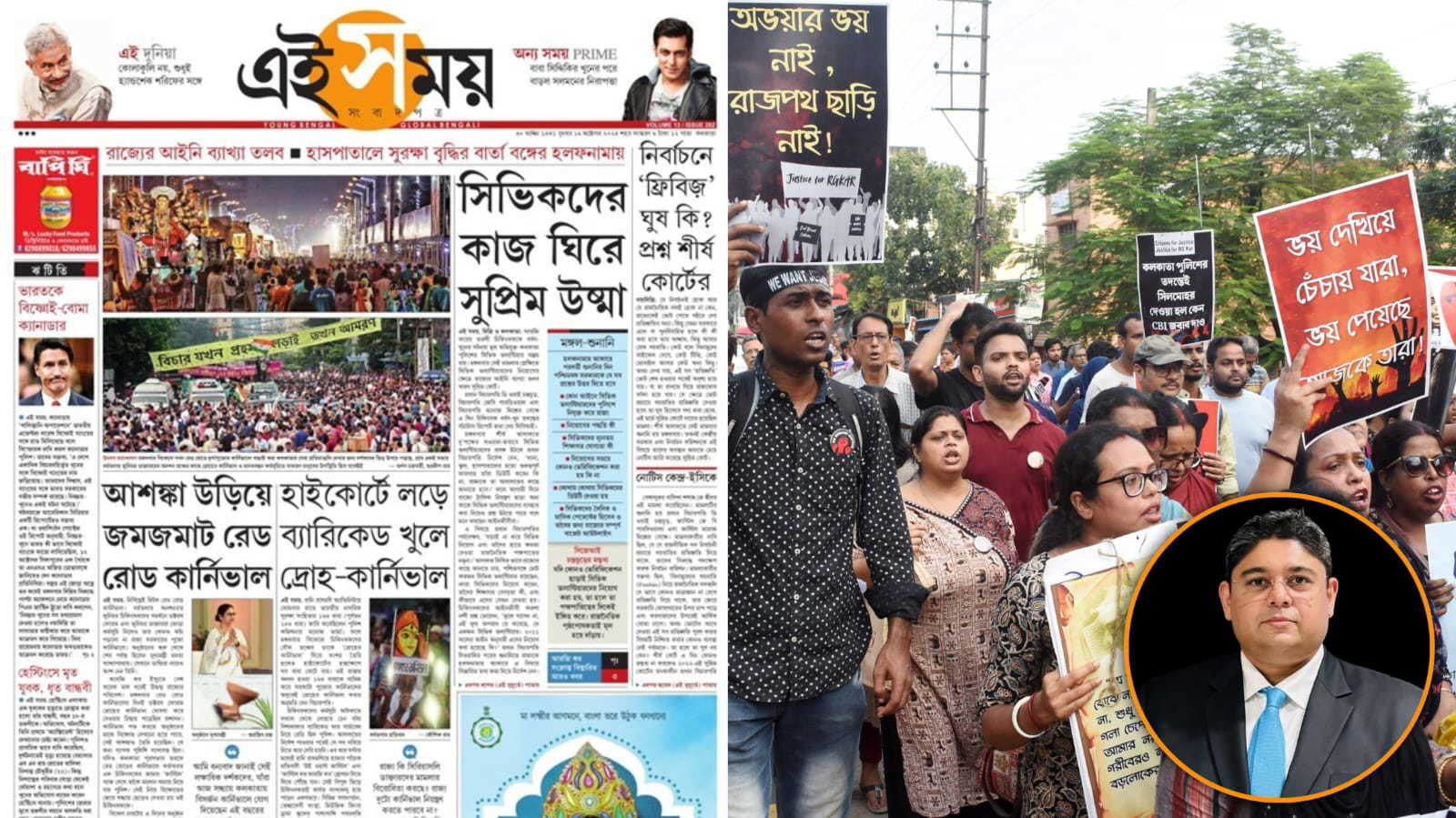
It was 15 October 2024. Kolkata’s streets were abuzz with protests demanding justice for Abhaya, following her brutal rape and murder. The same day, ironically, the State Government had organised the Durga Puja Carnival on Red Road. Protesters who were seeking justice for Abhaya had to move court for permission to hold their own “Droh Carnival”.
The Hon’ble Calcutta High Court rejected the arguments of the then State Government and allowed the protesters to take the streets in their quest for justice. It was an unforeseen contrast. Thousands gathered under the lights of Red Road for the Durga Puja Carnival. And several thousand on candlelit walks, demanding justice for the violent rape-murder.
On that day, the front page of Ei Samay carried both stories with equal importance. In journalistic terms, both events received equal space, with news reports and photographs. We showed neither bias nor hostility towards either. We simply followed the timeless principles of journalism. Place correct news before the reader with sensitive neutrality. Since we began, Ei Samay believed that this is its professional responsibility. I mention October 15 specifically because it symbolises the environment through which Ei Samay has continued its journey over these twenty months.

The Ei Samay edition published on 16 October, 2024
What followed, may not be known to many readers.
From the very next day, state government advertisements to Ei Samay were stopped. The reason, if one may call it a reason at all, was that both stories had been given equal prominence on the front page. Despite this, Ei Samay, did not move away from its path of courageous neutrality of news.
On 14 December that same year, Himalaya Darpan joined us as a sister publication. Within hours, state government advertisements were stopped there as well. Overnight, guardrails carrying Ei Samay posters were forcibly removed from different parts of the city. Even invitations to state government events, which are routinely sent to all recognised media houses, suddenly stopped reaching us.

A natural question arose. Can a government isolate one particular newspaper from public events in this manner?
Ei Samay was also an official partner of a Kolkata Police half marathon. Just a few days before the event, we were removed from that partnership too. There are many more such examples.
No official reason was given in any of these instances. Legally, perhaps, no reason could have been given. But the reason was not difficult to understand. Nor was it difficult for many to guess whose instruction, or whose signal, was behind it.
We also know that, several ministers of the then government could not answer a simple question, whether out of fear of displeasing the party leadership, or out of unquestioning loyalty towards it.
The question was … just as it is the duty of a newspaper to present news neutrally, it is also the duty of a state government to remain sensitive, fair and steadfast in its responsibilities. Then on what moral ground was Ei Samay being denied at every step?
We were not seeking financial favour from the government. Our question was … why was a state government so intolerant of neutral journalism?
Needless to say, no leader or minister, small or big, showed the courage to speak on the matter. On the contrary, one minister of that time, entrusted with multiple departments, but more visible in front of cameras than in his multi-department work, even conveyed in different circles that giving advertisements to Ei Samay would only “increase problems”. Some others chose to play the role of a blind Dhritarashtra.

Despite all this, we continued with our responsibility of presenting news with honesty, neutrality and objectivity. Because we believe that the pen is mightier than the sword.
Over the last 20 months, we have consciously avoided taking a partisan or antagonistic position against any political party or individual in our news coverage. At every step, we have tried to present the balanced and fair truth to our readers.
No matter how intensely the then state government tried to isolate or weaken Ei Samay, we chose not to retreat. We moved forward with greater resolve, and in doing so, emerged stronger than before.
Even through this prolonged unofficial boycott, Ei Samay continued to grow. Our readership increased. New editions were launched. The newspaper found an even deeper place in the minds and habits of readers.
What began as a Bengali newspaper evolved into a far stronger and more dynamic media presence, across English and Hindi digital platforms, Instagram, YouTube Live and beyond. While certain doors were deliberately closed to us, we built new ones ourselves through private partnerships, digital growth and the strength of our credibility.
But above all else, our greatest source of strength has been the unwavering trust of our readers. Advertisements can be withdrawn. Visibility can be obstructed. But trust, once earned honestly, cannot be dismantled so easily.
Perhaps that is the most important lesson from these last twenty months: institutions that stand by truth may be tested, but they do not break easily.
The resilience Ei Samay showed in refusing to bow before pressure or adversity has today become its greatest brand value.
And so today, without bitterness, without hostility, but with both humility and conviction, I wish to say only this: Truth does not bend to power. And neither will we.