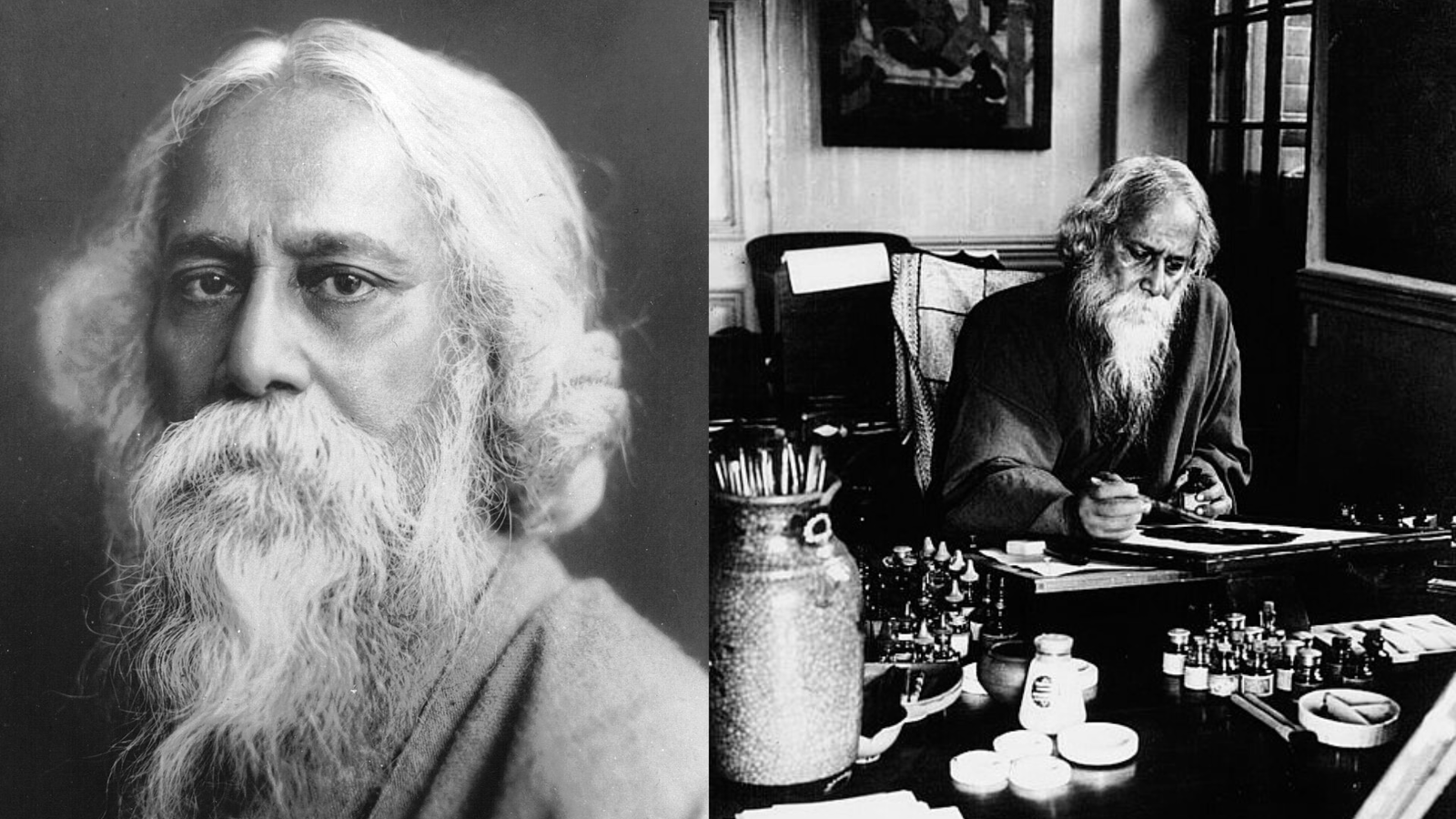
Rabindranath Tagore remains one of the most influential literary and cultural figures in India and Bangladesh. His birth anniversary is uniquely observed twice each year, reflecting the use of both the Gregorian calendar and the traditional Bengali calendar.
While most of India marks Tagore Jayanti on May 7, eastern states and Bangladesh celebrate it according to the Bengali calendar date known as "Pochishe Boishakh".
Also Read | Four workers killed in coal dust collapse at BCCL washery, safety lapses alleged
Two dates, one celebration
Rabindranath Tagore was born on May 7, 1861, a date recognised internationally and followed across most parts of India.
However, in West Bengal, Tripura and Bangladesh, his birth anniversary is observed on the 25th day of Boishakh in the Bengali calendar. Since the Bengali calendar follows a lunisolar system, the corresponding Gregorian date changes every year and usually falls on May 8 or May 9.
In 2026, Tagore Jayanti will be observed on May 7 across India, while "Pochishe Boishakh" celebrations in Bengal and Bangladesh will take place on May 9.
Cultural significance in Bengal
The Bengali calendar observance carries deep cultural importance in eastern India and Bangladesh.
Schools, colleges and cultural organisations hold programmes featuring Rabindra Sangeet, poetry recitations, dance dramas and theatre performances inspired by Tagore's works.
These celebrations continue to keep alive the legacy of the "Bard of Bengal," whose influence extended far beyond literature into music, education and philosophy.
Tagore's lasting legacy
Born in Kolkata's Jorasanko Thakurbari, Tagore was the son of Sarada Devi and Debendranath Tagore. He emerged as a literary prodigy at a young age and later became the first non-European to win the Nobel Prize in Literature in 1913 for Gitanjali.
Also Read | Kolkata sweats under scorching heat: Will Bengal see relief this week?
Tagore also wrote India's national anthem, Jana Gana Mana, and Bangladesh's Amar Sonar Bangla.
Beyond writing, he founded Visva-Bharati University and remained deeply involved in art, education and cultural reform.
From poetry and music to philosophy and painting, Tagore's influence continues to resonate across generations, whether celebrated on May 7 or Pochishe Boishakh.