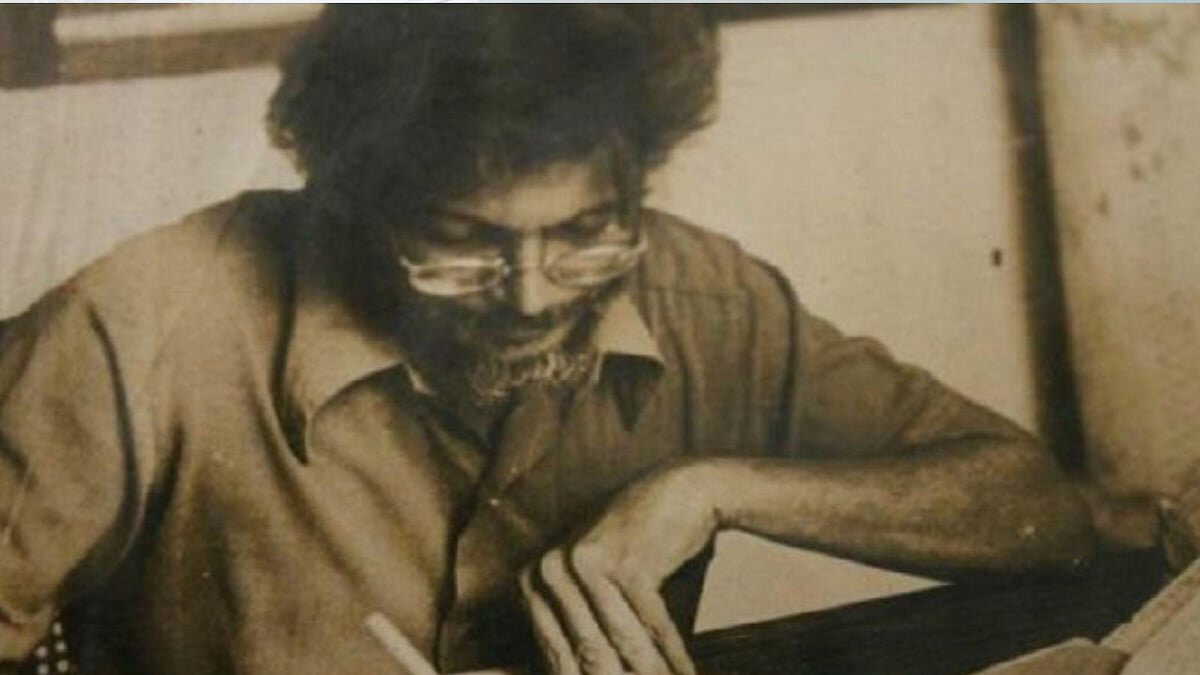
Written in enchanting, almost magical prose, his autobiography was titled 'Amar Nai Ba Holo Pare Jaowa'. On the morning of December 28, writer and journalist Jyotirmoy Datta crossed life’s final shore and departed for the land of no return. He was 89. Datta breathed his last at his home in South Kolkata. His daughter, Kankabati Datta, said he had eaten very little over the past two to three days and was suffering from age-related weakness. He passed away on Saturday morning in the city he loved most - Kolkata.
Jyotirmoy Datta's life and times
Jyotirmoy Datta belonged to Presidency College's 1951 batch. He was married to Minakshi Basu, daughter of the renowned litterateur Buddhadeb Basu. A rare literary force, Datta excelled across genres - prose, poetry, journalism, editorials, essays, and short stories. His writing, often lyrical, could also strike like lightning. His sharp, incisive journalism in newspapers such as Jugantor, Amrita Bazar Patrika, Ajkaal and The Statesman remains exemplary. He served as assistant editor at The Statesman and was a regular columnist for Ajkaal.
Journalist, political analyst, and writer Subhashis Maitra, who worked with Datta at Ajkaal, recalled him with deep emotion. Maitra spoke of Datta's magazine 'Kolkata', which was banned during the Emergency, leading to Datta's arrest along with Gaur Kishore Ghosh. “The day 'Kolkata' was banned, I was at Shankar's bookshop in Gariahat, flipping through its pages," Maitra recalled. "Suddenly, three or four people snatched the magazine from my hands and said it had been banned." The magazine later resumed publication from a house near Sealdah.
Also Read | Abhishek Bannerjee questions ‘logical discrepancy’ in voter lists, demands transparency from EC
The prowess of Jyotirmoy Datta
Datta was known for writing editorials in just 30 to 35 minutes - pieces that emerged fully formed and flawless. Those close to him often said, "When he wrote in Bengali, he thought in Bengali; when he wrote in English, he thought in English," comparing him to Nirad C. Chaudhuri in linguistic command.
His column 'Komal Cactus', published in Jugantor, became immensely popular. His autobiography, 'Amar Nai Ba Holo Pare Jaowa, was published in two volumes and celebrated for its captivating language and vivid storytelling. Equally fluent in Bengali and English, Datta was truly ambidextrous with words.
Veteran sports journalist Chiranjib fondly remembered Datta's friendship. At one point, Datta was living underground. "One day, he suddenly hugged me from behind on the street," Chiranjib recalled. "His hair was dishevelled, his clothes worn. Laughing, he said, 'But you haven't met me.'"
Also Read | Election Commission summons Anirban Bhattacharya for voter list verification
Chiranjib also remembered the day football legend Pelé came to Kolkata. "I was assigned to cover Pelé's visit," he said. "Then I heard Jyotirmoy Datta was on the same flight as Pelé from Bangkok. I told my editor, 'I’ve scored an own goal even before Pelé arrived.'"
This same Jyotirmoy Datta, brimming with an indomitable spirit, was imprisoned during the Emergency. After his release, he walked barefoot through Kolkata's streets in protest. He resisted not only with his body but with his pen, describing his work as "free-spear journalism".
Datta sets sail
After his release from jail, Datta bought a dinghy for ₹2,200 and set sail across the Bay of Bengal. The boat, named 'Manimekha', had a 20-foot mast and a 30-foot sail. He had planned to reach Sri Lanka, though 'Manimekha' never made it there. Yet, in his mind, he had travelled far that day - a journey that continues even now.