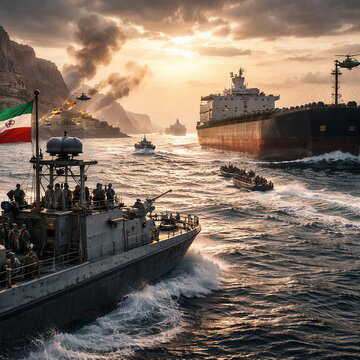
The United States and Israel’s military strikes on Iranian targets on February 28 have added fresh uncertainty to an already volatile West Asian security environment. The escalation has immediately raised concerns for global oil markets and for countries heavily dependent on Middle Eastern energy supplies.
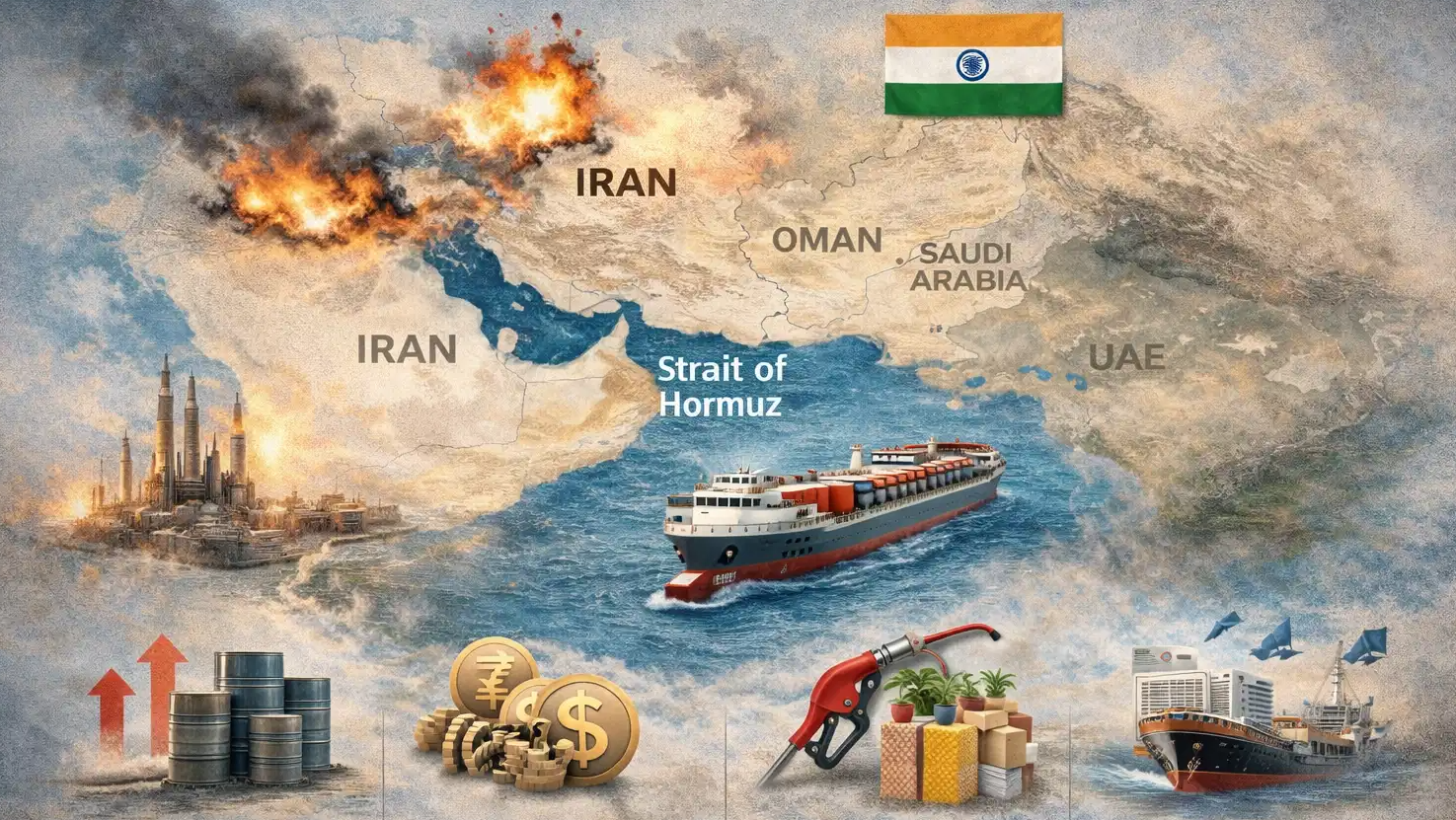
For India, the risks are particularly significant. Nearly half of the country’s crude oil imports now move through the Strait of Hormuz, the narrow waterway between Iran and Oman that serves as one of the world’s most critical oil transit routes.
Also Read | Call saga begins: As Netanyahu-Trump converse, Qatar Emir and King of Jordan also hold talks on phone
Any disruption in this corridor could push up oil prices, increase shipping costs and place additional pressure on India’s economy.
Strait of Hormuz remains India’s energy lifeline
The Strait of Hormuz handles roughly one-fifth of the world’s oil trade, making it a crucial artery for global energy flows.
Data from energy analytics firm Kpler shows that about 50% of India’s crude imports passed through the strait in January–February 2026, compared with roughly 40% toward the end of 2025.
In absolute terms, India currently imports around 2.6 million barrels per day (bpd) via this route, primarily from Iraq, Saudi Arabia, the United Arab Emirates and Kuwait.
“A disruption at the Strait of Hormuz would have immediate and significant implications for both India and global oil markets,” Sumit Ritolia, lead research analyst at Kpler, told Moneycontrol.
Also Read | 'Attacks on civilians prohibited': UAE condemns Iran strikes, calls for diplomacy
India also exports refined petroleum products through the same corridor, with shipments averaging around 74,000 bpd this year, according to Kpler data.
Oil prices may surge as war risk grows
Energy markets often react quickly to geopolitical tensions. Oil prices have already strengthened since the United States began deploying additional military assets to the region.
Analysts say this reflects a "war premium" which is the additional price markets attach to supply risks during conflicts.
According to a report by Equirus Securities, if Iran’s oil production of about 3.3 million bpd were disrupted, crude prices could rise by 9–15%, pushing prices from roughly $70 per barrel to $76–81.
However, the larger concern is the Strait of Hormuz itself. Even a partial disruption such as tanker incidents, naval standoffs or increased insurance costs, could push oil prices much higher.
Equirus estimates that geopolitical tensions could add $20–$40 per barrel, potentially sending crude toward $95–$110 per barrel.
Four ways the conflict could affect India
Higher import bill - India imports more than 85% of its crude oil requirements. A sustained rise in global oil prices would sharply increase the country’s import bill.
Pressure on the rupee- Higher oil prices increase demand for US dollars to pay for imports. This typically weakens the rupee and widens the current account deficit.
Inflation risks - Costlier crude eventually feeds into domestic fuel prices. Rising transport and logistics costs can then push up food and consumer prices.
Shipping and insurance costs- If the Gulf region becomes a high-risk zone, tanker insurance premiums and freight charges are likely to rise. Even if India sources oil from Africa or other regions, longer shipping routes could tighten short-term supply.
India preparing contingency measures
Government and industry officials are already considering steps to cushion the impact.
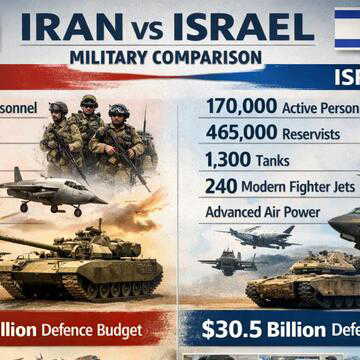
Also Read | Are Iran and Israel comparable in terms of military power? Here's what you should know
According to industry sources cited by Moneycontrol, India is exploring alternative suppliers outside the Gulf and strengthening long-term supply contracts.
The country may also draw on its Strategic Petroleum Reserves (SPR) if global supply disruptions occur.
Analysts say that if Middle Eastern supplies tighten significantly, India may also increase purchases of Russian crude, which previously accounted for a large share of the country’s imports.