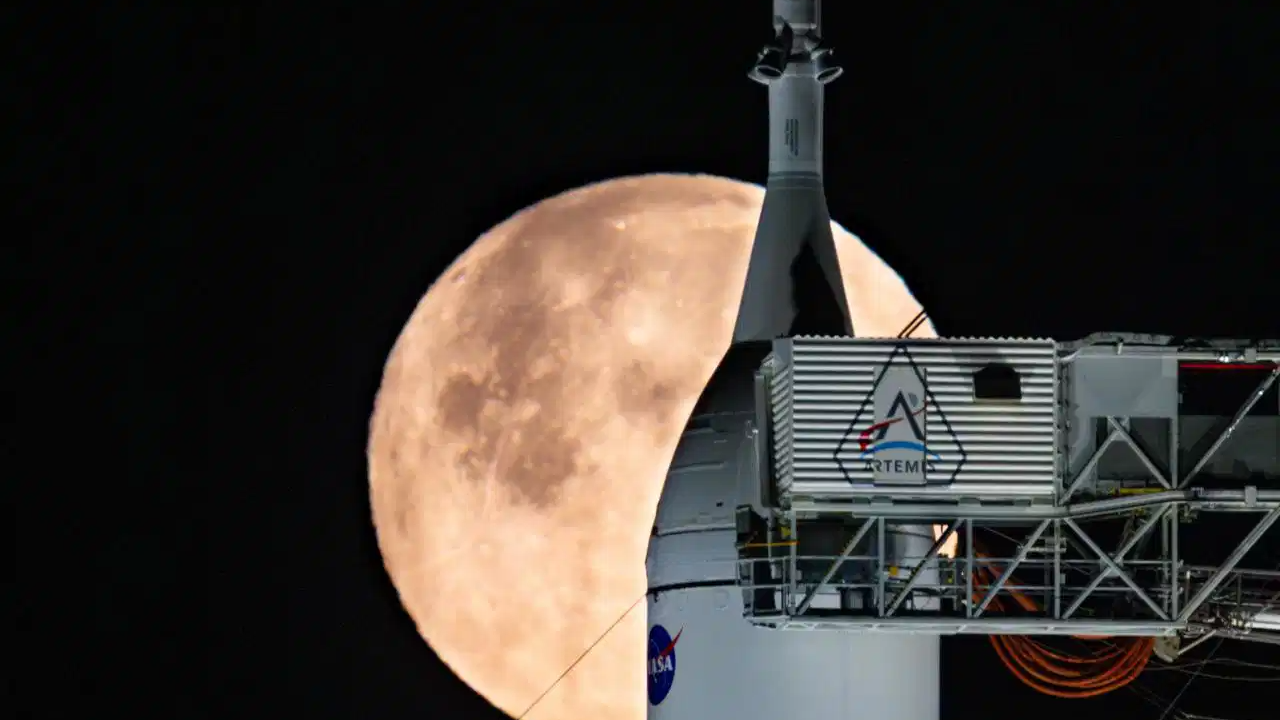
NASA is preparing to sent its astronauts on a journey around the moon for the first time in over 50 years, as the Artemis II mission is targeting an early March launch. The earliest possible launch date has been set as March 6, after completing a vital test known as a "wet dress rehearsal", as reported by BBC.
This mission will take humanity further into space than it has been since the Apollo days.
Successful rehearsal clears path for launch
The Kennedy Space Centre rehearsal in Florida involved fuelling the rocket and performing the entire countdown. The earlier attempt in early February was halted due to a hydrogen fuel leak, although problems with seals and filters have been resolved, as reported by the BBC.
Also Read | What is Artemis II? Meet the astronauts flying NASA’s next Moon mission
"Every night I look up at the Moon and I see it and I get real excited because I can feel she's calling us and we're ready," Nasa's Lori Glaze told a news conference on Friday, reported BBC.
"The excitement for Artemis II is really, really starting to build, we can really start to feel it. It's coming."
Glaze added that teams successfully completed fuelling and demonstrated the launch countdown during the latest test.
Meet the Artemis II crew
The four-member crew includes Americans Reid Wiseman, Victor Glover and Christina Koch, along with Canadian astronaut Jeremy Hansen. The astronauts are expected to enter quarantine ahead of launch preparations.
They will travel aboard Nasa's 98-metre Space Launch System (SLS) rocket, with the Orion capsule positioned at the top. Roughly the size of a minibus inside, Orion will serve as the crew's living and working space during the 10-day mission.
Journey around the moon
After a day of orbiting the Earth, the crew will then head towards the moon, if all goes well. The journey will take about four days, orbiting around the far side of the moon, the side that can't be seen from Earth.
Flying approximately 6,500 to 9,500 kilometre above the surface of the moon, the astronauts will carry out observations and take pictures before returning home and splashing down in the Pacific Ocean.
Also Read | Think you can spot a scam? AI-powered deepfakes and phishing are making it harder than ever
Gateway to future lunar landing
The Artemis II mission paves the way for the Artemis III mission, which has the objective of landing the first astronauts on the moon since the Apollo 17 mission in 1972. NASA is targeting a 2028 objective, although the timeline is quite ambitious considering the current challenges in lunar landing technology.
However, the United States is not alone in its ambitions, as it is facing increasing competition from China, which is also pursuing a lunar landing by 2030, with both nations targeting the south pole of the moon for future missions.