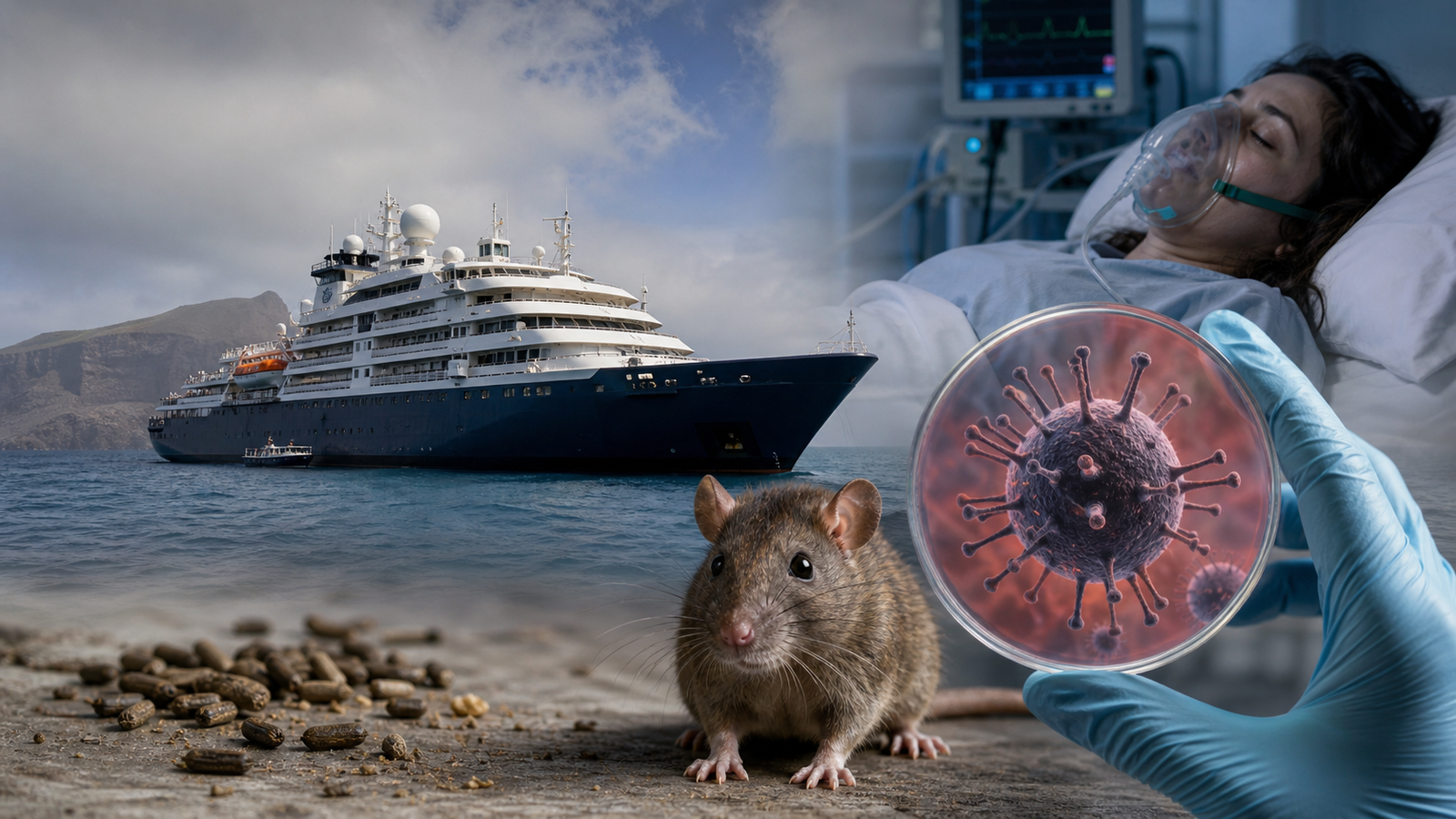
Last week, at least three people died, and one remains in critical condition following a suspected hantavirus outbreak aboard a cruise vessel. The World Health Organisation has confirmed that testing is ongoing, with one case of the virus verified and at least five more under suspicion.
“Detailed investigations are ongoing, including further laboratory testing and epidemiological investigations. Medical care and support are being provided to passengers and crew. Sequencing of the virus is also ongoing,” the WHO said in its official statement.
The outbreak has been traced to the MV Hondius, a cruise ship operated by a Netherlands-based company, which was travelling from Argentina to Cape Verde. The vessel is now anchored off the coast of Cape Verde, but authorities have not allowed any passengers or crew to disembark.
Dutch authorities have stepped in to coordinate efforts. Two passengers showing signs of infection are expected to be flown back to the Netherlands, while arrangements are also being made for those who have died.
Also Read | South Korea’s sleep problem in focus as Seoul holds unusual power nap contest
“The body of the deceased individual is also planned to be included in this repatriation, along with a guest closely associated with the deceased,” the Vlissingen-based company operating the vessel said.
WHO Director-General Tedros Adhanom Ghebreyesus confirmed that the UN health agency is assisting in the medical evacuation of two symptomatic individuals.
As of now, while three fatalities have been reported, one patient is said to be in critical care in South Africa.
What is hantavirus?
Hantavirus is primarily carried by rodents and spreads to humans through inhalation of virus particles from dried rodent droppings, urine, or saliva. According to the Centres for Disease Control and Prevention, infections occur when these particles become airborne and are inhaled, often in enclosed or poorly ventilated spaces.
Also Read | Close call at Newark: United jet strikes light pole, vehicle before landing
The virus can lead to two severe forms of illness. One is Hantavirus Pulmonary Syndrome (HPS), which typically begins with fatigue, fever, and muscle aches, before escalating into breathing difficulties, headaches, and abdominal distress.
The other, more severe form, is Haemorrhagic Fever with Renal Syndrome (HFRS), which affects the kidneys and can lead to low blood pressure, internal bleeding, and even acute kidney failure.
There is currently no specific treatment for hantavirus. Medical care focuses on supportive treatment rest, fluids, and, in severe cases, respiratory support such as ventilators.