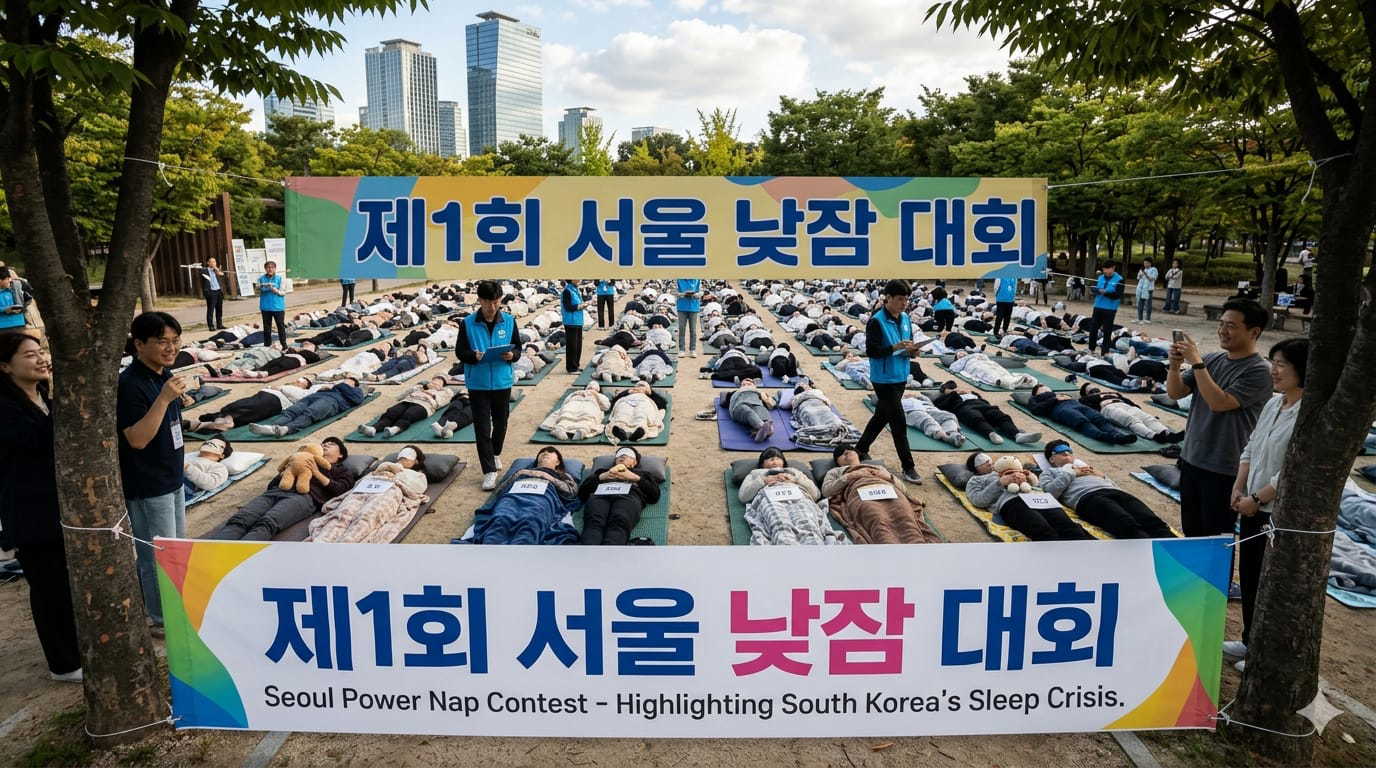
Seoul recently turned a public park by the Han River into an unusual competition ground, hosting a “Power Nap Contest” aimed at drawing attention to South Korea’s widespread sleep deprivation. The event brought together hundreds of participants who competed not in speed or strength, but in how well they could fall asleep, according to News18 reports.
A contest built around sleep
Organised by the Seoul Metropolitan Government, the event is part of an ongoing effort to highlight the country’s sleep crisis, especially among students and working professionals. Participants gathered at a park and were asked to simply rest and nap in a relaxed environment.
The contest was structured to measure relaxation rather than duration alone, with officials monitoring participants’ physical signs of calmness, including heart rate, to determine who achieved the most stable sleep state.
Also Read | Haj airfare shock: Pilgrims to pay ₹10,000 more amid Middle East crisis
Costumes, conditions, and participation
Participants arrived dressed in creative sleep-themed outfits, including costumes inspired by “sleeping beauty” and “sleeping prince” themes, as part of the event’s relaxed and playful format. They were also encouraged to come well-fed and tired, making it easier to fall asleep during the competition.
The setting reflected everyday exhaustion in South Korea, where long working hours and academic pressure are commonly reported reasons for reduced sleep among citizens.
Highlighting a national concern
The contest is not just symbolic entertainment, but a response to a broader issue. South Korea is often described as one of the most sleep-deprived countries among OECD nations, with many residents getting fewer hours of rest than recommended due to demanding routines.
Also Read | Airport of the future? Tokyo to test humanoid robots for ground operations
Winner and outcome
At the end of the event, participants were assessed based on their ability to maintain calm and deep rest. The competition crowned a winner among dozens of sleepers, turning an everyday struggle into a public awareness campaign about the importance of better sleep habits.
The event has continued to gain attention for its unusual format and the serious issue it highlights, reflecting how sleep deprivation has become a growing social concern in urban South Korea.