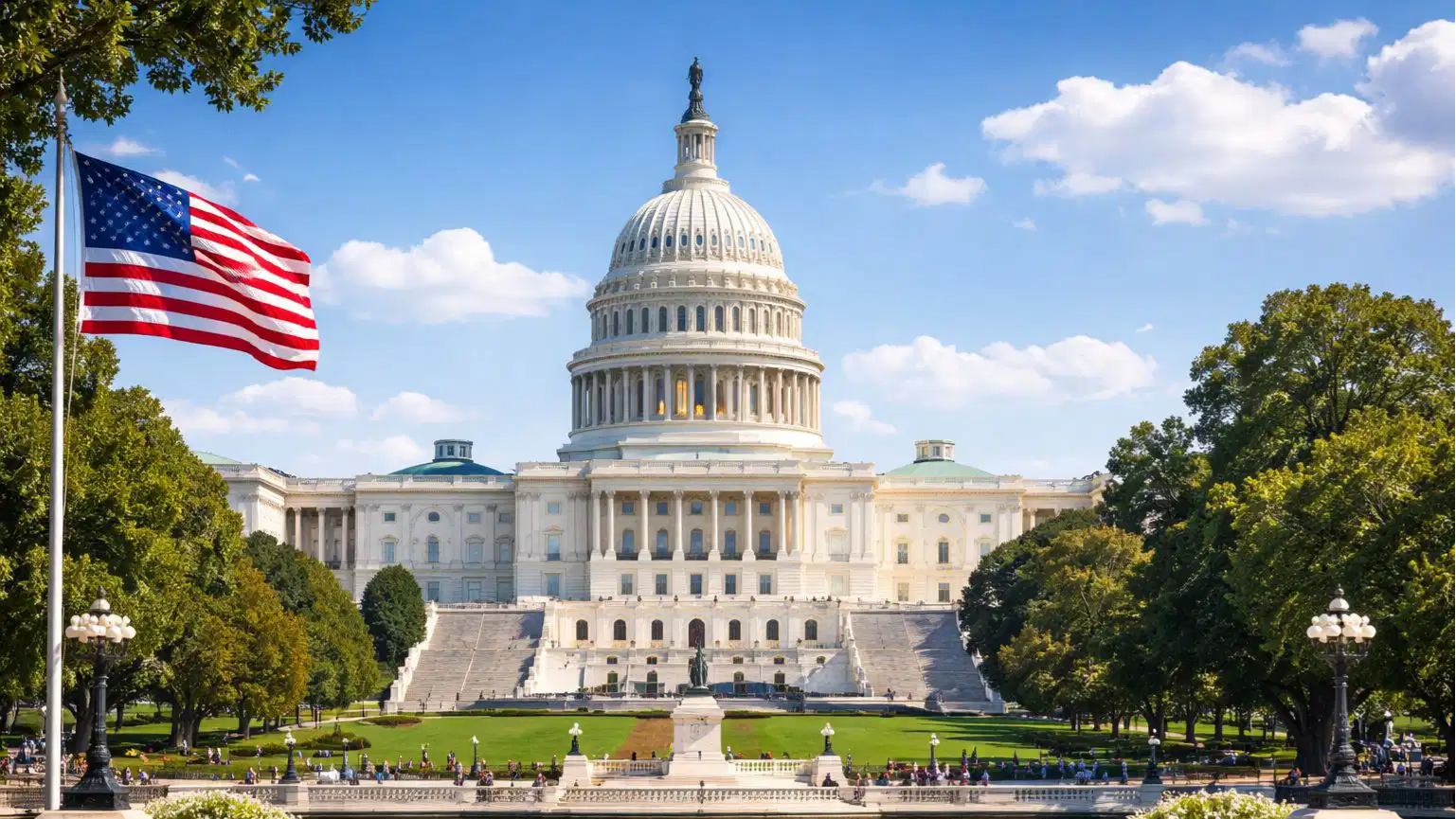
The US government entered a partial shutdown on Friday, even though the US Senate approved a last-minute deal supported by President Donald Trump.
The shutdown started as a midnight funding deadline passed without Congress agreeing on a 2026 Budget. According to news agency Live Mint, the shutdown was almost guaranteed to begin at 12:01 am Eastern time Saturday (0501 GMT).
Also Read | US government partially shuts down despite last-minute Senate deal
Why is brief US government shutdown likely?
The government funding Bill includes changes that Democrats requested regarding immigration enforcement. However, the US Congress seems unlikely to approve a deal that would keep many operations funded past the midnight deadline.
After hours of delay, the US Senate passed the spending package with a bipartisan vote of 71 to 29. But the House of Representatives is not in session and is not expected to address the measure until Monday, a Republican leadership aide informed news agency Reuters.
A shutdown is set to begin Saturday because the House is out of session until Monday. This means it cannot approve the Senate's agreement before the midnight deadline, leading to a weekend funding lapse, as reported by AFP.
Senate leaders believe that the legislation will significantly increase the chances of ending the shutdown quickly, possibly within days.
What is the Bill about?
With a weekend shutdown approaching, Trump struck a rare deal with Senate Democrats on Thursday after the deaths of two protesters, Alex Pretti and Renee Good, who were killed by federal agents in separate incidents in Minneapolis.
The agreement allows Homeland Security (DHS) funding to continue at current levels for two weeks while lawmakers consider Democratic demands. These include unmasking agents, requiring more warrants and letting local authorities help investigate any incidents. Under the deal negotiated between the White House and Senate Democratic leaders, lawmakers approved five pending funding Bills to support most of the federal government through the end of the fiscal year in September.
Also Read | Indian-origin filmmaker Mira Nair listed in Epstein files over 2009 film party
Funding for DHS, which handles immigration enforcement, was separated and extended for just two weeks under a temporary measure aimed at giving lawmakers time to discuss changes to the department's operations.
Trump publicly backed the deal and urged both parties to support it, signaling his wish to avoid a second shutdown during his second term after a record 43-day stoppage last summer.
Shutdown part II of Trump's 2nd term
The US government experienced its longest shutdown starting in October last year. On November 12, Trump signed a funding Bill that ended this historic shutdown. The government reopened after a 43-day deadlock. This standoff disrupted food benefits for millions of Americans, delayed paychecks for hundreds of thousands of federal workers and caused significant delays in air travel across the country.
Impact of shutdown
Shutdowns temporarily freeze funding for non-essential federal operations. This forces agencies to halt services, place workers on unpaid leave, or require them to work without pay. Departments such as defense, education, transportation, housing and financial regulation would be affected in a prolonged shutdown.
Pressure would quickly mount to resolve disruptions that ripple through the economy.
Ironically, Trump's Immigration and Customs Enforcement (ICE) is the agency at the centre of the immigration crackdown controversy. It would be largely unaffected, as it received about $75 billion over four years in Trump's 2025 One Big Beautiful Bill Act, Live Mint reported. A weekend-long stoppage, with a quick resolution in the House on Monday, would have a minimal impact on federal operations.
The larger funding issue has both parties preparing for at least a short shutdown. Congress has already approved six of the 12 annual Budget Bills, but these Bills account for only a small portion of discretionary spending.
The other Bills cover significant parts of the government, which means funding for about 78 per cent of federal operations is at risk of running out.
Speaker Mike Johnson has stated that the House plans to move quickly when it reconvenes on Monday. However, divisions among Republicans might make things more difficult.