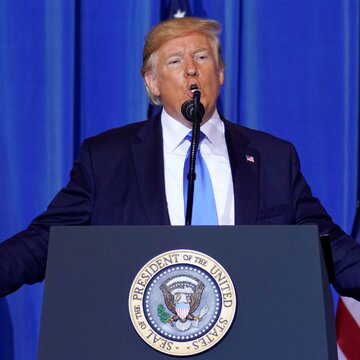
A recent US Supreme Court ruling has reshaped President Donald Trump's tariff strategy, altering global trade dynamics and temporarily shifting advantages among major exporting nations. The decision has positioned countries such as India and China among the immediate beneficiaries, while several US allies face new challenges under a revised tariff framework.
Court ruling resets US tariff policy
The Supreme Court struck down tariffs imposed under the International Emergency Economic Powers Act (IEEPA), declaring the emergency-based framework illegal. In response, the Trump administration is introducing a new system, a flat 15 per cent global tariff under Section 122, which will remain in effect for 150 days unless extended by Congress.
Also Read | Severe snowstorm hits US Northeast: Mass flight cancellations and travel restrictions- All you need to know
US Customs and Border Protection confirmed that collections tied to IEEPA tariffs will stop at 12 am. EST Tuesday, with related tariff codes being deactivated, Reuters reported.
Why the ruling matters
Rather than a rollback, analysts describe the move as a reset of the US tariff regime. The decision reduces the administration's ability to quickly adjust tariffs, potentially strengthening negotiating positions for trading partners.
Morgan Stanley economists noted that uncertainty may be stabilising despite ongoing policy shifts, writing, "The peak level of uncertainty on tariffs and trade tensions has passed," according to Bloomberg. At the same time, the ruling limits rapid tariff escalation, giving countries like China greater leverage ahead of upcoming negotiations.
Winners: India, China and export economies
India stands to gain diplomatic and negotiating space as trade talks with Washington continue. Officials have postponed a planned delegation visit to reassess the implications of the ruling and explore improved terms under the new framework.
China also benefits from the removal of emergency tariffs that previously allowed rapid escalation. Beijing's commerce ministry said it is conducting a "full assessment" and urged the US to lift "relevant unilateral tariff measures". It added, "US unilateral tariffs ... violate international trade rules and US domestic law, and are not in the interests of any party," and noted that "Cooperation between China and the United States is beneficial to both sides, but fighting is harmful," according to Reuters. Markets reacted positively, with Hong Kong-listed Chinese stocks rising.
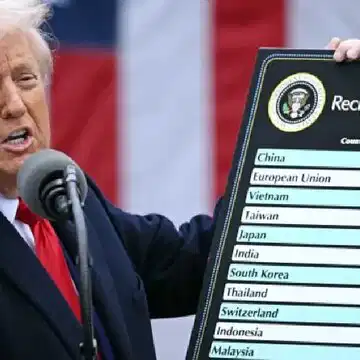
Brazil, Canada and Mexico also saw tariff relief after special levies tied to executive orders were eliminated. Asian exporters such as Vietnam, Thailand and Malaysia are expected to benefit from narrower tariff gaps across manufacturing sectors.
Losers: US allies and market stability
Countries that had negotiated lower tariff rates now lose their advantage under a uniform system. Bloomberg identified the UK and Australia among those facing higher effective tariffs, while the Financial Times reported the UK could see the largest increase in average rates.
The EU and Japan face relative disadvantages due to sector exposure, while financial markets reacted cautiously. Bloomberg reported declines in the dollar and S&P 500 futures amid renewed policy uncertainty.
What comes next
US Trade Representative Jamieson Greer signalled continuity in trade enforcement, stating, "We want to make sure that China is complying with its part of the deal," and acknowledging, "We don't have the same flexibility that IEEPA gave us." He added that investigations could justify future tariffs.
Also Read | Donald Trump announces 'great hospital boat' headed for Greenland, sparks fresh debate
With the Section 122 tariff still untested in court, analysts expect further challenges, reported The Times of India. The coming months are likely to see negotiations, legal scrutiny, and potential sector-specific tariffs shape the next phase of global trade policy.