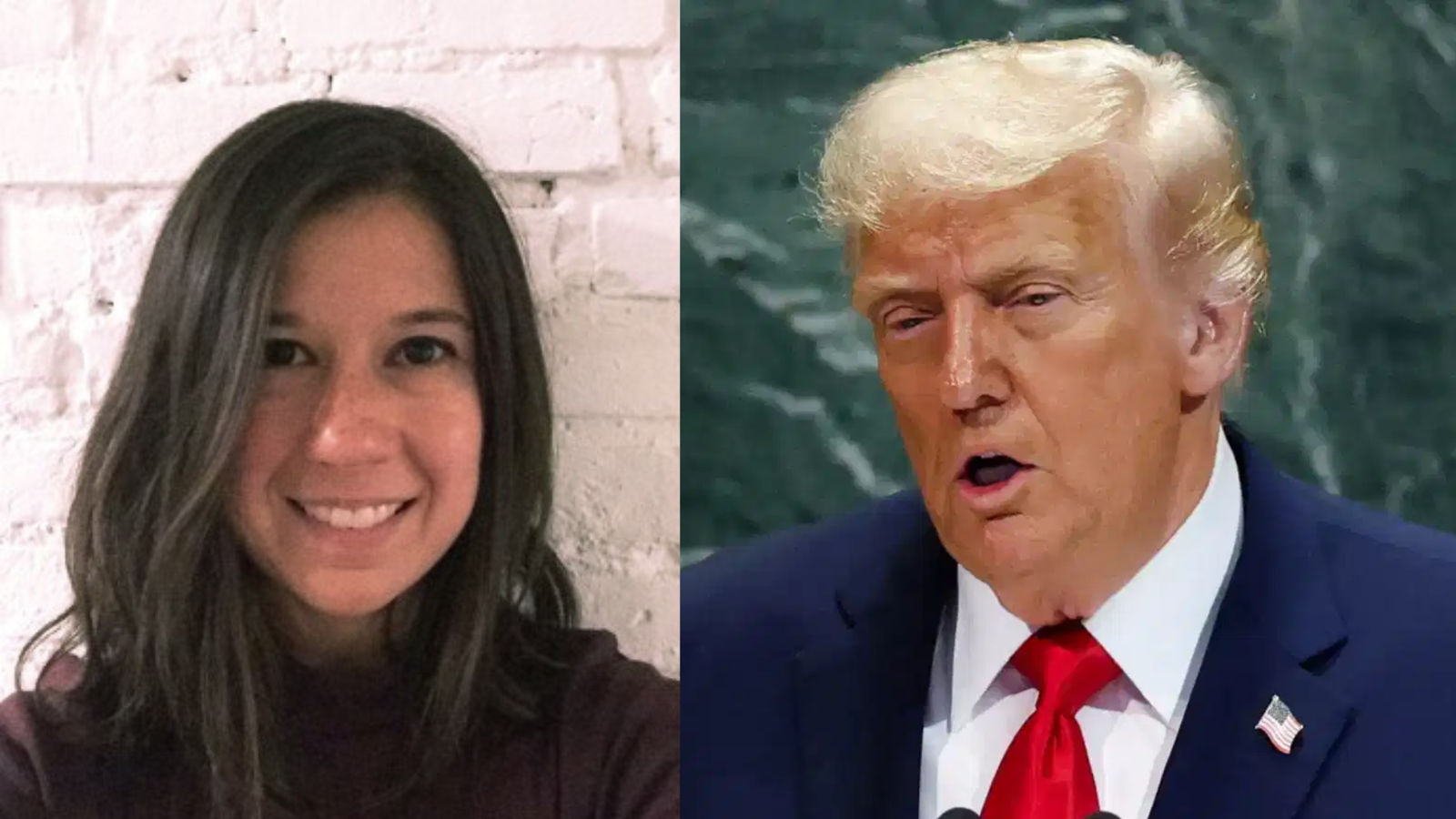
An Indian-American lawyer is among those shaping legal arguments before the US Supreme Court against President Donald Trump's executive order seeking to end birthright citizenship for certain individuals. Smita Ghosh, serving as amicus curiae, has contributed to a brief contesting the order signed by Trump on his first day in office after his re-election in January.
Also Read | ‘We're going to bring them back to the Stone Ages’: Trump warns Iran of ‘extremely hard’ strikes
The executive order aims to restrict citizenship granted under the 14th Amendment, triggering legal challenges over its constitutional validity. Ghosh, a senior appellate counsel at the Constitutional Accountability Centre, is part of a group of attorneys arguing that the move undermines long-standing constitutional protections.
Legal background and academic credentials
Before joining the Constitutional Accountability Centre, Ghosh worked as a Research Fellow at Georgetown University Law Centre, where she taught immigration law and separation of powers. She has also served as a Supreme Court Fellow at the US Sentencing Commission and worked as a law clerk for Judge Victor Bolden in the US District Court for the District of Connecticut.
Ghosh completed her undergraduate studies in history at Swarthmore College in Pennsylvania, graduating with high honours, as per her LinkedIn profile. She later earned a Juris Doctor from the University of Pennsylvania Carey Law School, graduating cum laude. In addition, she holds a PhD in legal history from the University of Pennsylvania, where she was recognised as an Annenberg History Fellow and a Benjamin Franklin Fellow.
Her professional experience also includes roles in private practice and civil rights advocacy. She worked as a legal advisor at Berke-Weiss Law, contributed to constitutional and pro bono matters at Paul, Weiss, Rifkind, Wharton & Garrison LLP, and served as a research associate at the NAACP Legal Defence and Educational Fund.
Argument rooted in constitutional history
In the brief submitted to the Supreme Court, Ghosh and co-authors rely on historical legal precedents to challenge the executive order. Her argument references rulings predating the 14th Amendment, including an 1844 New York case.
"In the 1844 case, Judge Lewis Sandford (of the New York Court of Chancery) held that Julia Lynch, the child of Irish parents who was born during their 'temporary sojourn' in New York, was a US citizen," Ghosh wrote in Slate's Executive Dysfunction newsletter.
Also Read | What happened before Trump fired Pam Bondi? Inside her last-minute plea
She further argued that the case "sheds light on the meaning of the 14th Amendment's citizenship clause because it represents the state of the law before the amendment was ratified, and the clause, according to its Framers, was ratified to confirm-not change-this aspect of existing law".
Challenge to executive order
The amicus brief concludes that the constitutional guarantee of birthright citizenship remains clear. "In brief, the Fourteenth Amendment guarantees birthright citizenship to all children born in the United States, no matter the immigration status of their parents. No amount of contortion on Applicants' part can change this. This Court should deny the applications," the amicus curiae said in the document submitted to the court against the Trump administration.