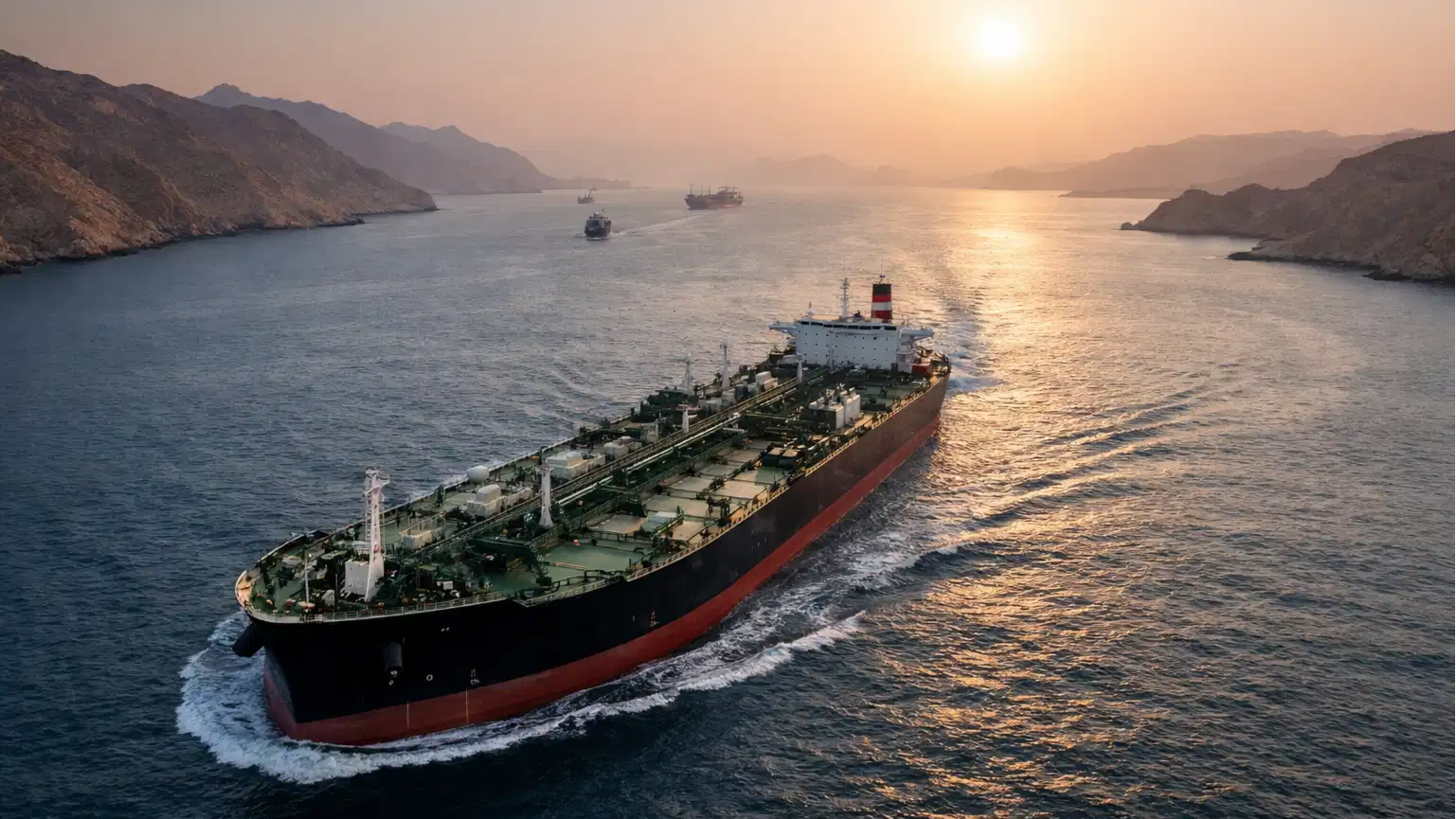
The US war on Iran has choked a critical global oil route: the Strait of Hormuz, which reportedly carried 20-25 per cent of the world's crude before the war, now faces a blockade. This has tightened oil supplies for refiners across Asia, including India. Against this backdrop, Iran has allowed a handful of shipments past its blockade. One of them may be heading to India.
As per the report of NDTV, the Ping Shun, an Eswatini-flagged vessel, departed from Iran's Kharg Island, reported as a target of a US ground invasion. It carries an estimated 6,00,000 barrels of Iranian crude. Tracking data from analytics firm Kpler shows Vadinar in Gujarat as its final destination, with an expected arrival on April 4.
Also Read | American University in Iraq's Sulaymaniyah attacked, tensions rise amid Iran warnings
Vadinar hosts a large refinery run by Nayara Energy, which has Russian backing. The port also serves as a distribution point for inland refineries, including the Bina facility in Madhya Pradesh, operated by state-owned Bharat Petroleum Corporation Ltd. The buyer of this cargo has not been identified.
What makes this possible and what remains uncertain?
According to the report of NDTV, Washington issued a 30-day sanctions waiver following war-linked global energy disruptions. It covers Iranian cargo already loaded and at sea. The waiver expires on April 19. This window may have allowed Indian refiners to consider buying Iranian crude for the first time since May 2019.
Dark fleet tankers and vessels carrying sanctioned oil often list one port and quietly change course mid-voyage to avoid detection. The destination could still shift. Payment is another unresolved issue. Iran remains excluded from the SWIFT banking network. Before 2019, India paid in rupees, deposited in an Indian bank, and Tehran used to fund imports like food and medicine.
"The Indo-Iranian oil trade has flickered back to life... this comes at a critical time for Indian refiners facing tightening inventories," said Sumit Ritolia, a Kpler analyst, as per the report on NDTV.
The US waiver covers an estimated 95 million barrels of Iranian crude currently at sea. Of these, around 51 million barrels could be sold to India. The rest may go to China or other Southeast Asian nations similarly affected by the war.
According to the report of NDTV, Iranian crude ranges from ultra-light condensate to medium-heavy sour grades. This suits a large share of Asia's refinery infrastructure. It also trades at a discount of $3 to $9 below Brent, which has crossed $100 per barrel since the war began.
Extraction costs are as low as $10 per barrel, making the margins considerable. If confirmed, this shipment also underscores a Delhi-Tehran relationship at a time when Iran has few allies globally and urgently needs funds to rebuild its military and repair war damage to civilian and energy infrastructure.
Also Read | Visiting Thailand? You may soon have to pay this new entry fee
India and Iran's oil history
NDTV further reported that Iran was once a top crude supplier to India. Its share of Indian imports crossed 16 percent in 2008. The 2015 nuclear deal revived trade. India bought around 5,00,000 barrels per day in March 2016. By 2017, Iran was India's third-largest supplier at 400,000 barrels per day. A record 705,000 barrels per day was purchased in May 2018. Trade collapsed after the US withdrew from the nuclear deal, and waivers expired in May 2019.