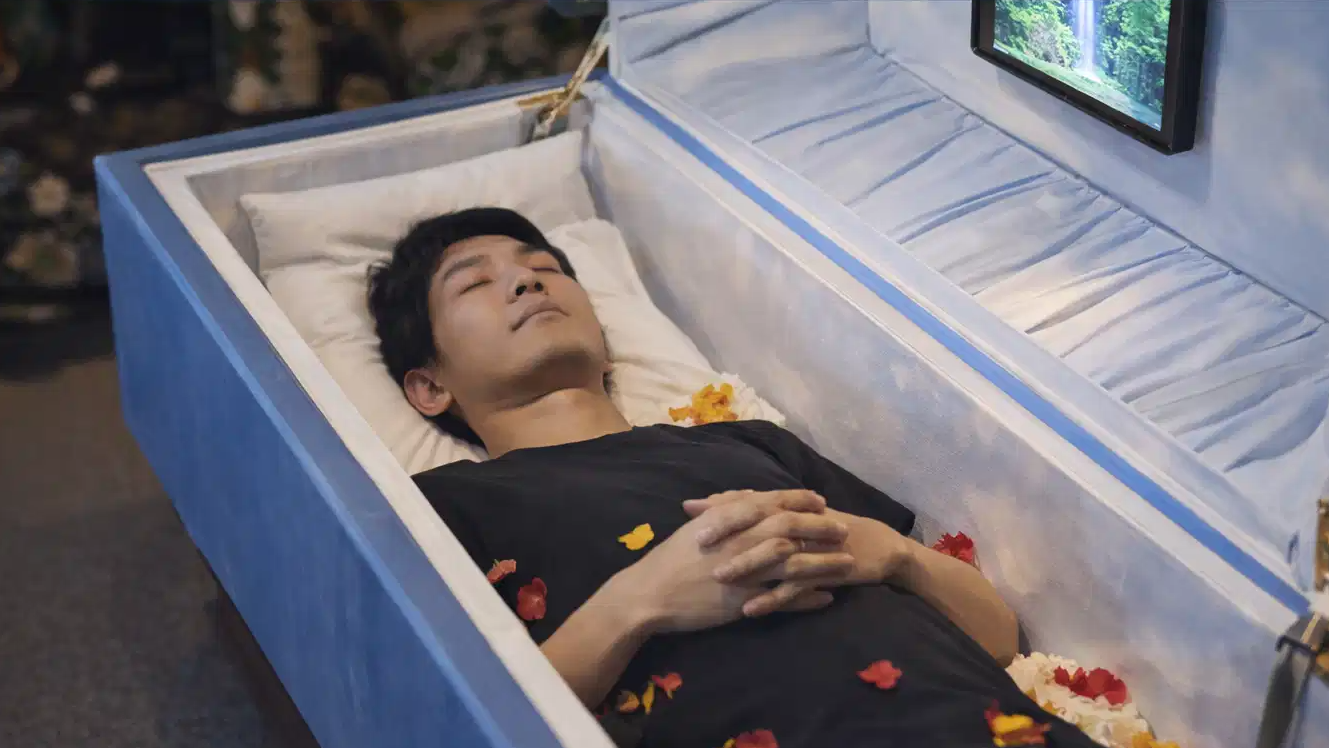
A new trend in wellness in Japan has caught the attention of the public because of its unusual approach to mindfulness. The trend involves meditation sessions inside coffins.
This trend has been referred to as “coffin-lying,” in which individuals participate in a meditation session inside a coffin for about 30 minutes. The main purpose of this trend is to help individuals focus more on life by confronting the concept of death.
This trend was said to have originated from an experimental program of a funeral home in Chiba Prefecture.
Also Read | India in full bloom: 6 flower destinations you shouldn’t miss this April
Meditation meets mortality
Some of the places where participants can have the experience include Meiso Kukan Kanoke-in in Tokyo, where participants have to part with about 2,000 yen (or about $13). Inside the coffin, participants can listen to music, watch videos, or just sit in silence.
Participants can decide whether they want the coffin open or closed. Unlike other coffins, coffins used in the sessions are normally colored, which makes them less intimidating.
The idea was developed by coffin designer Mikako Fuse, who explained that the sessions are aimed at helping participants change their perspective on death. Fuse explained that the sessions are aimed at helping participants change their perspective on death from negative to positive by appreciating life.
Reflection, not therapy
Workshops based on the idea have been held, in which participants have been asked to lie in coffins as part of the exercises. Some participants have reportedly told Japanese newspaper Mainichi Shimbun that the exercise has helped them think about their priorities in life and reduce their anxiety.
The practice is based on long-standing cultural ideas in Japan, which include concepts like kuyō. These ideas focus on remembering and reflecting on the impermanence of life.
Also Read | What does the term BDPC mean on your prescriptions? Here's a look at other Latin terms in medical sciences
The practice has come at a time when Japan is struggling with mental health issues like rising stress levels and suicide, especially among the younger generation.
The operators of the practice have stated that the practice is not any form of medical treatment. They have stated that participants need to be physically and mentally healthy, as well as comfortable in enclosed spaces, before they can participate in the practice. People who are claustrophobic can find the practice very stressful.