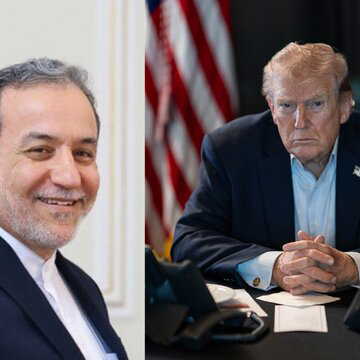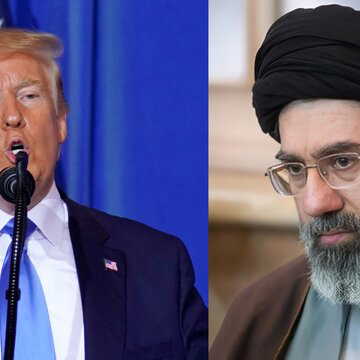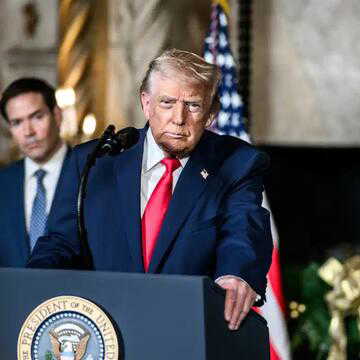
Donald Trump on Tuesday said he would suspend planned strikes on Iran for two weeks, signalling a temporary pause in escalating tensions. The decision came shortly after he warned that a "whole civilisation" could be destroyed if Tehran failed to reach a deal.
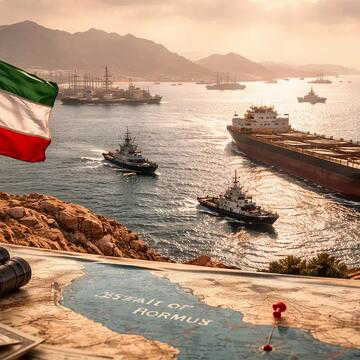
Announcing the move on Truth Social, Trump said, "Subject to the Islamic Republic of Iran agreeing to the COMPLETE, IMMEDIATE, and SAFE OPENING of the Strait of Hormuz, I agree to suspend the bombing and attack of Iran for a period of two weeks." The pause hinges on reopening the Strait of Hormuz, a key global oil transit route.
Also Read | Iran accepts ceasefire—but warns 'our hands remain on the trigger'
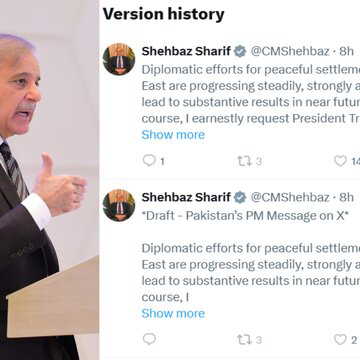
He described the development as a "double-sided ceasefire", following a request from Shehbaz Sharif, who urged both sides to step back and allow space for negotiations.
'Workable' proposal and military objectives
Explaining the shift, Trump said Washington had already achieved its immediate goals. "Have already met and exceeded all Military objectives, and are very far along with a definitive Agreement concerning Longterm PEACE with Iran, and PEACE in the Middle East," he said.
A major factor behind the pause was a proposal from Tehran. Trump revealed that the US had received a 10-point plan from Iran, calling it a "workable basis" for negotiations. "Almost all of the various points of past contention have been agreed to between the United States and Iran, but a two week period will allow the Agreement to be finalized and consummated," he added.
What Iran wants in return
Iran's Supreme National Security Council said its proposal was sent via Pakistan and includes several key demands. These include controlled transit through the Strait of Hormuz under Iranian coordination, an end to military action against Iran and its allies, and the withdrawal of US forces from regional bases, reported News 18.
Tehran also called for compensation for damages, the lifting of sanctions, and the release of blocked assets. It said acceptance of the proposal would turn the understanding into binding international law.
What happens next
Talks between the US and Iran are expected to begin in Islamabad on April 10 and continue for two weeks, with the possibility of an extension. Iran has clarified that the ceasefire does not mark the end of the conflict.
Also Read | 'Whole civilisation will die tonight': Trump's chilling warning amid Iran strikes
"Iran will only accept the end of the war once the details are finalised in the negotiations, given the acceptance of the principles set forth in the 10-article plan," the council said.
Iran's Foreign minister Seyed Abbas Araghchi also indicated that military operations would pause only if attacks from the US and Israel stop, underscoring the fragile nature of the truce.