Iran fired missiles at Israel on Monday in its first direct attack since a fragile ceasefire came into effect in early April, raising fears of renewed conflict in the Middle East and complicating ongoing diplomatic efforts involving Tehran, Washington and regional mediators.
The missile launches came a day after Iran warned it would retaliate following an Israeli strike on Beirut's southern suburbs. Tehran said the attack violated efforts to ease tensions and accused Israel of acting despite pressure from Washington to avoid escalation.
Also Read | Peru election showdown: Can Fujimori's famous name deliver victory?
Iran confirmed carrying out the missile attack and simultaneously shut its western airspace in anticipation of a possible Israeli response. Iraq and Syria also closed their airspaces as tensions spread across the region.
"Should these acts of aggression be repeated, the responses will be broader in scope and will encompass all American and Zionist targets throughout the region," Iran's Revolutionary Guard said in a statement that referenced attacks in Lebanon and on Iran's coast and vessels around the Strait of Hormuz, per a report by NDTV.
The Israeli Air Force struck military targets belonging to the Iranian terror regime in western and central Iran a short while ago.
— Israel Defense Forces (@IDF) June 8, 2026
Sirens sound across Israel
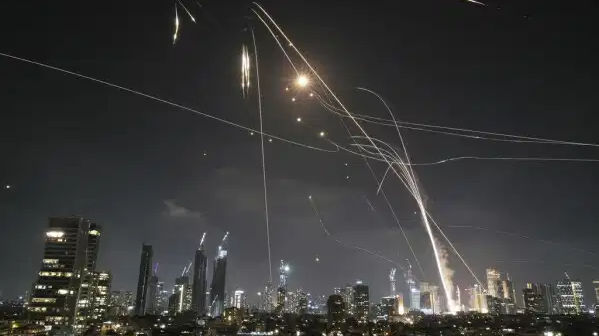
Air raid sirens were activated in several parts of Israel, sending residents rushing to shelters. The Israeli military said it intercepted missiles launched in at least three separate barrages, while explosions were reported in northern areas.
According to CNN, at least 10 ballistic missiles were intercepted.
Israel responded with a warning of strong retaliation.
Also Read | Can Pashinyan secure another term amid Russia's shadow over Armenia?
"Iran has made a grave mistake," Israeli military spokesperson Brigadier General Effie Defrin was quoted as saying by NDTV.
The military's chief of staff, Lt General Eyal Zamir, said it will "strike the enemy with determination as soon as the order is given".
#WATCH | Petah Tikva, Israel: Projectiles were seen in the sky above central Israel following a missile barrage from Iran
— ANI (@ANI) June 8, 2026
Israeli military officials late on Sunday said Israel had identified missiles launched from Iran and that its defence systems had intercepted them
(Source:… pic.twitter.com/kvUT02Y9sJ
Trump urges restraint
Even as Israel threatened retaliation, reports suggested the United States was attempting to prevent a wider conflict.
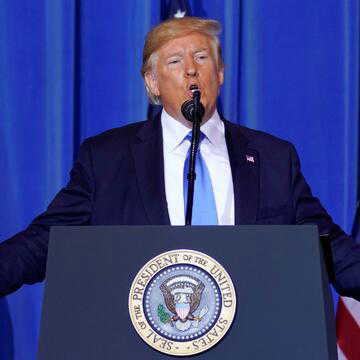
According to Axios and Israel's public broadcaster Kan, US President Donald Trump urged Israeli Prime Minister Benjamin Netanyahu not to respond immediately and instead allow more time for diplomacy. A senior US official also told Axios that Washington had not given a "green light" for the Israeli strike in Beirut.
The Trump administration is reportedly concerned that further escalation could derail ongoing negotiations with Iran.
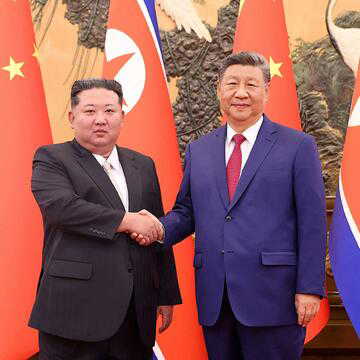
Also Read | Why is Xi Jinping visiting North Korea now? Kim courts Xi, but Moscow remains in the room
Lebanon strike adds to regional tensions
Iran had earlier warned that another attack on Beirut could reignite full-scale war across the region. Shortly before the missile launches, US Central Command posted on X, "US forces across the Middle East remain vigilant and ready."
Israel's recent strike on a residential building in Beirut killed two people and injured 20 others, according to Lebanon's health ministry.
"The army will continue to act in all of Lebanon," the Israeli military spokesperson said.
The latest developments have added fresh uncertainty to efforts aimed at reaching a broader settlement that could end fighting across multiple fronts in the Middle East.