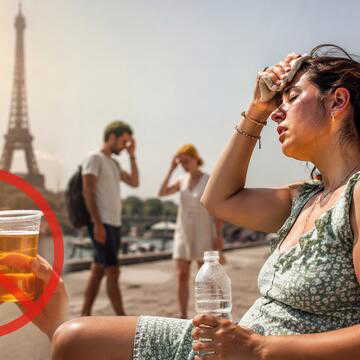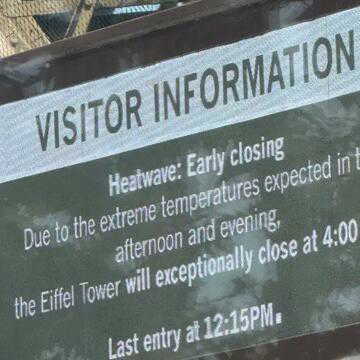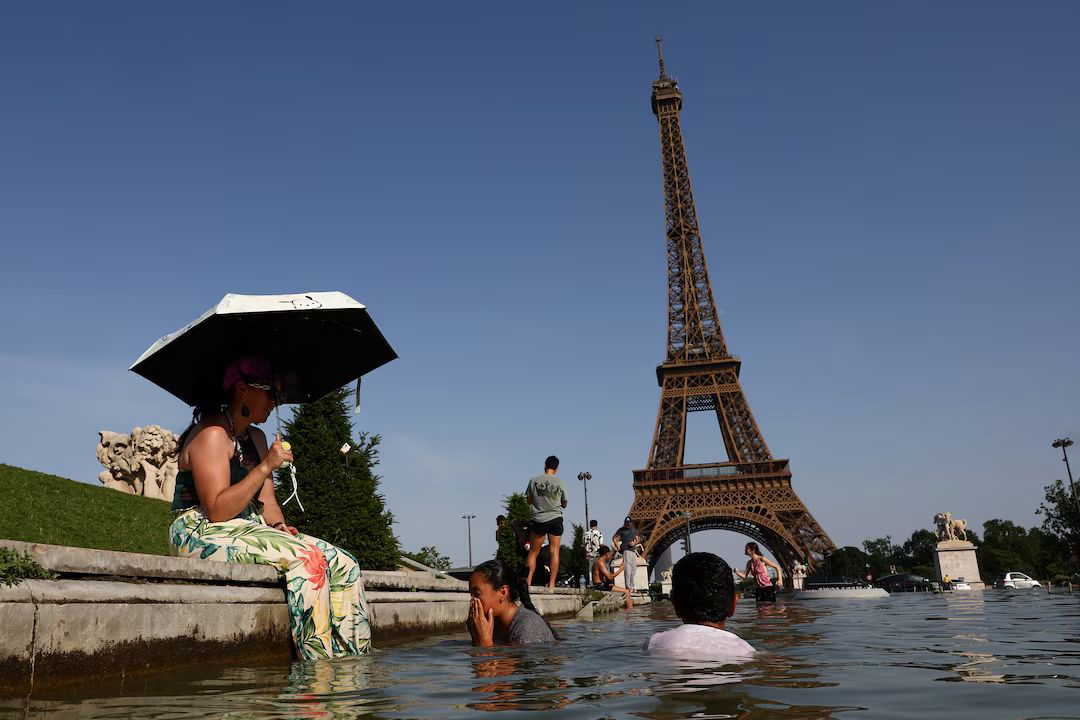
Europe’s record-breaking heatwave has forced authorities in Paris to take an unusual public health measure by temporarily banning public alcohol consumption and takeaway liquor sales. The decision comes as hospitals across the French capital struggle to cope with a sharp rise in heat-related emergencies, while temperatures across Western Europe continue to break historical records.
Officials say the move is aimed at preventing avoidable medical complications during the extreme weather, particularly as alcohol can significantly increase the dangers associated with prolonged exposure to high temperatures. The restriction does not apply to licensed bars and restaurants but targets public drinking, which authorities believe could place additional pressure on already stretched emergency services.
Also Read | Paris issues public drinking ban as Europe swelters under record heat
Why Paris decided to ban public drinking
Paris Police Prefect Patrice Faure announced the temporary restrictions after emergency response teams reported an unprecedented rise in heat-related incidents. According to officials, the city’s hospitals are approaching capacity, while firefighters have responded to thousands of emergency calls linked to the soaring temperatures.
According to the Hindustan Times, the decision follows a series of record-breaking temperatures across Europe. Germany crossed 41 degrees Celsius, while France, Switzerland and the United Kingdom also experienced their hottest June days on record. Several countries have already reported dozens of heat-related deaths, prompting governments to introduce emergency measures to protect public health.
Authorities believe discouraging public alcohol consumption could help reduce medical emergencies and ease the burden on hospitals.
Also Read | Pakistan experiences four earthquakes in a day, EMSC confirms
🇫🇷 The heatwave in France resulted in Paris' famous Seine River being flooded by hundreds of people in desperate need of cooling down.
— Mario Nawfal (@MarioNawfal) June 21, 2026
Given the amount of raw sewage that's usually in there, the hospitals may be busy soon too
Writers: Mhedi, Ianpic.twitter.com/ToRhLJso6t
How alcohol affects the body during a heatwave
According to the Hindustan Times, medical experts have consistently warned that alcohol is one of the worst substances to consume during extreme heat. Alcohol acts as a diuretic, causing the body to lose more fluids through increased urination. This accelerates dehydration at a time when the body already struggles to maintain adequate fluid levels.
High temperatures naturally force blood vessels to widen so that excess heat can escape through the skin. Alcohol amplifies this effect, lowering blood pressure further and making the heart work harder to circulate oxygen throughout the body. For older adults and people with existing cardiovascular conditions, this added strain can increase the risk of irregular heartbeats, fainting and even heart attacks.
Alcohol also interferes with the body's ability to regulate temperature, making it harder to cool down naturally. Combined with dehydration, this can rapidly increase the likelihood of heat exhaustion or heatstroke.
Experts advise caution during extreme temperatures
According to the Hindustan Times, health organisations across Europe and North America recommend avoiding alcohol entirely during periods of extreme heat. Along with drinking sufficient water, people are advised to stay indoors during peak afternoon temperatures, wear light clothing and seek shaded or air-conditioned spaces whenever possible.
Experts also warn that alcohol impairs judgement, making it more difficult to recognise the early symptoms of heatstroke, such as dizziness, confusion, headaches and slurred speech. This delayed response can prove dangerous, especially for people swimming or spending extended periods outdoors.
While some scientific studies suggest moderate alcohol consumption may not immediately affect healthy young adults during short periods of heat exposure, researchers caution that the evidence remains limited. Most studies have focused on small groups under controlled conditions and do not account for prolonged exposure, higher alcohol intake or vulnerable populations.