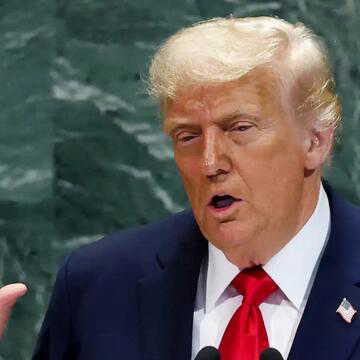
Donald Trump has managed to rope in 11 countries so far for his proposed "Board of Peace", a body pitched as a first concept to oversee a mechanism for ceasefire in Gaza and its post-war reconstruction. India has stayed away so far as have all permanent members of the UN Security Council, except the US.
Like Washington, none of the G7 nations have signed up either, against the backdrop of cautious global response to a platform, whose remit has steadily expanded beyond Gaza to take in a broad range of international conflicts.
Also Read | 'You have to be an Indian first': Sumantra Bose speaks on Netaji's vision and repatriation of remains
Invitation extended, decision pending
India was among nearly 60 countries that received invitations last week to join the Board of Peace, people familiar with the matter told Hindustan Times earlier. No Indian official attended the signing ceremony held on the sidelines of the World Economic Forum in Davos, Switzerland.
Officials said New Delhi is yet to take a call on the invitation. The Indian side is closely tracking the positions adopted by key partners, including France and Russia, while weighing potential implications of joining the body.
Concerns over mandate and structure
According to people aware of the deliberations, one major concern is that the Board of Peace could undermine the role of the United Nations in conflict resolution and global governance. There are also reservations about Trump’s continued role as chairman of the body, potentially in perpetuity.
These concerns have been amplified by the board’s official charter, which reportedly makes no reference to Gaza despite the initiative being originally linked to the conflict there. Instead, the document outlines a sweeping mandate to “promote stability and secure enduring peace” in conflict-affected regions.
Trump’s claims and India’s response
At the Davos ceremony, Trump claimed credit for ending “eight wars in nine months”, including last year’s military standoff between India and Pakistan. ““I think we can spread out to other things as we succeed with Gaza… We can do numerous other things. Once this board is completely formed, we can do pretty much whatever we want to do,” he said.
He also asserted that the UN had no role in conflicts he said he had helped resolve, adding: “We’re very happy to stop the war that had started with India and Pakistan, two nuclear nations, and I was very honoured when the prime minister of Pakistan said President Trump saved 10 and maybe 20 million lives by getting that stopped just before bad things were going to happen."
India has consistently rejected this account, maintaining that the hostilities ended after four days following an understanding reached between Indian and Pakistani military officials.
Who has joined so far
The charter has been signed by the heads of state or government of 11 countries: Argentina, Armenia, Azerbaijan, Bulgaria, Hungary, Indonesia, Kazakhstan, Kosovo, Pakistan, Paraguay and Uzbekistan, along with senior officials from Bahrain, Jordan, Morocco, Qatar, Saudi Arabia, Turkey, the UAE and Mongolia.