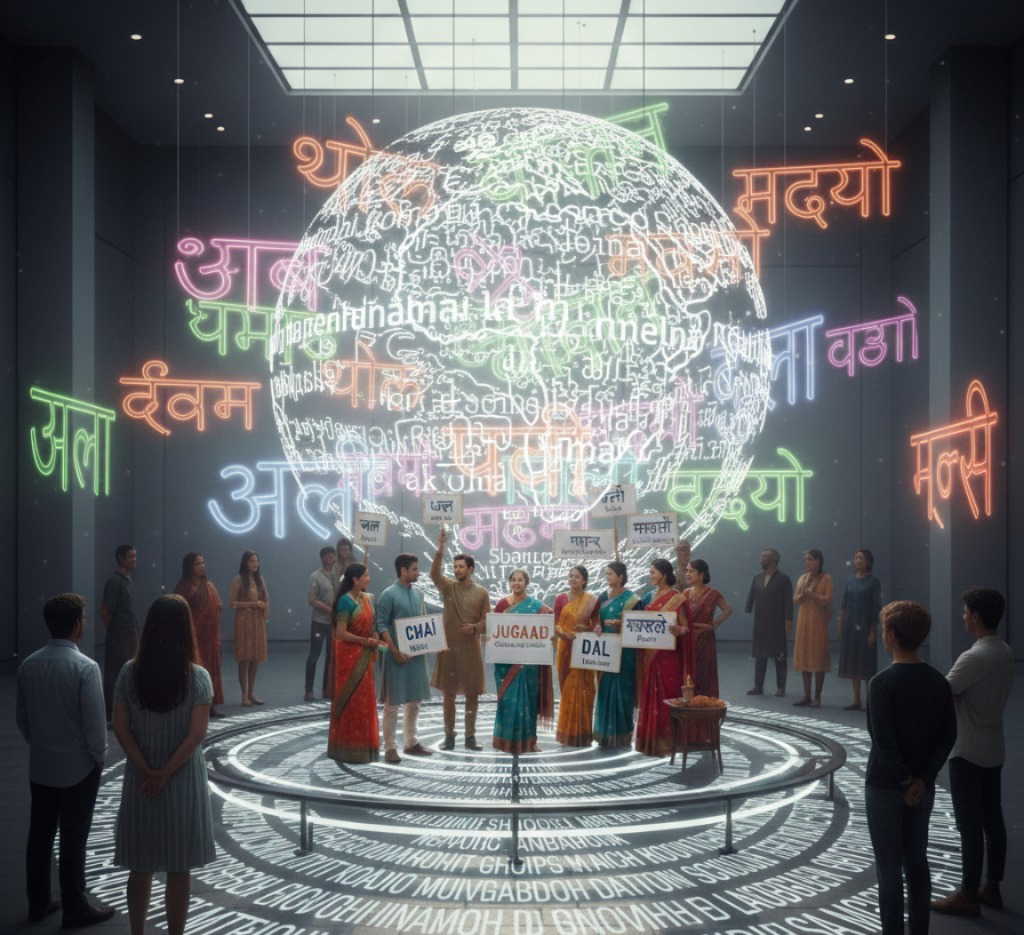
Some words refuse to migrate. Some words do not fit into English or any other languages. You can explain them, stretch them, soften them-but they refuse to sit neatly inside another language.
These words carry a texture, a pause, and most importantly history. They smell like old books, evening tea, train journeys, monsoon windows. And no matter how fluent we become, these words wait for us, in the language that first understood our feelings. Language of our mothers, grandmothers, which remind us to remember our roots.
ALSO READ | International Mother Language Day: What are India's most unknown languages still spoken today?
In the context of International Mother Language Day, here are some words that can't be translated into other languages-
Jugaad (Hindi)
A clever, makeshift solution created out of limited resources.
Fitehmuh (Punjabi)
The English equivalent for this popular Punjabi term would be ‘facepalming’. It is usually used to convey utter frustration at a situation or person.
Aador (Bengali)
A soft, indulgent affection shown through touch- feeding you with her hands, stroking your hair, saving the best piece for you.
Lyad (Bengali)
The term "lyad" in Bengali is a verb that means "doing nothing" or being in a voluntary slumber-state. It describes a way of not exerting effort while still not feeling bad about it,
Khunnas (Hindi/Urdu)
A simmering personal grudge. Petty resentment that lingers.
Porosh (Bengali)
A gentle touch- often emotional, not just physical. A presence that brushes against your heart.
Adda (Bengali)
Unstructured, lingering conversation with no agenda. Time spent talking for the joy of talking.
Viraha (Sanskrit/Hindi)
A longing born from separation -especially in love. Not just missing someone, but aching in their absence.
Aschi (Bengali)
“Aschi” literally translates to “I’m coming.”
But in Bengali, it rarely means immediate arrival. It becomes a version of softer “goodbye.”When someone says “aschi” while leaving, it carries an unspoken promise- I’m going now, but I'll return.
ALSO READ | International Mother Language Day 2026: Theme, history and why February 21 matters
Manvaar (Marwari / Rajasthani)
“Manvaar” is often translated as “hospitality.” But hospitality feels formal. Polite. Almost transactional. It is warmth offered not out of duty, but out of honour and affection.
These words are responsible for the reason we slip back into our mother language without noticing- when we are tired, when we are hurt, when we are most honest. Some feelings do not respond to translation. They respond to recognition. A mother tongue does not just help us speak. It helps us feel without explanation. It remembers the version of us that existed before polish, before performance, before we learned to edit our emotions.