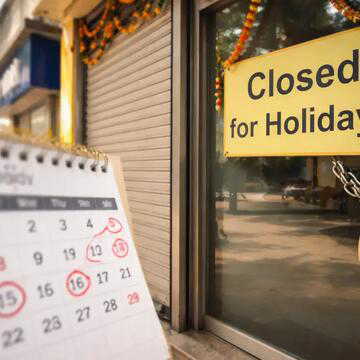
The National Stock Exchange (NSE) has released the holiday calendar for 2026, outlining the days when Indian stock markets will remain closed. According to the NSE holiday list for 2026, the Indian stock market will remain closed for 16 days. In addition, four holidays fall on weekends, when trading is already shut.
Also Read | Is stock market closed today for Mahavir Jayanti? Here’s what’s open and closed on March 31
Stock exchanges, including the BSE and NSE, typically suspend trading to observe national, religious and regional events. Markets also remain closed every Saturday and Sunday throughout the year.
Months with the most closures
Several key festivals and national observances feature in the holiday list. Some of the notable holidays fall on occasions such as Holi, Bakri Id, Republic Day, Diwali, Christmas and other festivities. The most number of holidays will be observed in the month of March with three holidays, followed by April, May, October and November with two holidays each.
Full list of market holidays in 2026
Trading will remain closed on the following dates:
15 January — Municipal Corporation Election (Maharashtra)
26 January — Republic Day
3 March — Holi
26 March — Ram Navami
31 March — Mahavir Jayanti
3 April — Good Friday
14 April — Dr Baba Saheb Ambedkar Jayanti
1 May — Maharashtra Day
28 May — Bakri Id
26 June — Muharram
14 September — Ganesh Chaturthi
2 October — Mahatma Gandhi Jayanti
20 October — Dussehra
10 November — Diwali-Balipratipada
24 November — Prakash Gurpurb Sri Guru Nanak Dev
25 December — Christmas
Holidays falling on weekends
Four holidays in 2026 fall on weekends:
15 February — Mahashivratri (Sunday)
21 March — Id-Ul-Fitr (Saturday)
Also Read | Gold, silver prices jump sharply as stock market falls, check latest Kolkata rates
15 August — Independence Day (Saturday)
8 November — Diwali Laxmi Pujan (Sunday)
Muhurat trading in 2026
Muhurat trading is scheduled for Sunday, 8 November, 2026. The timings for Muhurat trading will be announced later. This special one-hour session marks the beginning of a new Samvat year, when traders traditionally buy stocks as a token gesture for prosperity.