The Central Board of Secondary Education (CBSE) has announced the implementation of On-Screen Marking (OSM) for evaluating Class XII answer books in Board exams which will commence from February 17. The move is part of the Board's continued efforts to improve efficiency, transparency and speed in the evaluation process.
However, in 2026, the evaluation of Class X answer books will remain physical as in prior years' evaluations.
"In its continuous effort to enhance efficiency and transparency, the Board has decided to introduce On-Screen Marking (OSM) for the evaluation of Class 12 answer books beginning with the 2026 examinations. The evaluation of Class 10 answer books will continue in physical mode as before in 2026," the official notice stated as quoted by NDTV.
Also Read | CBSE 2026 exams to begin from February 17: Here's what students must know
The CBSE conducts Class X and Class XII Board examinations throughout India and in 26 other countries and each year, approximately 46 lakh students take these exams.
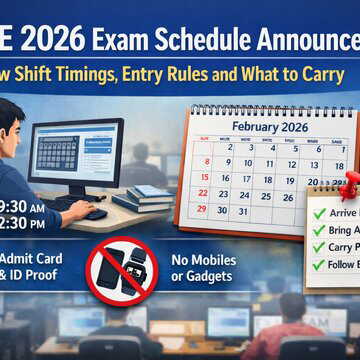
The Class X and Class XII Board exams for this year are scheduled from February 17 to April 10. The CBSE has decided to hold the Class X examination two times in this academic year, and the second set of exams will take place from May 15 to June 1. Both exams will follow the same syllabus. The first exam is mandatory for all students while the second is optional.
How will digital evaluation help?
As per a report by Hindustan Times, in a letter to school principals, CBSE's examinations controller Sanyam Bhardwaj highlighted several expected benefits of the digital marking system. These include the "elimination of totalling errors, automated coordination that reduces manual work, and faster evaluation with more teacher participation".
He stated that the new system will "save time and money on transportation". It will also allow teachers to "stay in their schools and continue with their regular duties".
He added that post-result verification of marks will no longer be necessary, which will cut down on the number of people needed for verification. This change also provides an opportunity for all schools to contribute to the evaluation and encourages involvement from teachers at all affiliated schools worldwide.
He described OSM as an "environmentally friendly digital evaluation".
Also Read | NEET UG 2026 notification out: Check eligibility criteria, steps to apply & other details
Schools instructed to prepare
To ensure preparedness, CBSE has asked schools to maintain necessary infrastructure. This includes a computer lab with a public static IP, devices with a Windows operating system (OS) version 8 or above, at least 4 GB of RAM, updated browsers, Adobe Reader, reliable internet connectivity with a minimum speed of 2 Mbps and an uninterrupted power supply.
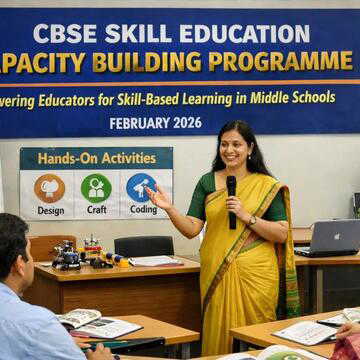
The board stated it would support the transition by allowing teachers with Online Affiliated School Information System (OASIS) IDs to access and familiarise themselves with the system.
It will conduct multiple dry runs for practice, organise training programmes, set up a call centre for issue resolution and release instructional videos. The board added that detailed instructions for each activity will be issued separately to ensure timely action by all stakeholders.