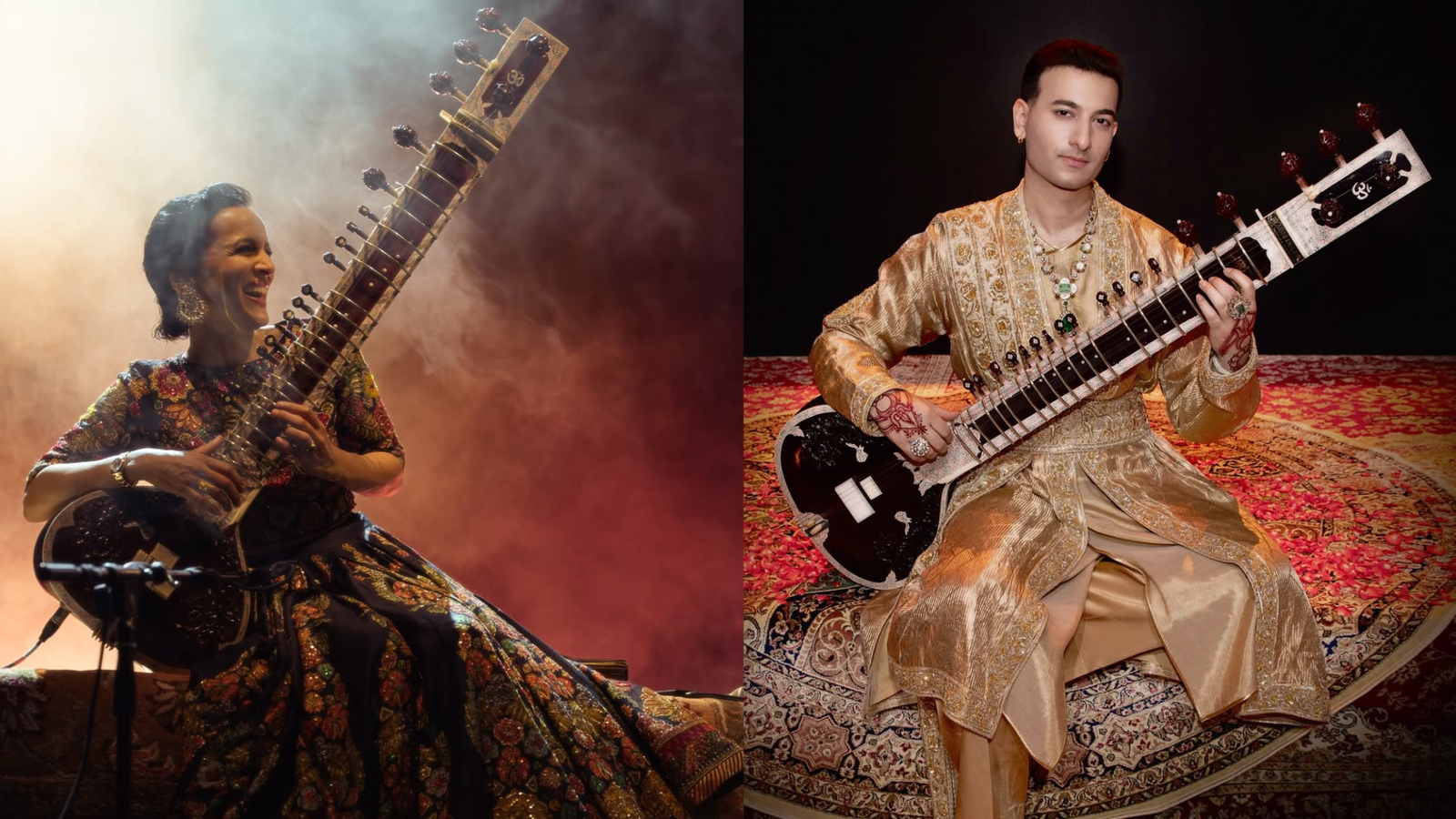
A recent interview by musician Anoushka Shankar has triggered a fresh debate within the classical music community over the legacy of the late sitar maestro Pandit Ravi Shankar. Anoushka clarified that Rishab was never formally a disciple of her father, the legendary Ravi Shankar. Rishab has often been described as the maestro's "last" or "youngest" disciple, a label that has appeared in several interviews and public discussions over the years. Following this, Rishab has responded with a detailed statement and supporting photographs.
Rishab’s statement on Ganda Bandhan ceremony
As per a report by the Times of India, Rishab’s team in a detailed statement said, “On 3rd January 2012, at the Ravi Shankar Centre (Saraswati Pooja Hall), a private meeting was held at the express request of Pandit Ravi Shankar between 13-year-old Rishab Rikhiram Sharma, his parents Sanjay and Manjul Sharma, his brother Mukul Sharma, Pandit Parimal Sadaphal, Shruti Sadamal, and Panditji with his wife Sukanya Shankar. This followed a personal call from Panditji to Sanjay Sharma on 2nd January, requesting Rishab’s presence for the Ganda Bandhan ceremony the next day.”
“Sukanya Shankar noted that during their stay in the USA she had shown Panditji a YouTube recording of Rishab performing Raag Tilak Kamod at a Sanjay Rikhi Ram Vadya Parampara event in New Delhi on 10th February 2011. After reviewing the recording again on the morning of 3rd January, Pandit Ravi Shankar decided to accept Rishab as a Shishya, intending to personally nurture his potential.”
Also Read | 'My father was never his guru': Anoushka Shankar clears air on Rishab Rikhiram Sharma's 'disciple' claim
The statement further said, “He asked Rishab to perform the same raag, listened attentively, demonstrated and corrected the composition, and conducted a formal lesson lasting several hours. Panditji clarified that while he might not always be physically present, Pandit Parimal Sadaphal would supervise structured training, with periodic remote progress reviews. The session culminated in the formal Ganda Bandhan ceremony, during which Panditji tied the traditional red thread around Rishab’s wrist and spoke of Kartavya Vidya, emphasising that while the thread may physically break, the spiritual Guru-Shishya bond endures for life.”
The team also referenced a public event at Kamani Auditorium on February 10, 2012, where Pandit Ravi Shankar allegedly introduced Rishab on stage as his youngest disciple. “On 10th February 2012, at a Sanjay Rikhi Ram Vadya Parampara event held at Kamani Auditorium, Pandit Ravi Shankar publicly introduced 13-year-old Rishab Rikhiram Sharma on stage as his youngest disciple, in the presence of Sukanya Shankar, members of the Sharma family, fellow disciples, and the assembled audience. This marked Panditji’s final public appearance in India before relocating to his overseas residence in the United States”, it stated.
Also Read | Who is Rishab Rikhiram Sharma? The ‘Shiv Kailash’ sitarist facing questions over his Ravi Shankar connection
Anoushka Shankar’s earlier clarification
In her interview with Humans of Bombay, Anoushka said Rishab was “really talented” but clarified that she thinks “there is some misunderstanding about his guruship.” She said, “He learnt very intensively with someone very dear to me, one of my father’s senior disciples, Parimal Sadaphal, and he had a couple of lessons with my father, very informally, with Parimal uncle also in the room.”
“We knew him from childhood because he was the son of our instrument maker Sanjay Rikiram Sharma. So somehow that has gone blown up into some story of him being his last disciple or the youngest disciple, which isn’t true. But he is super talented and deserves all success with or without that story.”
The differing accounts have sparked discussion within the classical music fraternity about lineage, mentorship, and how the traditional guru-shishya relationship is interpreted and remembered.